
Salt farmers hope to feel secure in sticking to the profession
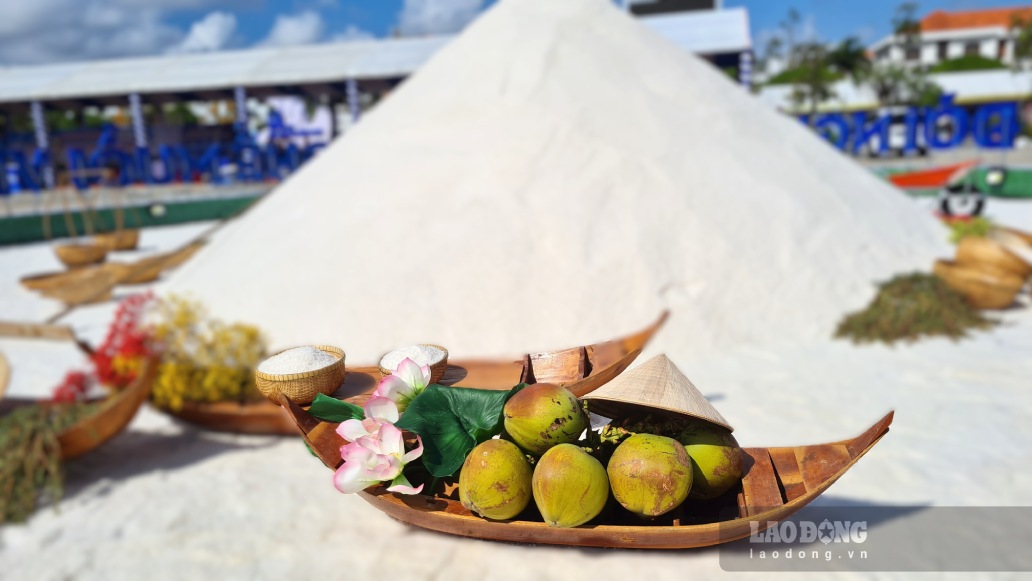
The Vietnam Salt Industry Festival - Bac Lieu 2025 takes place from March 6 to 8, 2025, bringing many expectations for a new step in the development of the salt industry. The event aims to honor the traditional salt industry, enhance the value of salt grains, promote the application of science and technology in production, attract young people to stick with the profession and promote Vietnamese salt products.
However, after the Festival, the salt industry in Ca Mau has not changed much as expected. Difficulties that have existed for many years are still present. Most salt farmers produce small-scale products, limited investment capital, mechanization is still slow, production depends heavily on weather, while prices and consumption markets are not really stable.
Mr. Nguyen Hoang Quoc - Chairman of the Board of Directors of Huy Dien Soil Cooperative, Long Dien commune - said that salt production this year is lower than last year and has not reached the plan. What people want most is stable salt prices to have income and have enough conditions to continue investing in production.
Ms. Quach Lien Hiep, a salt farmer in Vinh Hau commune, shared that her family lost money in the previous crop because the rain melted the salt. This crop is more favorable for production, but it has not yet compensated for the lost capital, so life is still difficult.
According to Mr. Ho Minh Chien - Chairman of the Board of Directors of Dong Hai High-Tech Salt Production Cooperative - the salt industry has been heavily dependent on weather for many years. To improve production efficiency, it is necessary to increase investment in machinery, paving crystallized yards and equipment to serve production to reduce labor costs, improve productivity and salt grain quality. However, most salt farmers do not have enough resources to invest because of limited capital and low income.
Currently, Ca Mau has more than 1,500ha of salt production with over 700 households participating. White salt prices range from 1,500-1,600 VND/kg, and black salt from 1,200-1,500 VND/kg. This price level has not created motivation for people to boldly invest in innovation in production.
Investing in infrastructure, innovating production to increase the value of salt grains
Director of the Department of Agriculture and Environment of Ca Mau province To Hoai Phuong said that in order to share difficulties with salt farmers, localities have disbursed nearly 7 billion VND to support people to restore salt and Artemia production.
According to Mr. Phuong, the specialized sector is continuing to complete dossiers to submit to the Provincial People's Committee for consideration and additional support for production households damaged in Hiep Thanh ward and Long Dien commune.
In addition to support from the budget, the province also directed credit institutions to implement debt freezing, debt extension, and create conditions for people to access preferential loan packages to serve investment in salt field renovation and purchase of machinery.
According to Mr. Pham Van Muoi - Deputy Director of the Department of Agriculture and Environment of Ca Mau province - in the period 2021-2025, the locality has invested more than 127 billion VND to upgrade the infrastructure of Dong Hai salt production area, contributing to improving production conditions for salt farmers.
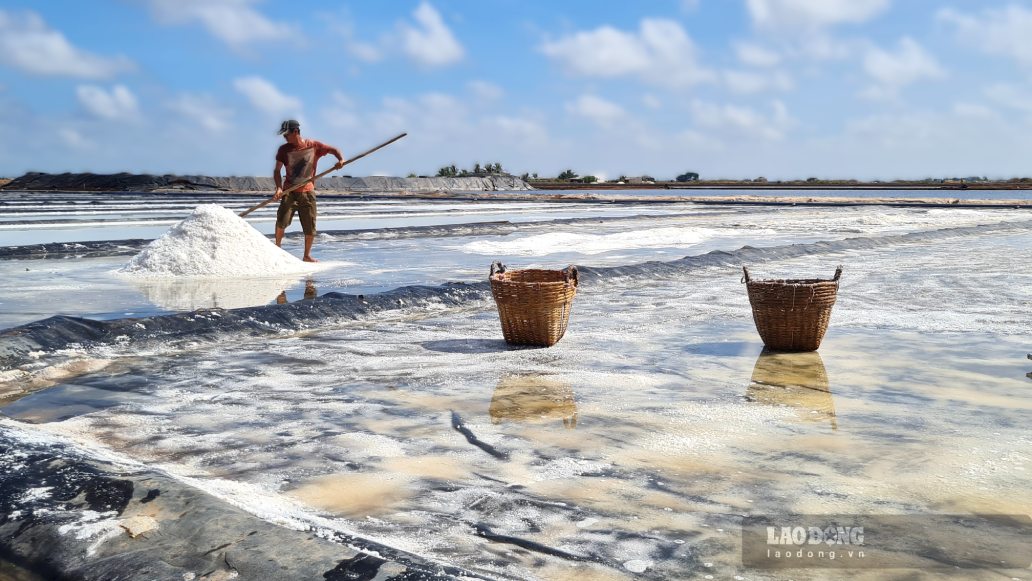
Along with infrastructure investment, the agricultural sector is promoting the application of the tarpaulin salt production model on the crystallization field. According to statistics, the yield of this model averages 47.15 tons/ha, significantly higher than the 29.85 tons/ha of traditional production methods.
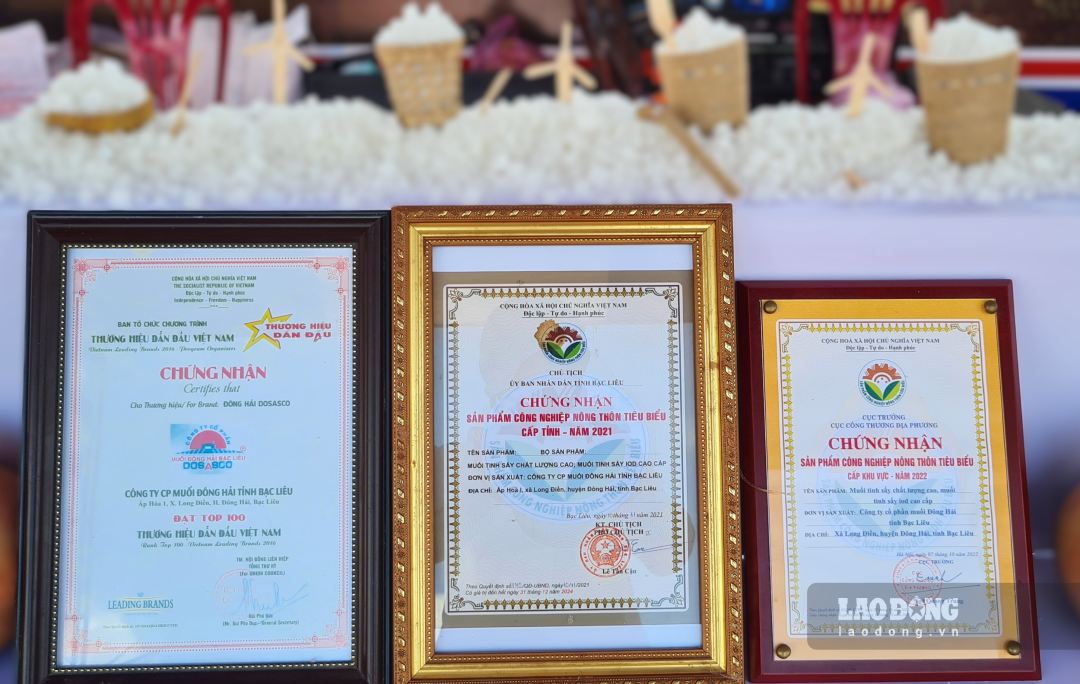
Many salt processing products such as herbal salts, foot salts, spa salts and spice lines are also being developed, gradually increasing the value of salt grains.
In the period 2026-2030, Ca Mau sets a target to maintain about 1,600ha of salt production, with an output of 76,000 tons per year; continue to expand production areas using the tarpaulin method, increase the proportion of salt through processing, develop cooperatives and link salt making with tourism in traditional salt-making areas.
However, to achieve this goal, according to many salt farmers and cooperatives, in addition to infrastructure investment and technical transfer, there needs to be strong enough support policies in terms of capital, expanding consumption markets, attracting businesses to participate in deep processing and building sustainable linkage chains.
When output is guaranteed and salt farmers have stable profits, the salt industry can develop in line with the expectations set after the Vietnam - Bac Lieu Salt Industry Festival in 2025.


