
People expand livelihoods
In the context of severe climate change, Con Nhan embankment helps people in Bao Thanh commune feel secure in producing vegetables and planting high-tech crops near the sea, expanding livelihoods from tourism.
Previously, every monsoon season from November to April, Mr. Lam Van Dong worried about landslides destroying the dyke and production land. For the past two years, thanks to the solid embankment, he no longer has to worry about losing land and stable production.
Mr. Dong shared that before the embankment, his family had to spend 70-80 million VND per year to hire bulldozers to bulldoze and build dykes to prevent landslides. Seawater intrusion has gradually lost production land, unstable production and reduced income.
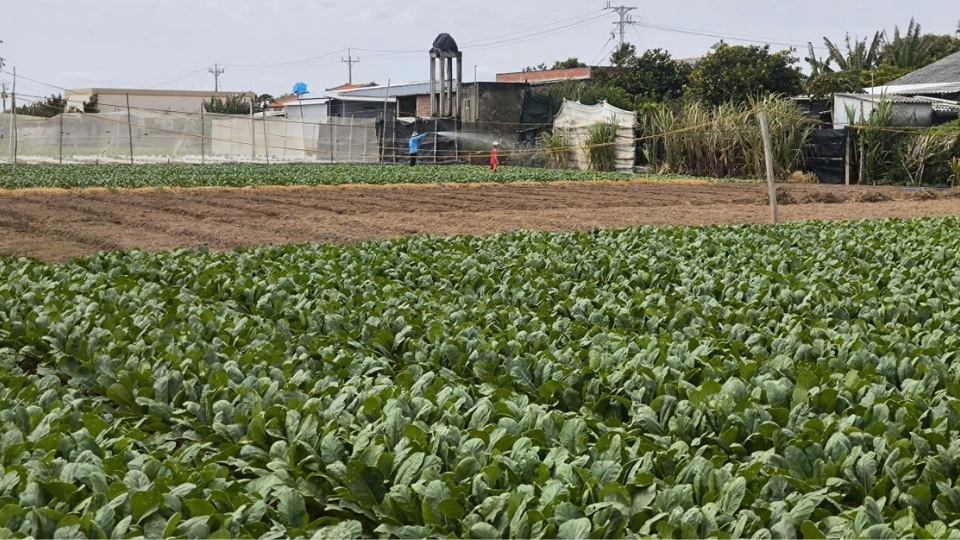
Currently, his family still has more than 3,000 m2 of land for growing vegetables such as watermelons, cabbage... Thanks to the embankment and increased yield, he also opened a small water stall to welcome tourists to visit Con Nhan beach, increasing income.
The embankment project helps people produce without interruption. People want to upgrade the road to the sea, creating favorable conditions for tourists, and at the same time develop livelihoods associated with tourism services.
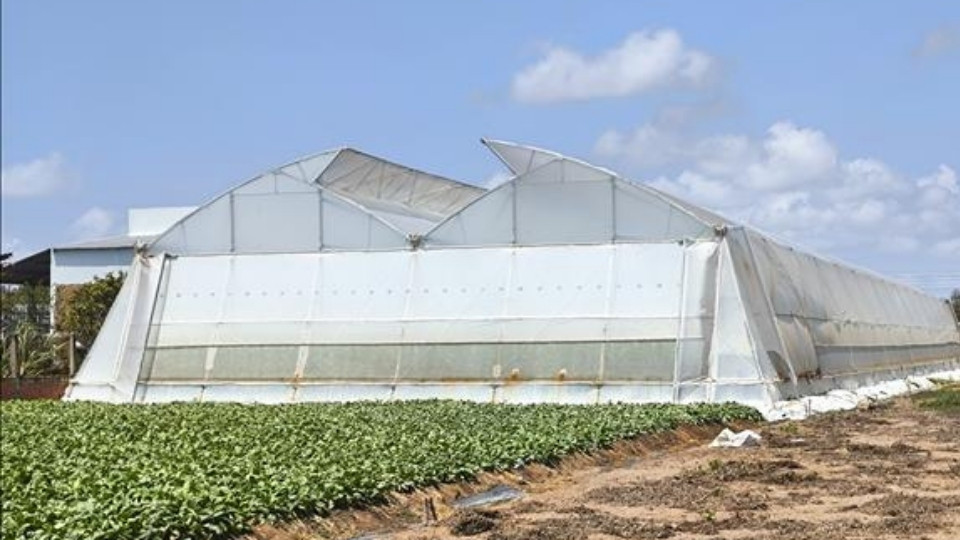
Previously, serious landslides caused Ms. Huynh Thi Nhien to produce sparingly. Now, she has boldly invested in a 1,200 m2 greenhouse to grow high-tech melons near the sea.
With a capital of more than 700 million VND, she grows 4 cantaloupe crops each year, earning 250-300 million VND/year, 3-4 times higher than before. She also combines with tourists to visit and sell products directly, improving economic efficiency.
Embankment protecting production land and protection forest
Mr. Vo Quoc Dat - Vice Chairman of Bao Thanh Commune People's Committee, Vinh Long province - said that the locality has built 2.5 km of solid Con Nhan dyke and embankment, protecting more than 115 hectares of crop production land with an output of more than 2,000 tons/year.
Mr. Dat emphasized that the project establishes a "steel wall" to block sea encroachment, protect production land and protection forests. Thanks to that, farmers boldly reinvest in high-tech shrimp ponds, restore clam farming cooperatives and expand safe crop areas behind dikes.
The spacious embankment becomes a landscape highlight, attracting tourists, creating conditions for people to develop logistics services, eateries, and directly consume local seafood products.
However, according to Mr. Dat, there are still more than 9 km of landslides that need to be invested in solid embankments. More than 535 hectares of alluvial land, riverside, coastal land, forests and defense land, along with 115 households living there, want to be protected to maintain livelihoods, protect protective forests and local infrastructure works.


