
In the days when the whole country is looking towards the 51st anniversary of the Liberation of the South and National Reunification Day (April 30, 1975 - April 30, 2026), we had the opportunity to visit a traditional flag making workshop in Tu Van village, Chuong Duong commune, Hanoi.
The sound of sewing machines running smoothly mixed with cheerful laughter creates a characteristic rhythm of labor. Only on days close to major holidays like this can people clearly see such hustle and bustle. Here, each worker is not just a pure laborer, they are also the ones who "keep the fire" for the national soul through each strip of flag.
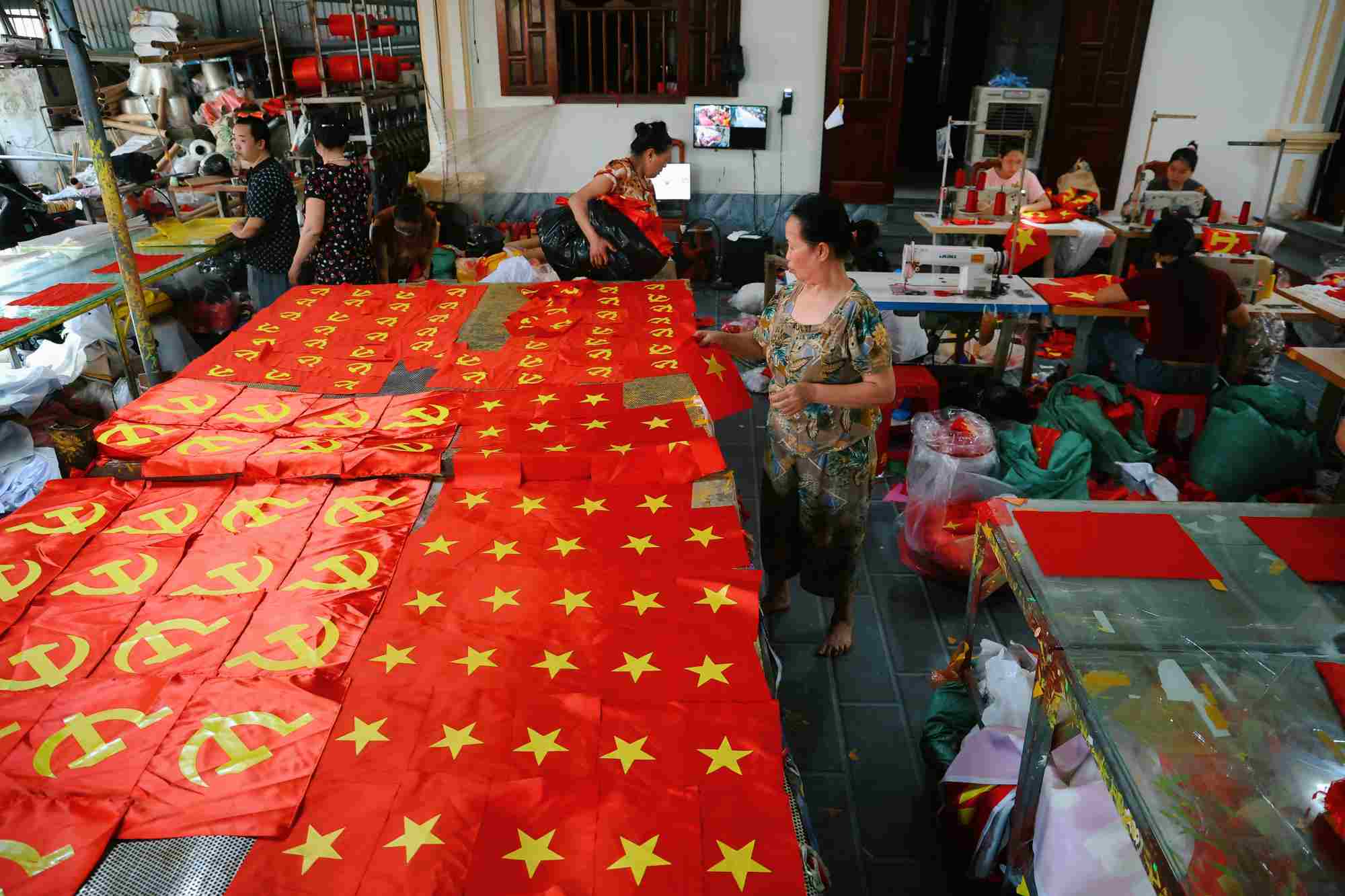
Stepping into the production workshop, we could not help but be overwhelmed by a brilliant red color covering the space. In a small corner, Mrs. Dao Thi Nho is quickly using her hands, carefully arranging each flag neatly and smoothly.
Having been attached to this job for nearly 10 years, Ms. Nho, while cherishing the finished product, emotionally shared: "Maying a wrong outfit can be repaired, but the national flag must be standard in every corner, accurate in every percentage of yellow stars. Throughout those years of working, every time I hold the flag in my hand, I still have complete pride in me.
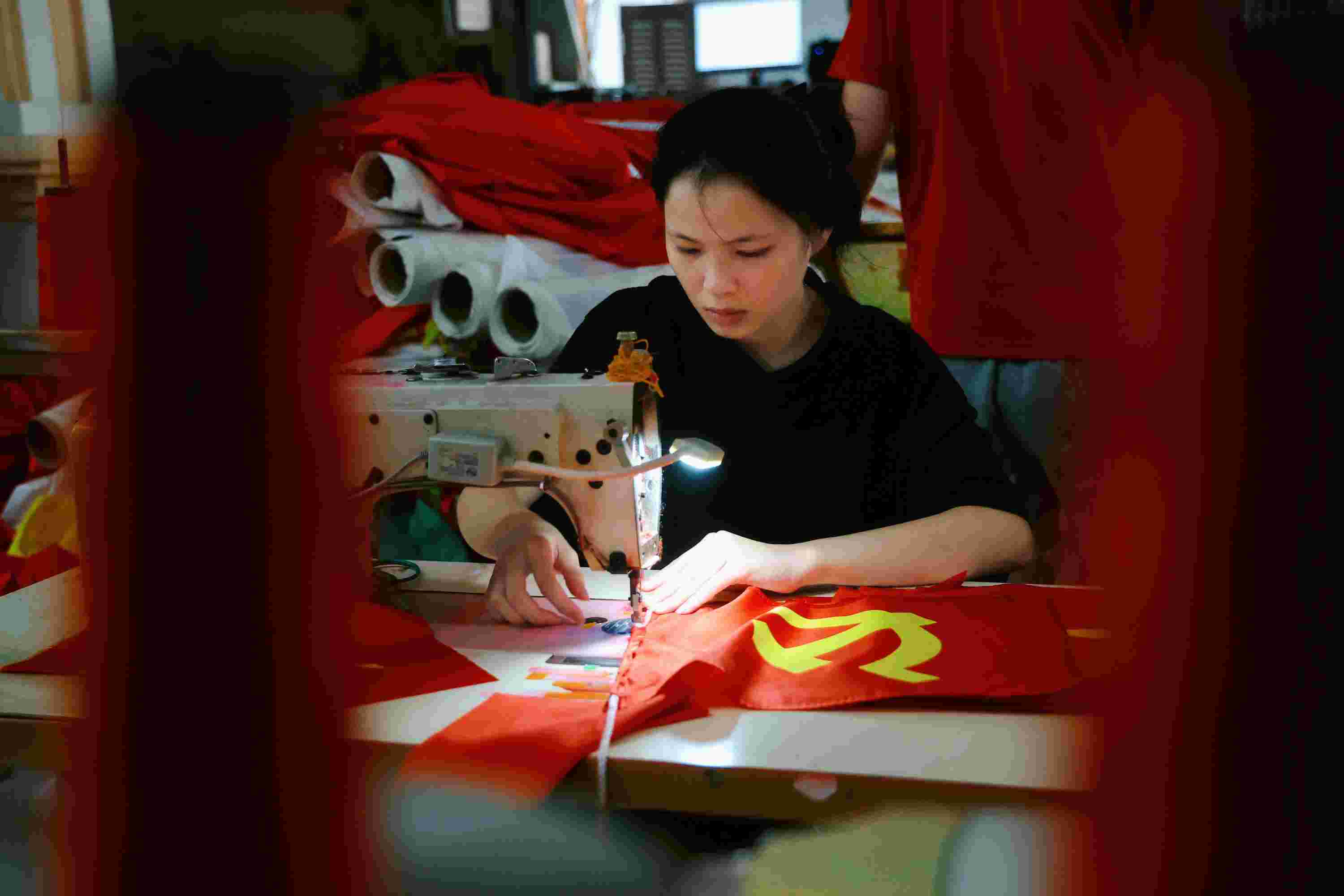
Next to it, the printing area is also no less bustling. Molds with hammer and sickle images and gold stars are accurately placed by craftsmen, sharply printed with bright yellow paint on a deep red fabric background. The burning heat from the drying system does not reduce the excitement of the workers here.
On the contrary, their eyes sparkled with joy when they saw each batch of flags printed correctly, ready for the journey back to the big city.
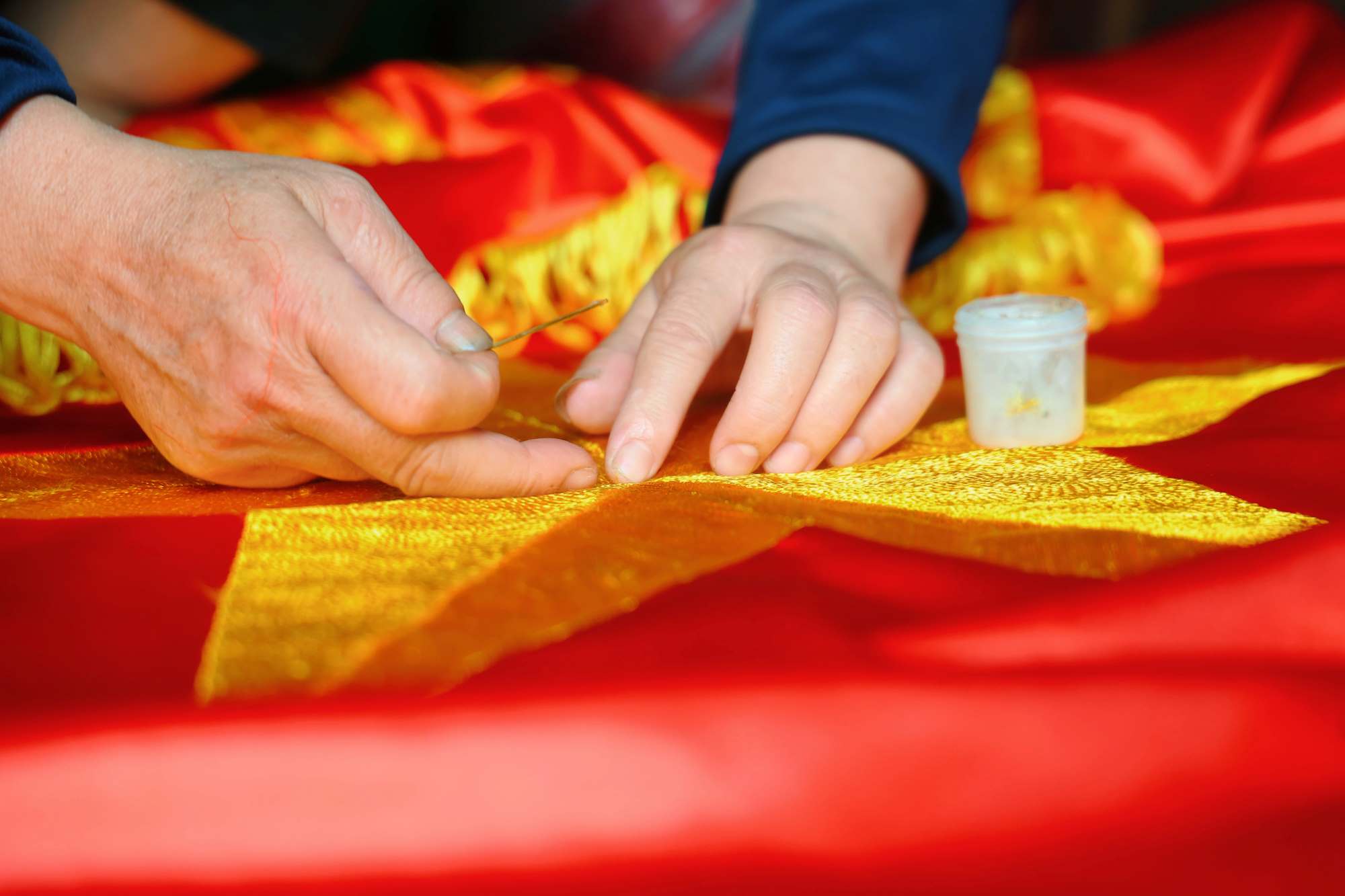
In particular, besides industrial-printed flags, people in Tu Van village still preserve traditional handicraft values through elaborately embroidered flags. Confiding in Ms. Vuong Thi Nhung, a long-time craftswoman, we fully understand the hardship behind each product.
“Unlike printing technology, embroidering a complete star sometimes takes many days, even weeks. The most important thing is the enthusiasm we put into each needle and thread, conveying into it the meticulousness and self-respect of a child of Vietnam.” As soon as she finished speaking, Ms. Nhung's hands quickly moved the needle in the shape of a five-pointed star, without an extra movement, without a deviation.
Leaving Tu Van village, we followed the buses carrying flags towards the center of the Capital. Those flags, which were still on the sewing machine in a peaceful countryside a few hours ago, are now ready to fly all over the streets and corners of Hanoi.
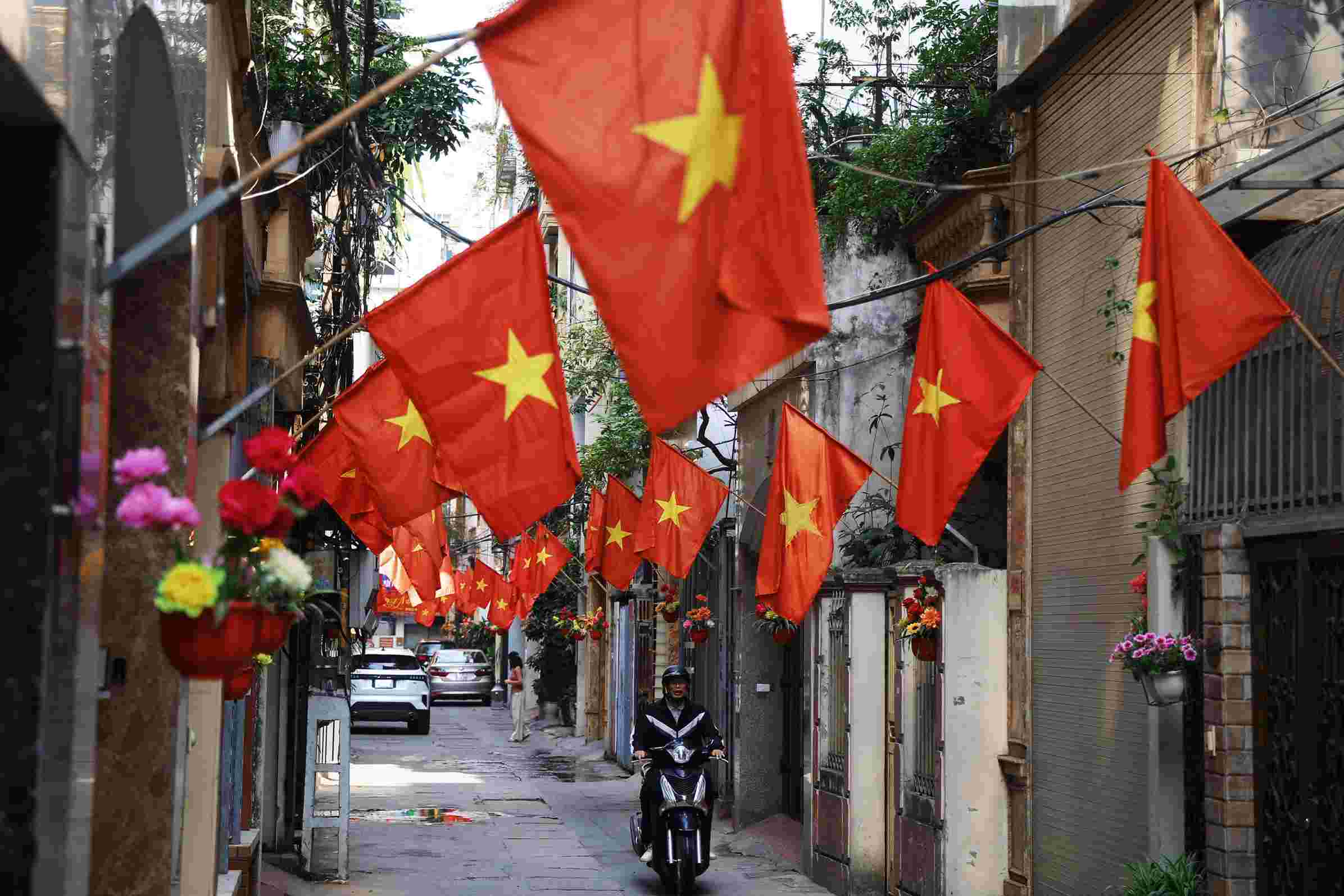
Amidst the green color of April leaves, the red color of the national flag appears brilliantly and solemnly. From the deep alleys to the spacious boulevards, from historical monuments to each doorstep of people's houses, the image of the red flag with a yellow star fluttering has brought a new breath of life.
Taking a moment of silence to admire the flags, we truly empathize with their journey. From the needles and threads of tailors, the flag has carried the soul of a civilized countryside, carrying the sweat and enthusiasm of so many people to become the common pride of an entire nation.
Looking at the excited flows of people walking under the sky of flags and flowers, one can see that each flag is a strong connection between the heroic past and the radiant future. The Vietnamese spirit, therefore, keeps fluttering, persistent and intense, starting from the silent hands in the craft village to proud moments in the heart of the Capital.


