Deploying many policies to support small traders in digital transformation
For about a year now, Ms. Phuong Thi Suong's vegetable stall near Tan Binh market has not only sold goods directly but also received orders via the "go to the pet market" application. Online sales help Ms. Suong have a stable number of orders and a higher income. Despite initial difficulties in updating orders, she has gradually gotten used to it and felt more comfortable. This form helps stalls reach more customers and cannot go to the market, even though they have to pay a discount to the platform.
Mr. Tran Van Dung, a food trader at Binh Tay market, said that he was supported to open an e-wallet account and post QR codes right at the stall. "Customers now have less cash, with QR, they buy immediately. Revenue is also more transparent, said Mr. Dung.
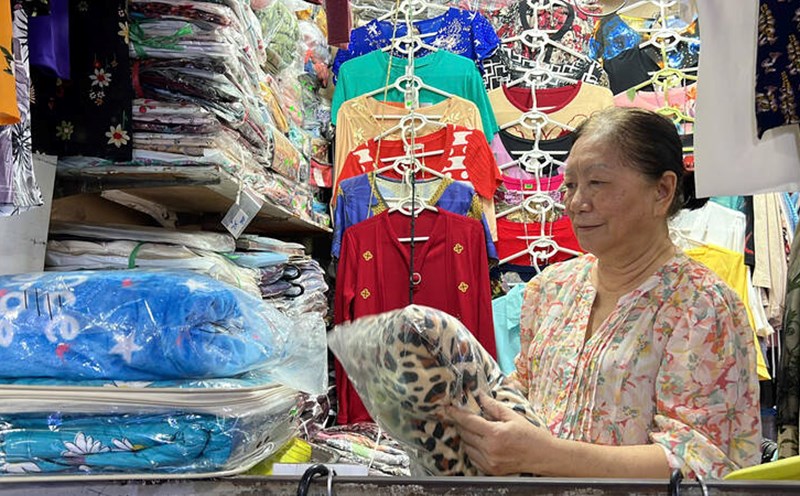
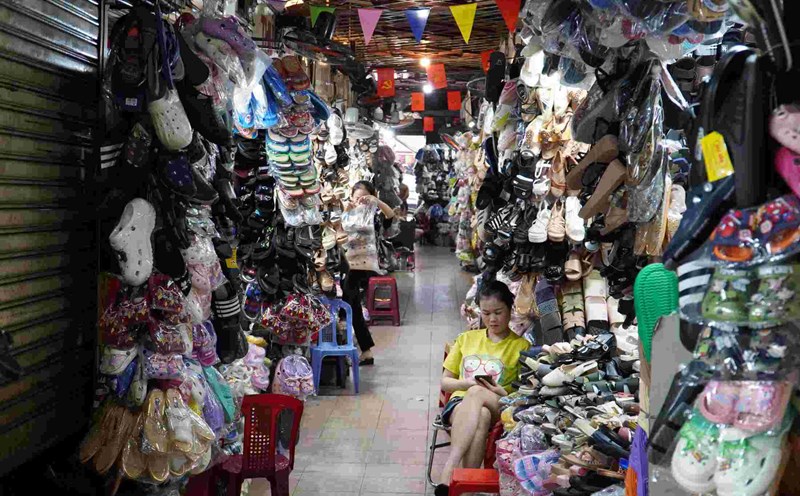
At many traditional markets in Ho Chi Minh City, more and more traders are boldly participating in applications for going to household markets and selling goods via social networks, considering this a supplementary channel to expand output and not replace direct trading.
However, the number of participating traders is still modest, mainly concentrated in young business households, ready to access technology, while many other traders are still reserved due to limitations in digital skills and long-standing trading habits.
Long-term companionship, not just a movement
From the practice of traditional markets, Mr. Nguyen Quoc Duong - Chairman of Binh Tay Ward People's Committee said that the ward identified digital transformation in commercial activities as one of the key directions, in which the "smart market" model is considered a highlight.
Currently, there are two markets in the ward, Binh Tay and Minh Phung; Binh Tay market has gradually implemented non-cash payments and electronic invoices, while encouraging traders to promote and sell on online platforms.
According to Mr. Duong, the market management board not only supports infrastructure but also directly guides traders in communication skills, building product images, thereby helping businesses at the market gradually adapt to the e-commerce model associated with the green consumption trend.
From the perspective of industry management, Mr. Le Huynh Minh Tu - Deputy Director of the Department of Industry and Trade of Ho Chi Minh City commented that digital transformation has, is and will be a key driving force to help businesses improve competitiveness, optimize supply chains and bring better experiences to consumers. Implementing the orientation of Resolution 57-NQ/TW and the National Digital Transformation Program, Ho Chi Minh City aims to have a digital economy accounting for about 40% of GRDP by 2030, in which the trade - service sector, especially retail, plays a leading role.
To realize this goal, the Department of Industry and Trade of Ho Chi Minh City is implementing many synchronous solutions to promote digital transformation in the industry and trade, such as building a digital ecosystem in the trade - distribution sector; connecting businesses, suppliers, distributors, logistics and consumers on the same shared data platform.