
According to the Ministry of Agriculture and Environment, from 2015 to 2025, the added value of the seafood sector has nearly doubled. Seafood export turnover in 2025 reached about 11.3 billion USD, helping Vietnam maintain its position as one of the 3 largest seafood exporting countries in the world, after China and Norway.
In the first 5 months of 2026 alone, despite facing many market difficulties, seafood exports still reached 4.65 billion USD, an increase of 10.6% compared to the same period in 2025. This is a positive sign showing that the production, processing and market adaptation capacity of Vietnamese seafood enterprises continues to be consolidated.
Farming plays a pillar role
In the past 10 years, Vietnam's seafood output has grown steadily. In 2015, total seafood output reached 6.56 million tons, by 2025 it will increase to 9.95 million tons, with an average growth rate of 4.3%/year.
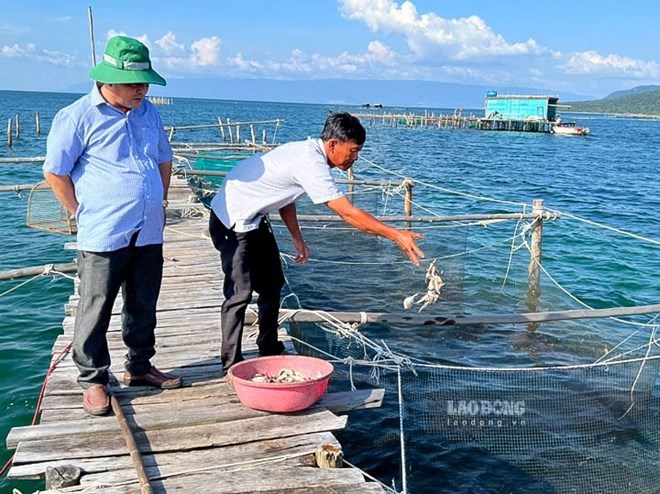
Notably, aquaculture is increasingly playing a key role. In 2025, aquaculture output reached 6.11 million tons, accounting for 61.5% of total aquaculture output. While the farming area did not increase much, maintaining about 1.1-1.2 million hectares, productivity improved sharply thanks to the application of science and technology, high-quality seeds and intensive farming models.
The Mekong Delta continues to be the largest aquaculture region in the country with an output of over 4 million tons, focusing on key industries such as pangasius and brackish water shrimp for export. Pangasius alone reached nearly 2 million tons, accounting for over 50% of the total farmed fish output.
Besides land farming, marine farming is also opening up new growth potential. In 2025, the whole country has about 9.8 million m3 of cages and 59. 200 hectares of mollusk farming. Total marine farming output reached about 859. 200 tons, including sea fish, lobsters, mollusks and other farmed species.
Meanwhile, seafood exploitation output increased more slowly, from about 3.18 million tons in 2015 to 3.83 million tons in 2025.
Exports are wide open despite many pressures
Talking to Lao Dong Newspaper, Mr. Tran Gia Long, Deputy Director of the Planning - Finance Department (Ministry of Agriculture and Environment) said that from now until the end of the year, the seafood industry will continue to face some difficulties such as price competition in the shrimp industry and slow purchasing power in the US and EU. Besides, there are challenges from the market and international technical barriers, in which the removal of the "yellow card" IUU of the European Commission EC is still a major challenge, the requirements for traceability, transparency of fishing vessel information and law enforcement at sea require resources and a very large change in production habits.
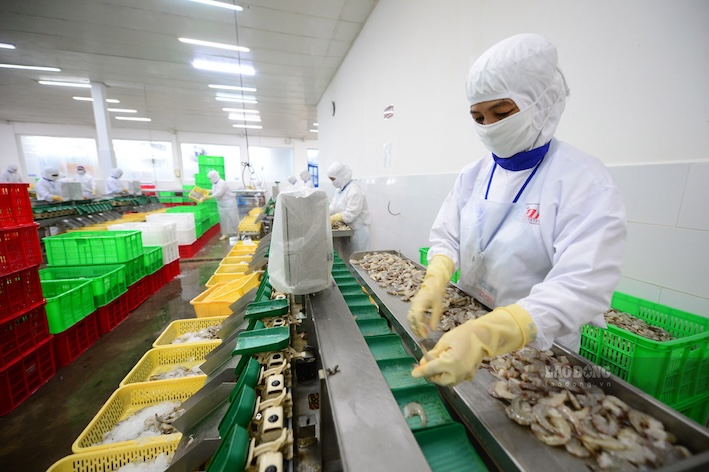
In addition, limitations in infrastructure, logistics, difficulties in management and raw material sources dependent on strong fluctuations according to world prices also reduce the proactiveness of aquaculture farmers. In particular, the impact of climate change has put pressure on farming areas, increasing the risk of diseases that reduce productivity.
However, Mr. Tran Gia Long commented: "Seafood exports still have many growth prospects to achieve the export target of more than 12 billion USD thanks to the positive recovery demand in the Chinese market and the increase in demand for white meat fish thanks to reasonable prices.
Shrimp and pangasius continue to be the two key export items of Vietnamese seafood. In the first 5 months of 2026, shrimp exports reached 1.85 billion USD, up 10.3% over the same period. Pangasius also maintained an important role when in the first 5 months of 2026, pangasius exports reached 830 million USD, up 11.1% over the same period. Currently, Vietnamese seafood products are also present in more than 170 countries and territories.


