According to a report by the Japanese Ministry of Economy, Trade and Industry (METI), the market size reached over 150 billion USD in 2022 and also created an attractive national image.
The shift in awareness and position of a cultural power
The history of the development of the concept of cultural industry has gone through a long journey of cognitive turmoil. The concept of "cultural industry", proposed by Theodor Adorno and Max Horkheimer in the 1940s, initially implied criticism of standardization and cultural commodities under capitalism.
When the term appeared, it faced a strong wave of criticism from scholars and public opinion. The popular view at that time was that cultural industry was a negative expression, seen as the shell of mass-produced factories imposed on spiritual products, or even considered public deception.
However, historical practice proves a completely different direction under the guidance of market rules and profit motives. Through the late 20th and early 21st centuries, the cultural industry has made independent and spectacular progress, overcoming initial prejudices to become one of the important pillars in improving national competitiveness.
Today, creative industries in Japan have become a global phenomenon, playing a role as an important driving force of the economy and a key factor in creating international influence for the Land of the Rising Sun. This rise is not accidental but the result of a delicate combination of long-standing cultural heritage with advanced technology.
Different from the traditional concept that culture is only for display or preservation, the cultural industry in Japan operates thoroughly according to the principle of maximizing the satisfaction of market needs. The nature of this industry covers essential areas related to people's daily life and entertainment, from basic needs such as food, accommodation, clothing to high-class spiritual needs.
Based on the Soft Power Index (Soft Power 30), Japan is continuously ranked high in the group of countries with global cultural influence, where cultural exports not only bring economic benefits but are also an effective soft power diplomacy tool.

The picture of Japanese cultural industries
Japan's creative industrial ecosystem spans many fields, each field contributing to the unique cultural identity and economic strength of this country. Anime and Manga play a core role in the model.
Media Mix (Multimedia Product), creating a premise for an expanded value chain. This country has long become synonymous with animation and comics, possessing a huge number of fans globally.
Symbolic film studios such as Studio Ghibli and great creators such as Hayao Miyazaki have elevated anime to a true art form, far beyond the simple entertainment framework. In parallel with that, Manga with its diversity of genres continues to maintain its position as the core foundation of the Japanese publishing industry, providing an endless source of materials for film and television adaptations.
Besides the animation field, the video game industry is also a solid pillar affirming Japan's position. Considered the homeland of industry giants such as Nintendo, Sony and Sega, Japan has shaped the global game landscape.
Famous franchises such as Super Mario, Final Fantasy or Pokemon have not only dominated the world market for decades but have also become part of the cultural memory of many generations.
According to international studies, while global cultural industries are strongly influenced by products from the United States or the West, Japan's dominance in the video game, animation and comic market is considered a rare exception.
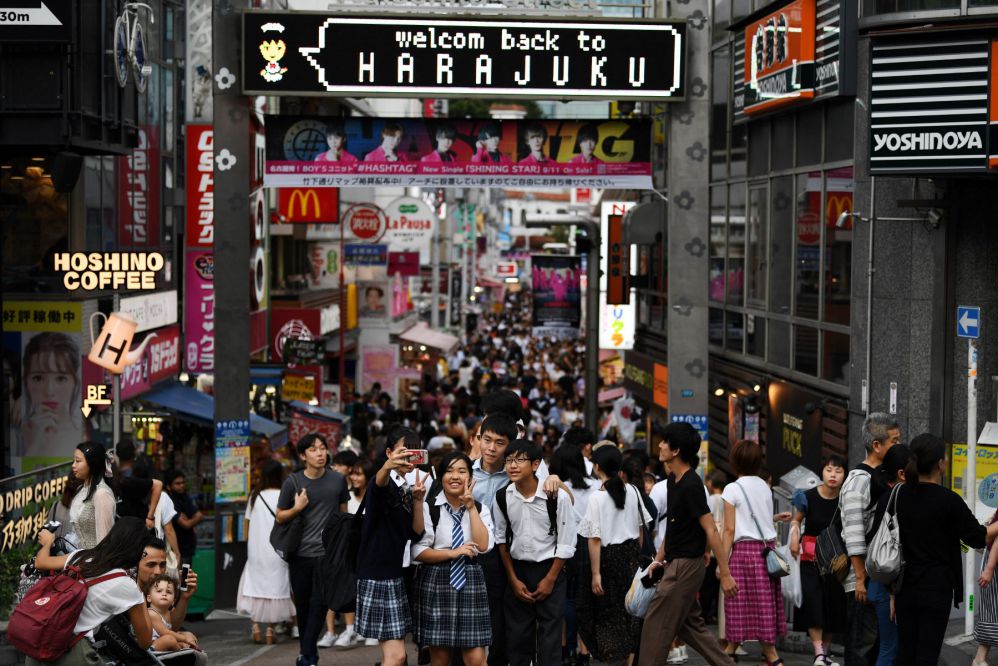
Not only limited to the virtual world, Japan's creativity is also strongly expressed through the fields of fashion and architecture. Harajuku district of Tokyo has long been famous as a sanctuary of multi-style street fashion, where all limits on clothing are broken. On high-end catwalks, legendary designers such as Yohji Yamamoto, Rei Kawakubo and Issey Miyake have made Japan a center of high-end fashion.
Events such as Tokyo Fashion Week are constantly the shining place of new talents, affirming the sustainable vitality of the country's fashion industry. In the field of architecture and design, Japan is admired by the world for its ability to blend minimalism and innovation. Architects such as Tadao Ando, Kengo Kuma are vivid proof of the intersection of tradition and modernity. In addition, Japanese industrial design, from electronics to automobiles, also has a widespread global influence thanks to its sophisticated design philosophy and superior performance.
Japan's film and television sector also possesses a long history and remarkable achievements. From Akira Kurosawa's classic works to modern films that have made a great splash such as "Your Name - Kimi no Na wa", Japanese cinema always shows an emotional storytelling tradition. This country is also excellent in producing high-quality television series and reality shows, attracting the attention of international audiences.
At the same time, Japanese music with genres from J-pop, traditional music to experimental music has also found a foothold in the world market. Artists such as Hikaru Utada or the band Babymetal have achieved resounding international successes, while traditional instruments such as koto (traditional zither) and shamisen (three-string musical instruments) are still preserved to preserve cultural heritage. Japan's tourism promotion strategy has effectively utilized the attraction from popular culture, promoting the form of pilgrimage tourism (seichijunrei) to locations appearing in anime/manga.
Economic momentum and role in the macro picture
Statistical figures over the years paint a panoramic picture of the economic strength of Japan's cultural industry. This industry has long become an important economic sector, contributing a large source of income to gross domestic product. According to a report by the United Nations Conference on Trade and Development (UNCTAD), Japan regularly ranks in the top 10 leading exporters of creative goods in the world. In particular, in 2022, the value of the content industry alone exceeded 150 billion USD, mainly driven by the export of anime, games and fashion. The Japanese government identifies creative industries as key growth sectors and actively promotes them through strategic initiatives.
To better understand the importance of this industry, it is necessary to place it in the overall context of the Japanese economy. After an impressive growth period in 3 decades after the war, the Japanese economy experienced a significant slowdown in the 1990s due to the consequences of the asset bubble. However, since 2013, Japan has witnessed a recovery thanks to the "Three arrows" economic recovery program of late Prime Minister Shinzo Abe, also known as Abenomics, including monetary easing, flexible fiscal policy and structural reform. In the context of Japan's scarcity of natural resources and heavily dependence on energy imports, shifting to a creative economy based on intelligence and culture is a strategic and vital step.
A particularly important aspect that makes up the superiority of the Japanese cultural industry is indirect economic efficiency, also known as spillover effect. The value that this industry brings is not only in direct revenue but also in stimulating demand for related industries. The most typical example is the Pokemon phenomenon.
Revenue from animated films and related products in the global market has reached huge figures, leading to the development of a series of accompanying services from toys, fashion to tourism. Japan's specific Production Committee mechanism allows publishers, television stations and toy companies to share risks and optimize intellectual property rights.
Support policies and cultural diplomacy strategies
The success of the Japanese cultural industry cannot be without the constructive hands of the Government. The Japanese State actively supports creative industries through specific policies and funding sources. The most prominent is the "Cool Japan" Initiative, aimed at promoting Japanese culture abroad, focusing on anime, fashion, cuisine and tourism.
This strategy is not simply trade promotion but also cultural diplomacy efforts, using creative industries as soft power tools to promote international cooperation and exchange. In addition, the "Creative Tokyo" project is being implemented to support startups and promote innovation in the creative field in the capital.
In the context of the administration of former Prime Minister Shinzo Abe seeking to open up the economy to compete more with foreign countries and create new export opportunities, Japan has actively participated in trade agreements such as: the Comprehensive and Progressive Agreement for Trans-Pacific Partnership (CPTPP) and the Economic Partnership Agreement with the European Union. Market expansion through these agreements creates favorable conditions for Japanese cultural products to penetrate deeper into international markets, while forcing domestic businesses to constantly innovate to maintain competitiveness.
Lessons learned for Vietnam
Looking at Japan's success, Vietnam can draw valuable lessons to shape its own cultural industry development strategy. The first lesson is the change in awareness and determination of strategic focus. Vietnam needs to clearly recognize the position and role of the cultural industry for the country's development in the 21st century. Experience from Japan shows that identifying key areas such as the digital content industry (game, animation) is extremely important.
We need to recognize the constructive role of the Government as a key factor. Vietnam needs to quickly complete the policy system and legal framework, learn from the "Cool Japan" or "Creative Tokyo" models to build specific support programs for startups in the cultural field.
The government needs to have incentive tax policies, strictly protect intellectual property rights and create favorable conditions for Vietnamese cultural products to reach out to the world. Participation in free trade agreements also needs to be utilized to expand the market for cultural products.
Lessons from Japanese architecture and fashion show that the greatest attraction comes from renewing traditional values with modern thinking. Vietnam possesses a rich treasure of folk culture, which is a valuable source of raw materials for developing cultural tourism and digital content products imbued with national identity but still suitable for global tastes.
Vietnam's challenge is not in the shortage of labor like Japan, but in the shortage of human resources with in-depth skills meeting international standards. There needs to be a methodical training strategy, combining creative skills and the ability to use new technologies such as AI and VR to prepare for a high-quality cultural labor generation, ready to compete in the digital age.
With the strong support of the Government, talented human resources and commitment to quality, Japan has been and continues to be a global leader in the creative economy. For Vietnam, this path, although challenging, with correct orientation and serious learning, we can completely expect a breakthrough in the country's cultural industry.
It's a bit of a bit of a bit of a bit of a bit of a bit.
It's a bit of a bit of a bit of a bit of a bit of a bit.
It's a bit of a bit of a bit of a bit of a bit of a bit.