Standing behind that proud "rebirth" is Nguyen Viet Bac (stage name Nam Chi), a young man born in 1996 with a burning passion for heritage. Through the project named "Thong Dong", Viet Bac has proven that old values are not lost, but on the contrary, they are finding a new, brilliant and artistic life in the heart of contemporary society.
Reviving heritage from shattered documents
The predestined relationship leading Viet Bac to the image of the horse began from a meaningful coincidence when the project was launched right in the Year of the Horse. Among countless mascot symbols of Vietnam, he decided to choose the horse as the opening image because this is an animal that carries many precious qualities such as flexibility, agility and a very unique "relaxation".
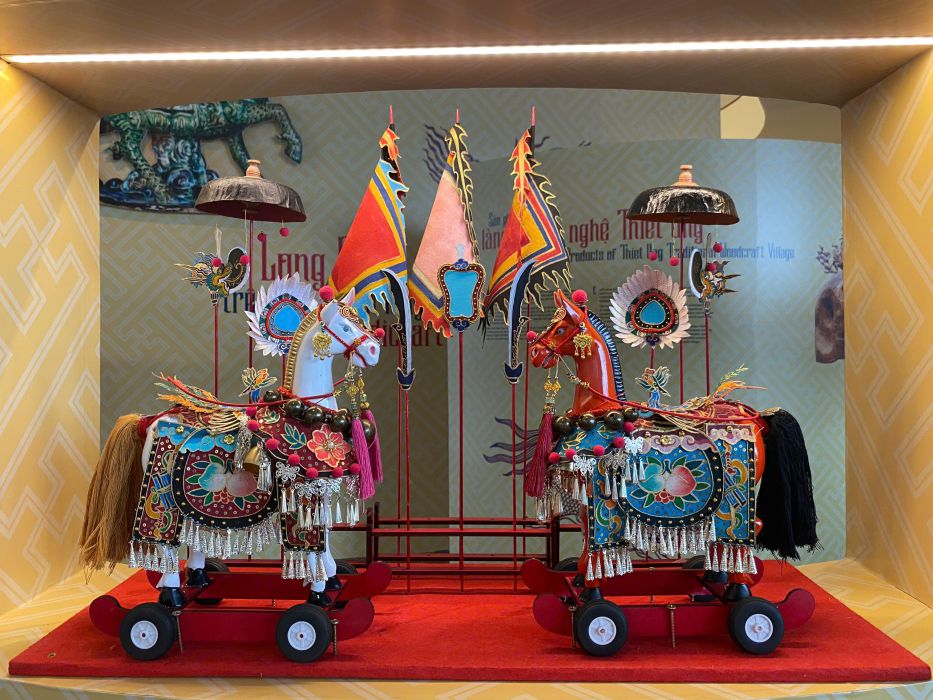
Viet Bac confided: "Our goal is to restore, but it must be renewed. These products are not only for the purpose of children's toys anymore, but they will be artistic and decorative products in modern houses.
However, the journey to find the appearance of the ancient pulling horses is not smooth. The biggest difficulty for Viet Bac and his colleagues is the scarcity of materials. He had to spend a lot of time collecting and summarizing old photos of toy stalls during the French colonial period, sometimes just faint photos.
The difficulty with materials to simulate those shapes is very great. We had to search for a long time to summarize about ten photos of the booths and images of this toy from the past" - Viet Bac expressed.
The shaping process is also a difficult problem between preservation and innovation. In 3D sculpture, Vietnamese horses are recreated with strong, solid blocks but still retain their flexibility. Vietnamese horses have very unique characteristics that are difficult to recognize if you do not observe carefully.
The special thing is that Vietnamese horses often have very graceful smile grooves, and their ears are straight and outstretched. The front legs are often shaped in a stylized style, bearing a unique characteristic that only Vietnamese horses have" - the young man said.
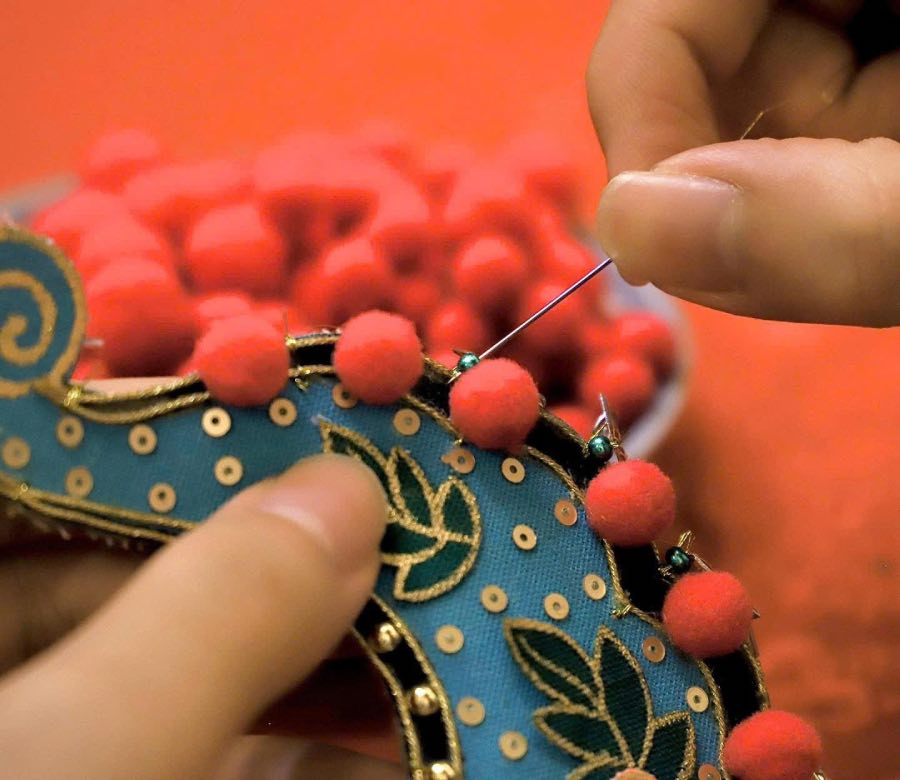
Besides aesthetics, the material is also strongly improved by him. Instead of using western iron or foil, which is easily damaged or has low durability, Bac switched to using high-quality wood and plastic. He explained about this change: "When learning, ancient people often made it from western iron or foil covered with paint. However, in modern times, using western iron can cause scratches or injuries. Therefore, we choose wood and plastic to have high durability, safety for users, and when applying layers of paint, it further protects the material. It is a combination of traditional values and modern elements.
Even small technical details such as the carriage axle, after many tests with stiff bamboo, have been replaced by iron axles combined with rubber wheels to ensure that the horse can move smoothly and smoothly on all surfaces.
To let the source of culture flow forever
Each product in Viet Bac's collection is not simply a decoration but a cultural story told in the language of young people. That is the "Tien Si Horse" set (Vinh Quy Bai To) with the image of a horse and 4 umbrellas, sending wishes for academic success and fame from our ancestors to future generations. Or "Xe Long Ma" - a massive model recreating the image of Saint Giong's iron horse with full of tails, canopies, umbrellas, flags and fans, carrying the heroic atmosphere of the Phu Dong Temple Festival.
The greatest reward for Viet Bac's hard work is the feeling of happiness when seeing his horses appear in museum exhibition spaces, or proudly lying on the decorative tables of many young families. That is how he spreads traditional values, so that society understands more about the way of life, the way of thinking and even a long-standing civilization of his ancestors.
Through this, young people can proudly see that Vietnamese people are not only gentle but also extremely intelligent and artistic. The change in the awareness of young audiences is the most proud achievement after the days of "redrawing" his heritage.
For young people who are also nurturing the project of rebuilding national culture, Viet Bac's journey is a strong message of perseverance and belief. He believes that using technology or digitization does not lose core values.
Many people are afraid that technology will lose the essence of handicrafts, but for me, applying digital tools is the shortest and most effective way to bring heritage to young people around the globe. If we do not start doing it for hobby and passion, we will never fully feel the beauty and profound meaning that the ancients entrusted," Viet Bac confided.