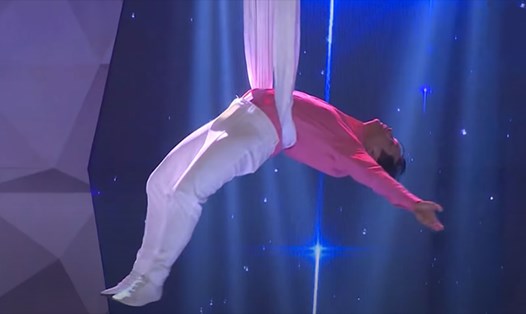
Visiting the Vietnam Circus Federation on a hot summer noon, stepping into the practice room, people can somewhat feel the hardships behind the velvet curtains. The acrobatics, supports, and hanging on high movements are repeated countless times. Sweat soaking, bruises clearly visible on the body - all are the price of accuracy and perfection that the audience only sees in a few short minutes on stage.
A working day for circus artists starts from familiar warm-up movements, then switches to in-depth techniques. Each person has a performance, a form of body, but the common point is a dense training schedule: morning physical training, afternoon rehearsal, evening performance. In peak seasons, a week can perform 4-5 programs, almost no proper break.
Profession chooses people - and also soon leaves people
Few people imagine that to be able to stand on stage for a few minutes, a circus artist must go through at least 5 years of training at school, and then many years of professional training at the unit.
According to NS Phung Dac Nhan - Deputy Director of the Vietnam Circus Federation, cum performer, the current source of enrollment is mainly from the Vietnam Circus and Variety Arts Secondary School, but it is becoming more and more difficult. Partly due to the dangerous nature of the profession, and partly because of unstable income, many families do not want to send their children to school.
Even after being admitted, the training journey is still full of hardship. "A course of more than ten people, when graduating, there may only be a few people left," he said. But that's not all - after graduating, many people turn around because they do not have enough conditions to pursue the profession for a long time. This reality of shortage of force makes even the leadership team of the federation have to regularly go on stage to maintain performance activities.
Not only pressure from the training and performance process, inadequacies in protection and insurance regimes also make the path to attachment to the profession more precarious.
Artist Bui Hai Quan - Deputy Head of the Circus and Variety Art Troupe said that currently the regulations on insurance and protective equipment in the Circus industry are still not different from other professions, although the nature of the work contains many risks. According to him, with a specific profession like circus, there should be a separate insurance regime and higher labor protection standards, instead of applying them generally according to regulations for all labor fields as at present.
In the opposite direction, the career age of circus artists is very short. With dangerous performances such as acrobatics, ziplining or flexibility, the peak performance time may only last a few years. After that, the body no longer meets the intensity of movement, forcing them to switch to other roles or leave the stage.
Injury and decision to stay
In his story about his profession, artist Phung Dac Nhan mentioned an accident that he considered a turning point.
In the late 1990s, when he had just graduated and was at his prime, he suffered a serious injury during an acrobatics training session. A wrong landing caused severe knee damage, requiring a cast and a long day off. His family advised him to quit his job. At the age of 22, returning to lecture halls and starting another path seemed to be a safer option. And he himself at that time also thought about stopping.
But what kept him here were not great reasons. It was a very specific action: The troupe leader at that time - People's Artist Ta Duy Anh - personally came to his house to visit and encourage him. "I think, I haven't done much but you still care so much, if I give up, it would be a pity," he recalled.
When he recovered, he returned to the training ground. That decision lasted for more than 30 years of attachment to circus.
In that 3-decade journey, many times the audience themselves have become a source of motivation to help artists maintain the fire of their profession.
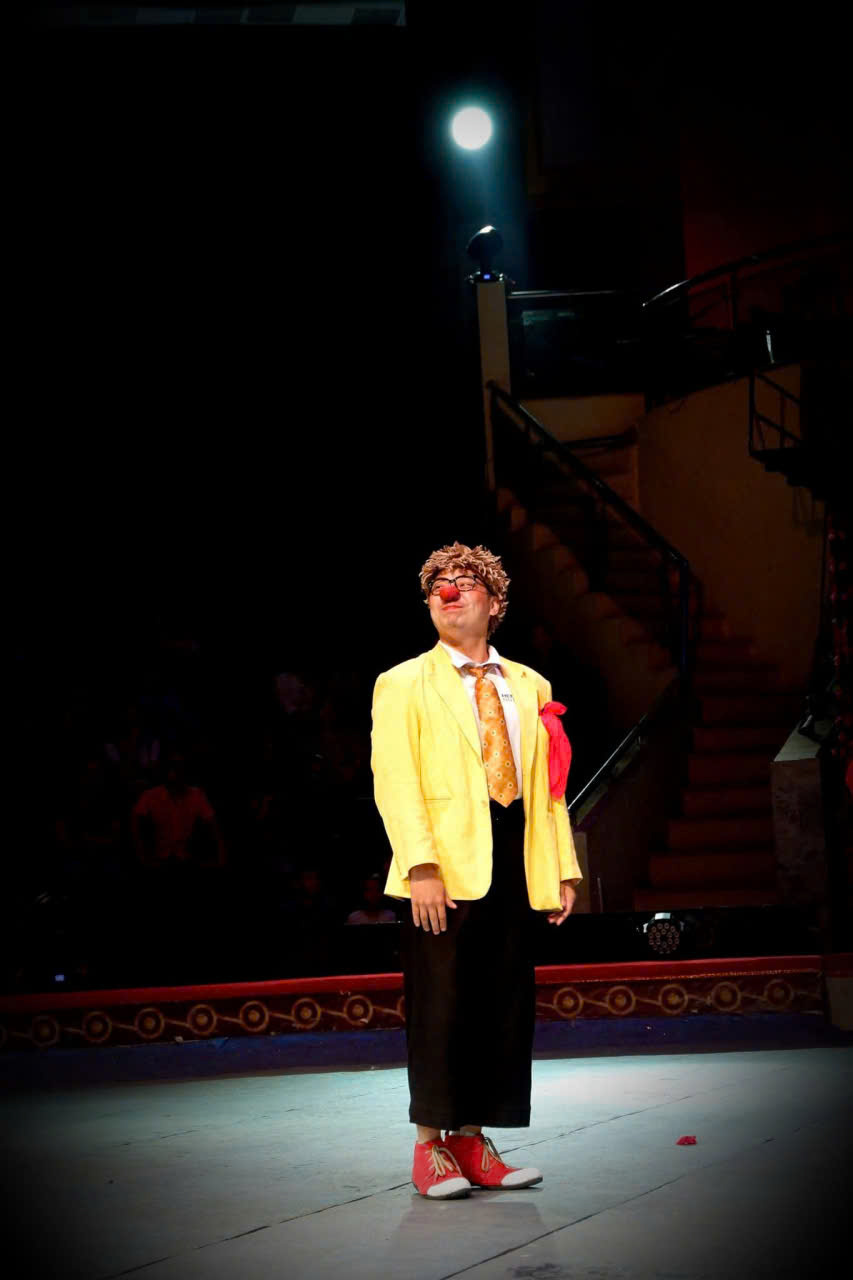
One of the most memorable memories of NS Phung Dac Nhan is during his tour in France. A few days after a performance, when he and his colleagues returned to their residence, security guards reported that two audience members came to see him - an old woman and a French granddaughter. It turned out that the little girl had watched the performance and especially loved the two Vietnamese comedians. She personally drew two portraits and asked her to take them to find them to hand over.
The child stood waiting in front of the door, giving me the painting. At that time, I was really touched," he recounted. The innocent strokes but a sincere recognition - something that no remuneration can replace.
Not only abroad, those feelings are also present in the country, sometimes very simple: a round of applause that lasts longer than usual, a compliment after the performance, or the attentive eyes of young audiences. It is these seemingly small things that become the fulcrum for artists to continue, even when there are still many hardships ahead.
New hopes
If the audience's feelings are the enduring spiritual support, then new policies are the necessary material foundation for them to be assured of long-term dedication. The meeting between these two factors not only helps artists overcome immediate difficulties, but also opens up hope for a more sustainable and humane cultural environment in the future.
In which, the draft Resolution of the National Assembly on a number of breakthrough mechanisms and policies to develop Vietnamese culture is considered a positive signal. Proposals such as increasing professional preferential allowances, increasing training and performance allowances, or mechanisms to attract talent are expected to substantially improve the lives of artists.
People's Artist Tong Toan Thang - Director of the Vietnam Circus Federation - said that this is an opportunity for the Circus industry and other forms of performing arts to break through. According to him, improving treatment not only helps stabilize life but also creates motivation for artists to stick with the profession for a long time.
However, the problem of the Circus industry still needs a more comprehensive solution. Degraded facilities, unsynchronized equipment, and limited investment are persistent problems. Meanwhile, the private sector with strong resources is attracting many talented artists, making the risk of "brain drain" increasingly clear.
To retain talent, according to artists, it is not only necessary to increase income but also to improve the working environment, invest methodically in the theater and build a long-term development strategy.
Circus is a profession of risk, discipline and limits being challenged every day. Each performance on stage is not just a performance - it is the result of many years of accumulation and many times of silent exchange.
As policies gradually improve and internal efforts continue to be maintained, Vietnamese circus can expect a more stable journey. But before talking about major development steps, what is still necessary is to ensure that artists can live with their profession - sustainably and worthily.