
Worry about the craft village fading away
When mentioning horn crafts, many people often think of craft villages that have been "tourismized" associated with a stable consumption chain. Few people know that, besides that, there is still Do Hai - a craft village over a hundred years old, formed and nurtured from the very ordinary needs of rural residents.
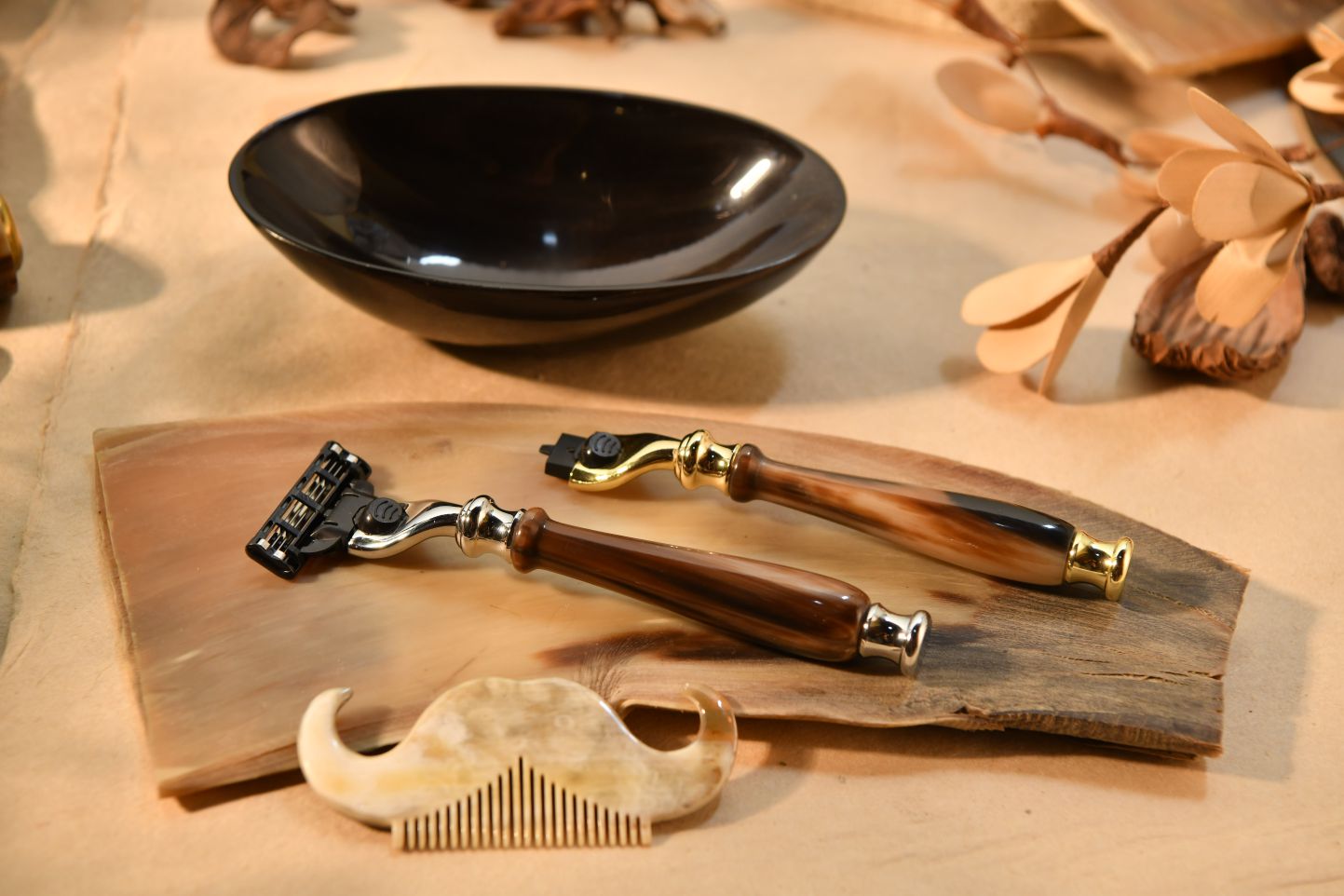
In the past, buffalo horns were closely associated with the life of Vietnamese people. From simple items such as horse whips, hats, hair combs, scarves, spoons, tea boxes..., the Do Hai craftsman patiently grinded and "inspired" rough ingredients to create durable, rustic products, present in the kitchen, on the tea table of many generations.
According to the elderly artisans, the horn craft in Do Hai was taught by the craft ancestor Nguyen Van Tan. Through many generations, the craft is not only a livelihood but also a part of the village's cultural memory. However, Do Hai today has a quiet appearance. Small workshops interspersed in residential areas, the craft is mainly maintained during peak season, each household has a corner of work, everyone does their own thing.
That sparseness not only reflects the production rhythm but also a faint worry about the risk of fading away. Young workers are gradually becoming scarce, the market is shrinking while artisans who have been attached to buffalo horns for a lifetime are getting older. The greatest value of the craft village lies not only in the products, but also in the profession itself and those who preserve the profession. Because when the profession disappears, the secrets or knowledge passed down through many generations will also permanently disappear.
Young people accompanying craft villages
Nguyen Le Huong Huyen (born in 1996) came to Do Hai craft village from a very personal remorse. The first time she touched handmade horn products, she frankly admitted that she had seen them as monotonous, difficult to touch the aesthetic taste of young people familiar with urban life.
But the longer she stayed, the more she worked with the artisans, that view gradually changed. In each horn fiber, Huyen realized the rustic, personality and unique beauty. That is something that industrial production cannot copy. Each product is the result of dozens of stages of time, patience and tireless hands of the craftsman.
For Huyen, accompanying the craft village is not "working for" artisans but finding ways for the profession to step into modern life on its own. She and artisans experiment with new directions: Combining buffalo horns with lace, silver, copper; designing products with high applicability such as bracelets, necklaces, bracelets, jewelry accessories...
When there is a suitable approach, craft village products can completely reach the contemporary public" - Huyen said.
That road is not flat at all. The generation gap, differences in market thinking and rhythm of life create no shortage of stumbles. Young people are used to speed, used to plans. Artisans believe in slowness and meticulousness.
Huong Huyen shared: "To make a quality and soulful product, we cannot rush. That patience will be the biggest lesson learned from the old workers.
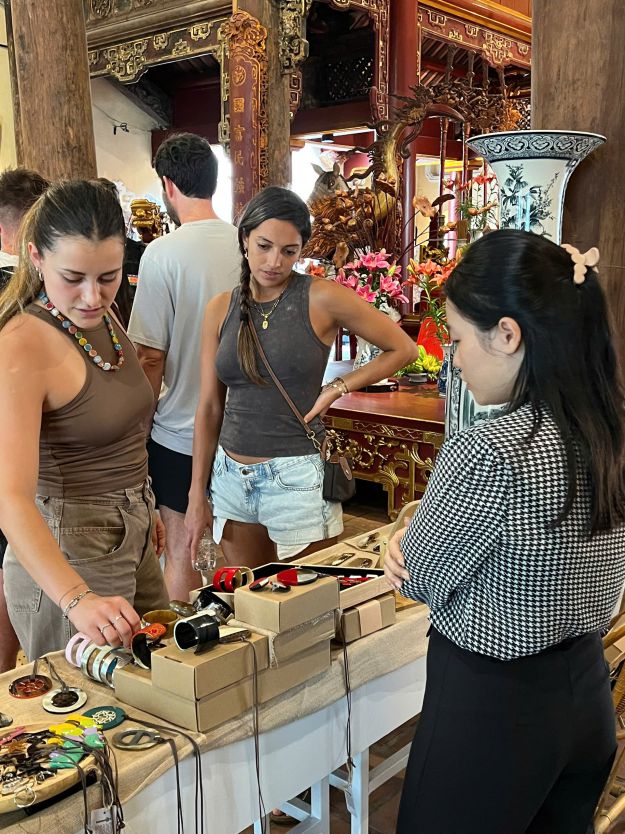
Not stopping at the domestic market, Huyen also brought Do Hai horn products to international friends. What surprised her was the respectful reception from foreign tourists. They not only bought a handicraft but were also eager to learn about the craft village story, the origin of ingredients and especially how Vietnamese artisans transformed rudimentary buffalo horns into delicate products.
According to the young girl, the most fragile boundary when renewing traditional products is to maintain "village quality". Creativity is necessary but must not go against professional ethics and core cultural values.
Artisans always remind me of that, so that each product, no matter how modern, still does not lose its essence," Huyen confided.
Huyen's dream is simple: It is to spread the story of the craft village to Vietnamese youth and further to international friends. For her, when working in the profession with sincerity and sincerity, the effect of spreading will come.
In the silence of Do Hai, young people like Huyen are silently extending the lifeline of the craft village not only with products but with the belief that traditional culture, if cherished and told correctly, still has a sustainable foothold in today's life.
It's a bit of a bit of a bit of a bit of a bit of a bit.
It's a bit of a bit of a bit of a bit of a bit of a bit.


