
Reviving the hundred-year-old craft village
The knitting village in Thuan Hoa commune (Can Tho city) was formerly Phu Tan commune (Chau Thanh district, Soc Trang province) and has existed for more than a hundred years, and has been the main livelihood of many generations. But when plastic items took the throne, traditional crafts gradually fading away. Many households have given up their jobs, many artisans have almost given up the bamboo and bamboo fibers that they have been attached to all their lives.
However, with the perseverance, aspiration and love for the profession of Khmer women, that craft village is reviving strongly, becoming a sustainable livelihood model and a unique cultural highlight.
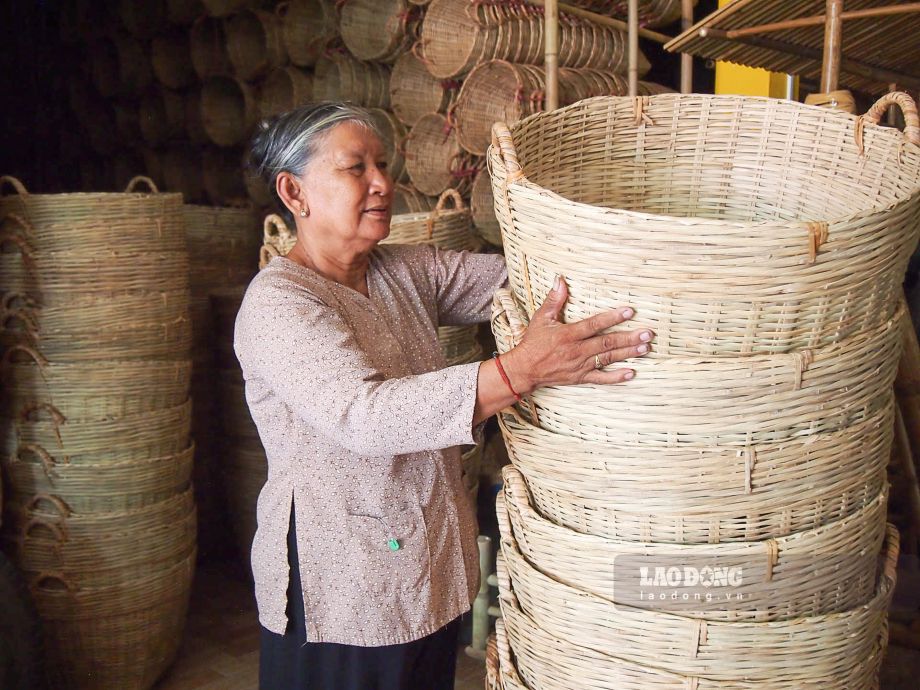
In Phuoc Quoi hamlet, Ms. Lam Thi phen, who has been weaving for more than 50 years, still regularly maintains the old way. Every month, she weaves about 25 pairs of scraps, baskets, and nia. Her hands are rolling, mastering each operation. The products are sold for 150,000 VND/pair, after deducting expenses, she earns from 2.5 - 3 million VND per month. That number is not large but it is a stable source of income.
Ms. Phien said that before, every time she finished weaving and needed to tear it, she had to rent a car to take it to the market dozens of kilometers away from the restaurant to sell. If I go for a walk, I can only sell a few units a day, the rest I have to take home, gradually sell and then continue. Her income is very unstable, so she often thinks about quitting her job. In the past 4 years, when the locality established a cooperative and linked businesses to set up warehouses to buy right in the commune, her life changed completely. "Working with peace of mind is a great joy, not afraid of stagnation, not worrying about being forced to pay like before," Ms. phen said excitedly.
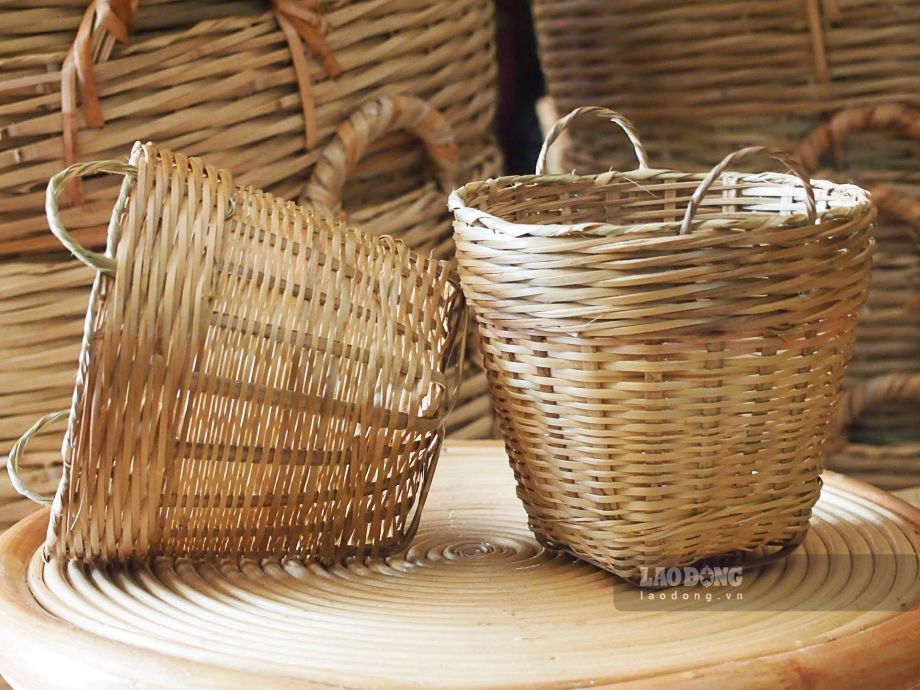
Thanks to the consumption linkage, Ms. Tran Thi Phien, another household in Thuan Hoa commune, has a stable source of income. In addition to traditional splints, she was also instructed by the cooperative to make mini products such as baskets and nia, which need to be splints to serve tourism. Every day, she weaves about 6 small products, earning more than 100,000 VND after deducting expenses.
"Sometimes my family plans to quit the job because of competition with plastic items. But since being able to buy products, income has become more stable. Some types of large peeled needles from 40 - 50cm are sold for 100,000 - 150,000 VND/pair, small products for 30,000 VND/piece. This job is suitable for women and the elderly, who work while taking care of their grandchildren and still have income, said Ms. Phien.
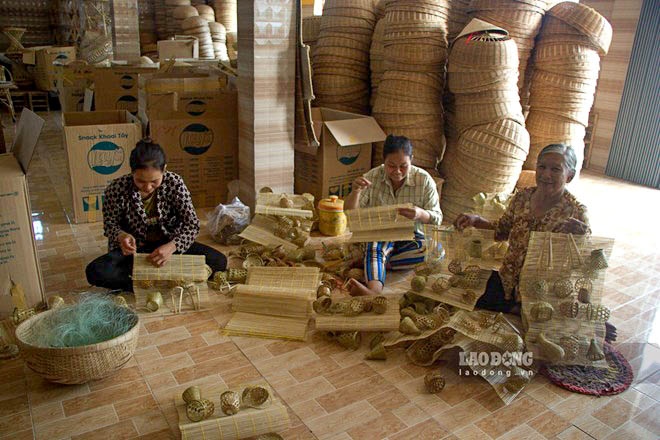
Ms. Truong Thi Bach Thuy - Director of Thuy Tuyet Knitting Cooperative, who contributed to bringing Phu Tan knitching village back to its heyday - said that she was born into a family with a knitching profession in Bac Lieu (now Ca Mau province). As a child, after school, she sat and knitted each bamboo basket to sell at the market. In high school, she studied further handicrafts and then boldly opened a bamboo product business when she was only 17 years old.
However, market fluctuations made manual products unable to compete with cheap plastic products, so she had to leave the craft village and switch to doing business in many other fields. Life is more stable but my heart is always lost in the family profession. "Every time I remember the sound of the swerving sound, I remember the smell of bamboo, I remember the weaving scene. "I don't do it but I never forget it," Ms. Thuy confided.
The opportunity to return when the green consumer trend arises, bamboo products are popular again. Grasping the trend, Ms. Thuy returned to her maternal hometown in Phu Tan, founding a cooperative with the goal of restoring craft villages and creating sustainable livelihoods for Khmer women.
"The weaving village here is gradually fading away, while the local materials and human resources are very rich. I always think, why don't I take advantage of the available resources to restore the traditional craft village that has existed for many generations," Ms. Thuy expressed.
Sustainable livelihood
Thanks to understanding the market and knowing how to be creative, Ms. Thuy oriented her colleagues to make products that meet new needs: food containers, decorations, souvenirs, gift baskets, display trays. sophisticated, modern designs that still preserve the traditional bamboo soul have helped the cooperative soon receive many domestic and foreign orders. Currently, the cooperative has more than 700 products consumed domestically and exported.
From a small facility, Thuy Tuyet Rattan Cooperative quickly attracted over 30 members and over 60 women in the surrounding area. Thanks to organizing production systematically and orienting market demand correctly, the cooperative helps many households in the past to "eat today's meals, worry about tomorrow's meals" now have accumulated, escaped poverty, and do not have to leave their hometowns to make a living. People have an average income of 4 - 5 million VND/month, an income that few people thought the weaving profession could bring.
Ms. Thuy said that the cooperative operates according to the principle of transparency, putting the interests of workers first. Those in need of advance payment are willing to support and gradually deduct with products. Many times when people were stuck in capital to buy raw materials, she even borrowed from the bank to lend without interest.
The cooperative also organizes free vocational training for young people and women in difficult circumstances. Not only learning weaving skills, students are also taken on tours, training on finance, information technology, connecting to the market to expand their thinking, confidently choosing their own path. "We have to take care of the people to keep the profession," said Ms. Thuy.
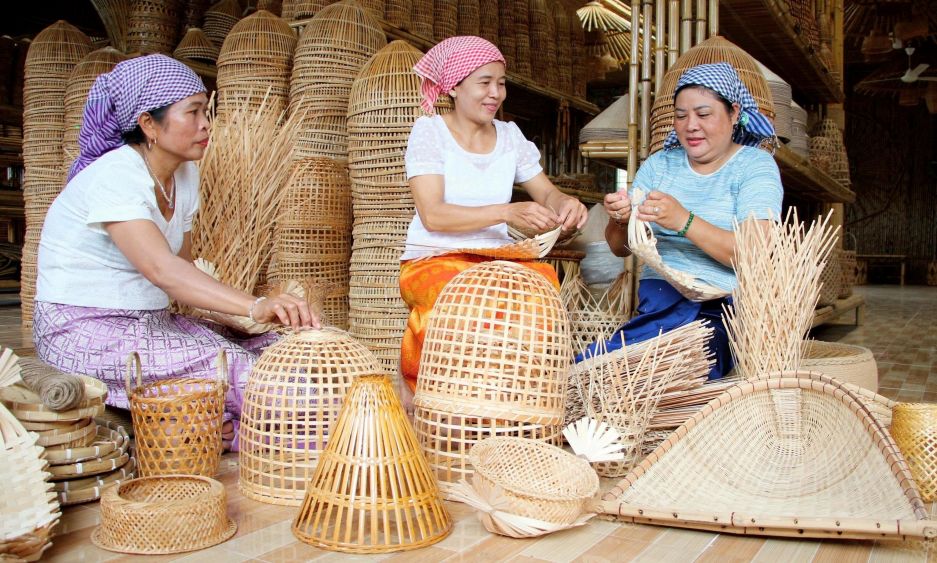
Ms. Thach Thi Huong shared: I learned the profession from my parents since I was a child, later my parents passed away, but I still kept the profession as a way to preserve family memories. Since the cooperative was established, everything has been much more favorable, with available raw materials, stable output, and no longer having to run around like before".
Ms. Truong Thi Hong, who followed her husband to live in Thuan Hoa commune, said that her mother-in-law passed on the weaving profession to her. After hours of working in the fields, the couple sat together weaving each basket and nia. "Since the cooperative was established, I have been much less worried. Just receive the materials to do at home and hand them over to the cooperative to have a steady income," said Ms. Hong.
Reviving Khmer culture
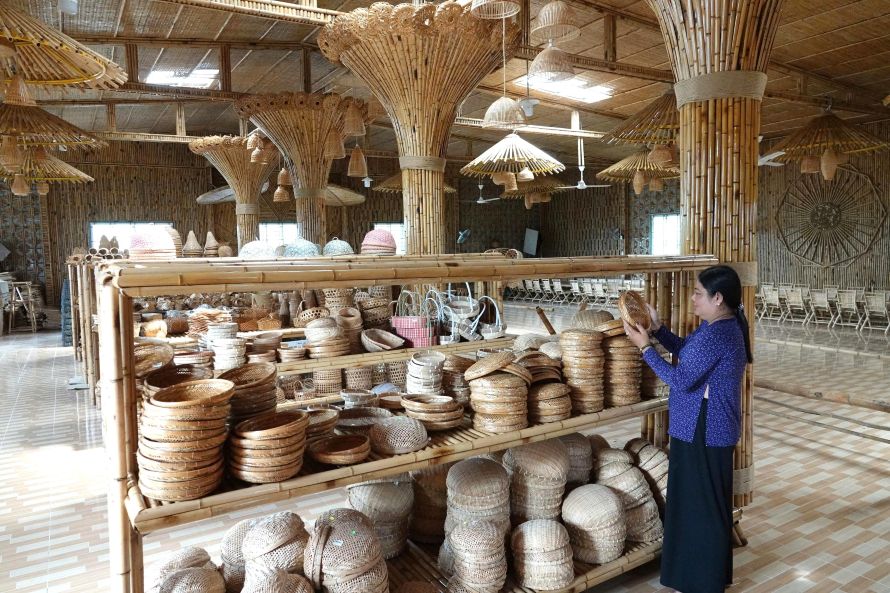
Not stopping at production, Ms. Thuy also hopes to elevate the traditional craft by adding bamboo to architectural works, contributing to preserving the Khmer cultural identity. Currently, the craft village has up to 90% of the workers who are Khmer. Together with a team of talented artisans, she built a long-term orientation: restoring craft villages, combining community tourism, bringing visitors a complete experience of indigenous culture.
In the cooperative's working space, bamboo is applied in the design of resorts, exhibition rooms, and hut houses. Visitors here can admire the craft village, watch the artisan weaving, enjoy the Rom Vong dance, experience making green rice, the unique connection between the typical craft villages of Soc Trang. For each rice making and dance performance, the women in the cooperative earn from 150,000 - 200,000 VND, both keeping their profession and increasing their income.
"Customers coming here are to support the people, not me. Each person who experiences it will become a storyteller for Khmer culture, Ms. Thuy shared.
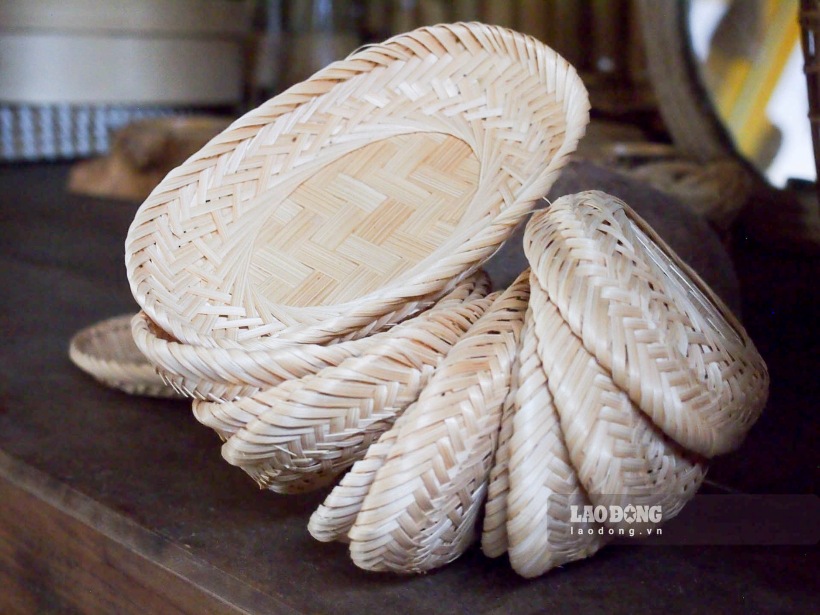
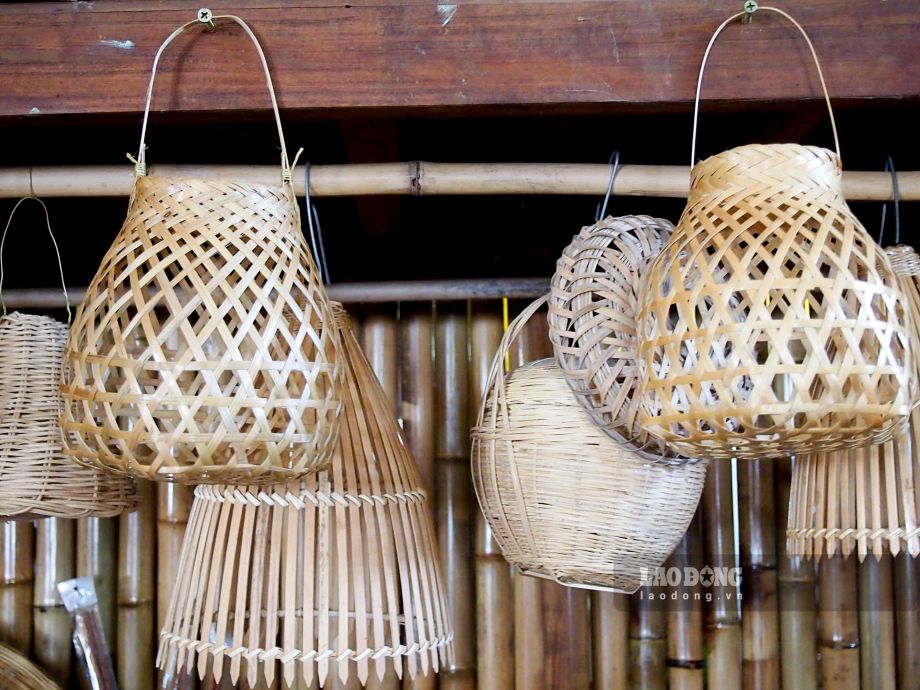
With her efforts to contribute to restoring the traditional indigenous craft, Ms. Truong Thi Bach Thuy is honored to be recognized as a national-level artisans in the bamboo and rattan weaving industry. In addition, she also won first prize at the national level in the Women's Startup Contest, Promoting Local Potential, special prize in the Women's Startup Contest, Promoting Local Potential in the region; the cooperative's products are recognized as typical rural products at the provincial and regional levels, OCOP products.


