Half-mountain classroom
In January 2026, during a business trip to visit and wish Tet to officers and soldiers of islands belonging to Naval Region 5, I had the opportunity to set foot on Hon Chuoi Island, a small island located dozens of nautical miles from the mainland, belonging to Song Doc commune, Ca Mau province.
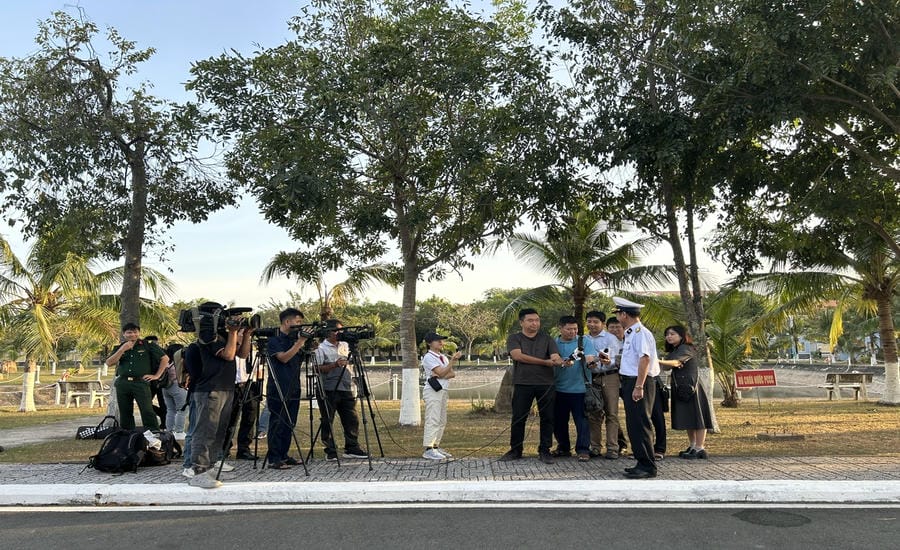
After many hours of drifting at sea, the large ship carrying hundreds of delegates, reporters and officers and soldiers could not dock directly. We had to switch to small boats of fishermen to go to the island. Each trip could only carry about 15 people. Our reporter delegation was prioritized to go on the first trip to prepare for work.
Stepping onto the shore, in front of me were houses nestled on the mountainside, built with wooden pillars and tarpaulins faded by the sun and wind. To get to Hon Chuoi Border Guard Station, we had to follow a mountain road with more than 300 stone steps. The road was steep, many sections were slippery, just a slight mistake could make us fall to the mountainside. But right on that road, I encountered an image that I will always remember. In the middle of the mountain is a small classroom with a few simple sets of tables and chairs, an old blue board and the sound of children spelling. The teacher that day was Lieutenant Colonel Tran Binh Phuc, Deputy Head of the Mass Mobilization Team, Hon Chuoi Border Guard Station (Cai Mau Provincial Border Guard).
Lieutenant Colonel Tran Binh Phuc told me that in 2010, when he was assigned to work for a long time at Hon Chuoi Border Guard Station, he and his unit started building classrooms for children on the island. Those days were extremely difficult. Without proper classrooms, lacking tables and chairs, boards had to be borrowed, and scarce books. The most difficult thing was persuading people to send their children to school. After nearly 16 years of being attached to the special class in the open sea, Lieutenant Colonel Tran Binh Phuc directly taught nearly 100 students. From children who first took the pen, many of them have now grown up, continue to study further or learn a trade, and have stable jobs.
More love for the homeland's sea and islands
During the voyage with the working delegation of the Command of Naval Region 5 to visit and wish Tet to officers, soldiers and people of the Southwest islands of the Fatherland in January 2026, not only me but also many reporters from press agencies across the country had the opportunity to experience special emotional levels at the forefront of waves and winds.
For journalist Dang Thi Minh Thuy - Deputy Head of Radio and Television Department, Thai Nguyen Newspaper and Radio - Television, the most unforgettable memory in the trip was the seasickness that lasted throughout the journey.
“The first night on the way to Tho Chu Island, I did not clearly feel the harshness of the sea. But in the following legs, when the ship sailed to more distant islands, with bigger waves, I really felt the feeling of seasickness to the point of near exhaustion. There were quite a few reporters in the delegation, especially female reporters, who encountered similar situations. However, no one backed down because of that. We still tried to closely follow the activities of the delegation, going to each school point, radar station, and stationed unit to work and complete the task,” journalist Minh Thuy shared.
For reporter Nguyen Van Tuyen - News Department, Newspaper and Radio - Television of Bac Ninh, the working trip is an opportunity to complete a 3-episode television chronicle series called "Southwestern Islands - Shining affection between soldiers and people at the forefront of the waves".
The workload is very large while the working time is quite short. We have to both record, interview, collect documents, and build scripts right on the ship during the journey between the islands. Each island, each unit has very touching and meaningful stories, which I always regret because I don't have enough time to fully reflect them," he shared.
Mr. Nguyen Van Tuyen said that the biggest challenge is not only the pressure of time but also the journeys of climbing many kilometers to approach border posts and radar stations located on steep terrain, while having to bring cameras, recording equipment and quite heavy working equipment.
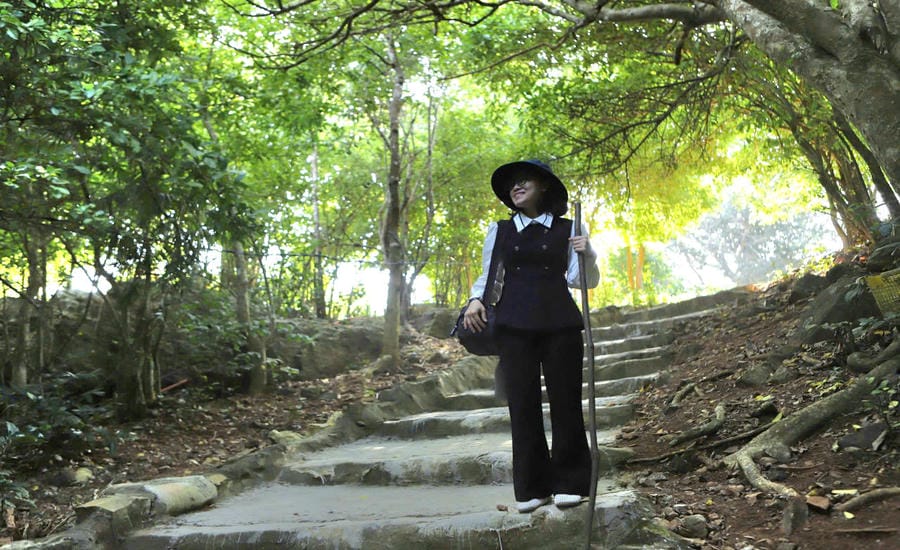
Fortunately, throughout the trip, I received very enthusiastic support from colleagues from many press agencies. That sharing helped me complete my task and get valuable footage and documents for my series of chronicles," Mr. Tuyen shared.
As for journalist Linh Trang, Quang Tri Newspaper and Radio - Television, the working trip not only brought valuable professional documents but also helped her feel more deeply about the silent sacrifice of soldiers who are day and night guarding the sacred sea and island sovereignty of the Fatherland.
From this trip, I want to send to young people the message that the sea and islands are not only a space for survival but also a flesh and blood part of the country, a sacred heritage preserved by many generations of fathers and grandfathers. Please cherish the silent sacrifices of officers, soldiers and fishermen who are day and night clinging to the sea and protecting the islands to protect the Fatherland's sovereignty," journalist Linh Trang expressed.