Thach Lam in the book "Hanoi Three Six Streets" used the love of a wife and mother for her husband and children to talk about eel vermicelli. Cooking eel vermicelli is not simple at all, so it is only women who love their husbands and children very much who are willing to cook this dish to nourish the yin part damaged by hot weather and drinking habits.
Eel vermicelli nourishes yin because eels live in mud and water for life, so they are cold in nature, help nourish blood, strengthen the spleen, and are often used in medicinal recipes and dishes to treat anemia, weakness, and slow-growing children. An average of 80 - 120g of eel meat contains 15 - 24g of protein, an essential nutrient that helps create muscles, tendons, internal organs, skin and hormones.
In addition, eel meat is rich in vitamins (A, B1, B2, B6, B12, D, E) and minerals (iron, calcium, zinc, phosphorus, magnesium...), supporting bone development, especially good for children and the elderly. Fat in eel contains Omega-3, Omega-6 which help reduce bad cholesterol, improve blood circulation, and reduce the risk of heart disease.
Due to its cold nature, dishes made from eel need to balance the yang part with the spicy and hot taste of chili, fresh turmeric and shredded tubers, to avoid too much yin causing cold stomach. Spicy and hot taste is always needed in eel dishes, from eel soup, eel porridge, eel vermicelli, stir-fried eel, braised eel...
The spicy and hot flavor has become a mark of eel dishes, especially in Nghe land which is hot and dry all year round due to Lao wind (phơn wind). It can be affirmed that Nghe land is the hometown of the most delicious eel dishes in Vietnam, to the point that, whenever mentioning Nghe cuisine, one must mention eel soup eaten with banh muot or the presence of eel soup stalls in Nghe land throughout Vietnam.
People in Nghe An are proud of their eel, one of the top products that the Lam River brings. It is not understood how special the alluvium and water of the Lam River are that they can nourish eels with meat that is both chewy, fragrant, and fatty.
In this land, people can prepare many delicious local dishes from eel. Unlike other places, eel is only used to cook porridge, vermicelli and some braised dishes, people in Nghe An have up to 50 dishes made from eel, creating a unique and diverse eel ecosystem.
Therefore, Nghe eel dish was newly listed in the list of National Intangible Cultural Heritage in 2025, to sit at the same tray with Hanoi pho, Hue beef noodle soup, Quang noodles... Eel has been present in daily meals, in the Tet anniversary feast of Nghe people for many years.
Therefore, for the people of Nghe land who are destined to migrate to the four seas, they always miss the spicy taste of eel dishes, and then recreate them in places chosen as livelihoods. Thanks to that, the body of Nghe eel is no longer covered in mud and has roamed everywhere, praising the culinary scene of Nghe land.
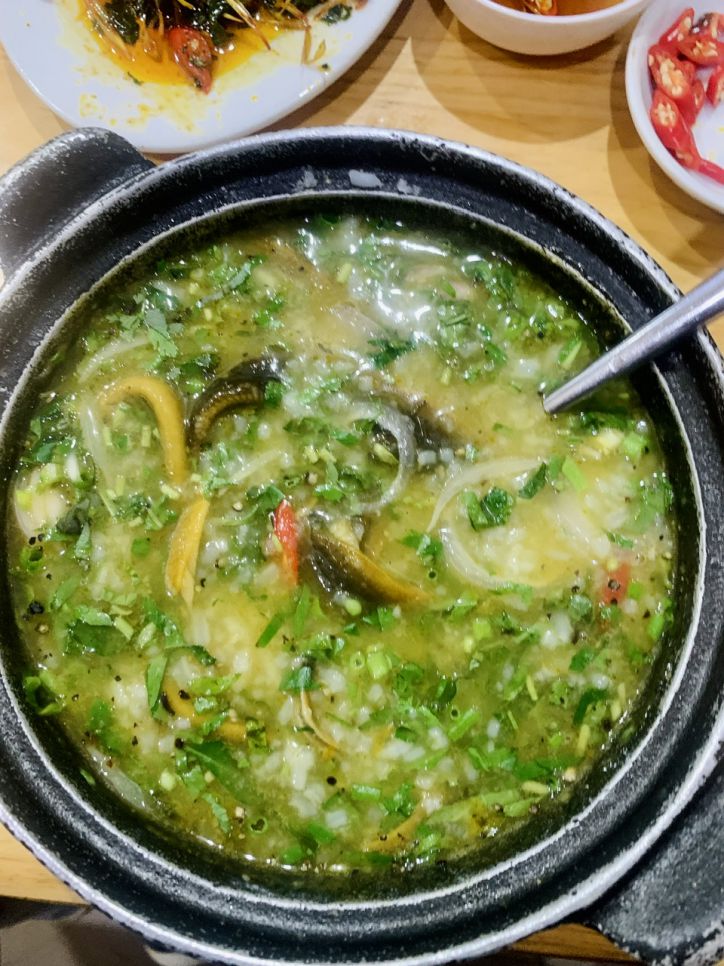
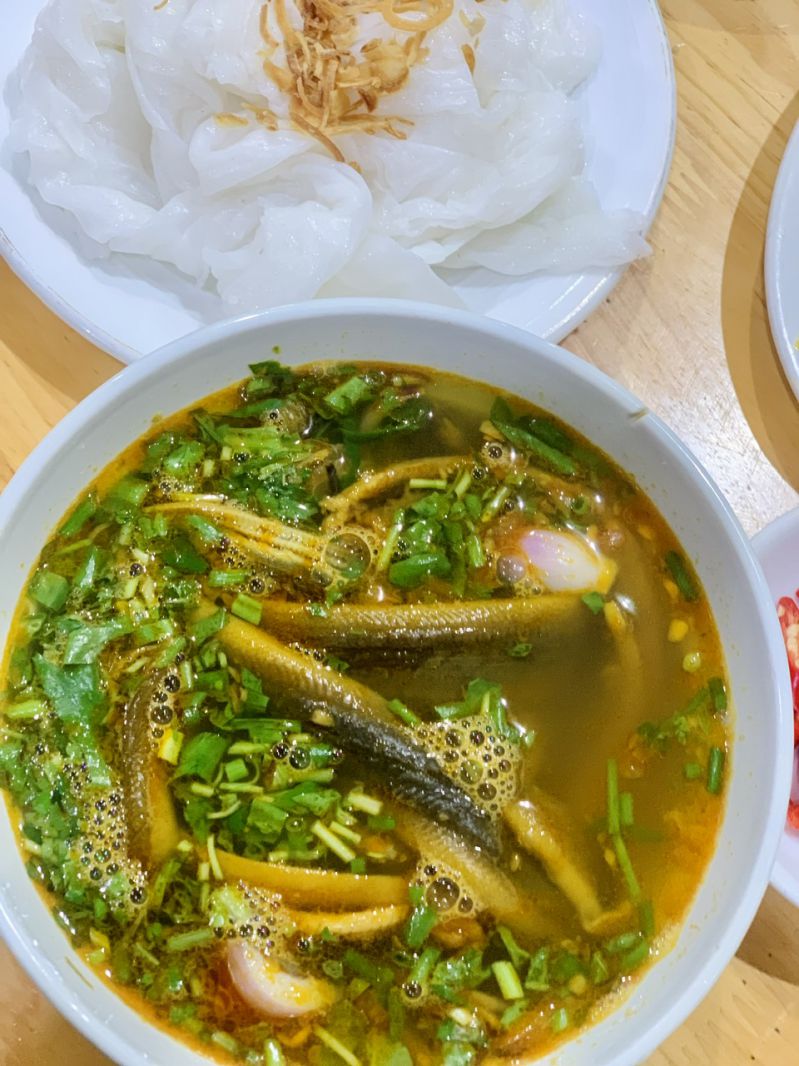
Prominent among the dishes made from Nghe eel is eel soup - a simple dish but carrying a lot of effort. The eel used to cook soup must be field eel, a type with a small body, black back, yellow belly, caught in the rice fields in Yen Thanh countryside, famous for its firm, fragrant eel.
Making eels is a laborious process, very time-consuming, because only then can all the slime on the eels be removed. Salt must be used to remove the eels, then rice husks are burned to get ash to remove the eels in the second batch, and finally cleaned with warm water with fresh lemon juice.
After the eel is cleaned, use a knife to slaughter the eel, remove all the intestines. The people of Nghe An are so meticulous that they use thin and sharp bamboo slats to make a knife to slaughter the eel to prevent the eel meat from becoming fishy. After that, the eel is peeled off the meat and bones. The eel bones are very hard, so they must be crushed in a stone mortar until smooth, then stewed with pork bone broth to make broth.
Taking so much effort is because eel bones contain a lot of nutrients and calcium, which is beneficial for the bones of the eater. Don't be afraid that finely ground eel bones will cloudify the broth, because the bright yellow color of turmeric will fill this defect. When simmered, the roots in the bones dissolve and blend with the sweetness from the eel bones to create a soup with a very characteristic sweet taste.
Eel meat is stir-fried with fresh turmeric, shallots, chili, pepper, castor dressing and spices to enhance the aroma and have a glossy golden brown color, characteristic strong aroma. Then, add the stir-fried eel meat to the broth, bring to a gentle boil to absorb the spices evenly. When the aroma is released, add Vietnamese coriander and chopped scallions and you're done. The more Vietnamese coriander you use, the more attractive the aroma.
Eel soup has a rich sweetness and outstanding spiciness. If eel soup is not spicy, it is not good, it will immediately be criticized by the people of Nghe An, no matter how delicious and fatty the eel is. It must be spicy to the point that eating the first bite immediately makes your tongue sweat, eating the whole bowl of soup, you are soaked as if you just had a cold, then it is considered standard.
People often eat eel soup with crispy grilled rat bread, but the most wonderful thing is with Do Luong banh muot. That silk-like soft banh muot after being soaked in the soup suddenly becomes extremely rich, but still retains its crunchy texture, just reaching the lips and flowing down the throat.
To cook eel porridge, the processing step is like cooking soup, but the broth adds a handful of rice, which is a mixture of eight-stick rice and sticky rice. Simmer until the rice grains expand like flowers, the rice content dissolves in the soup to create a moderate thickness. Then scoop the porridge into a wide bowl, then add stir-fried eel meat.
Mix well the bowl of porridge until you see the harmony of green, yellow, brown, red colors as well as a light sweet, spicy, fatty and soft taste. Nghe people often eat eel porridge with Do Luong black sesame rice paper that is crispy grilled, along with cilantro and Vietnamese coriander.
Nghe An eel vermicelli is also very famous. There are two types of eel vermicelli cooking: liquid eel vermicelli - light and light and stir-fried eel vermicelli - rich. The special feature of eel vermicelli is that in addition to eel and vermicelli, there must be wood ear mushrooms and bean sprouts. The vermicelli must be chewy and soft vermicelli, not mushy when cooked thoroughly.
It's so delicious, no wonder people in Nghe An love the eel body of their homeland for thousands of years.