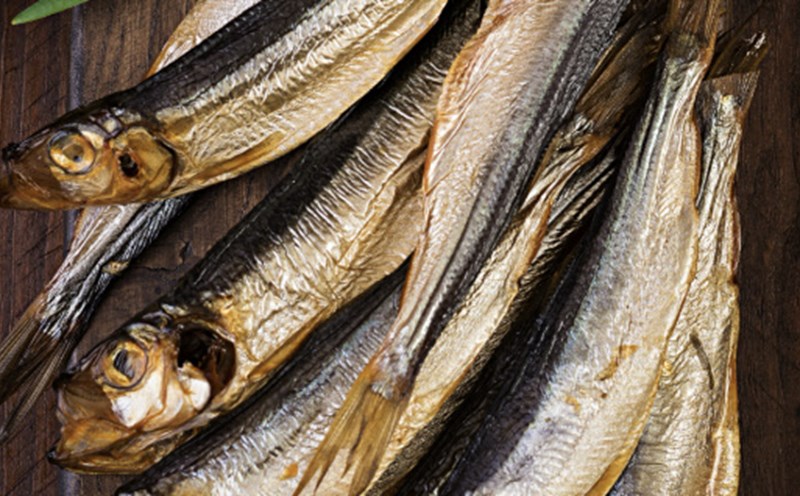
Sardines carry in them a legendary story about a cycle of birth, this life is fish, the next life is birds. The reason is that, from about February of the lunar calendar to April of the lunar calendar, sea sardines living at sea gather and swim from the sea to the river mouths, upstream to deep inland to lay eggs.
Then in September of the lunar calendar, when the rice is ripe, a flock of chim ngói birds, originally transformed into sardines, suddenly appears in flocks to eat ripe rice. When the fields are clear, the flock of chim ngói birds suddenly disappears. People say, chim ngói birds have flown out into the tank to transform into sardines.
The cycle of sardines - seagulls appearing and disappearing alternately, to create a legend. In fact, sardines are a fish species that has a custom of being born in freshwater areas, swimming out to sea to grow, and when they mature, in order to have a warm spring, they swim from the sea to the river to lay eggs, like salmon.
Eggs hatch, young sardines become strong and go downstream to the sea, starting a new life cycle. As for the tiled bird, it is a migratory bird, and Vietnam is just a stopover to forage on a long journey. The time the tiled bird chooses to stay in our country is also just in time for harvesting the summer rice crop.
The observation of the times of appearance and disappearance of these two bird-fish species, which are inherently rootless, has led our ancestors to speculate about a miraculous life-changing scene. Especially when dissecting sardines, it is found that the fish's stomach has a shape quite similar to the gizzard of the tiled bird.
And above all, the delicious taste of sardines is a seasonal delicious taste, very short, so precious, creating a conclusion for the cycle of Spring is fish, autumn is birds. Then, people consider sardines as a blessing from heaven at the beginning of the year, and eagerly wait for sardines to follow the river mouths in Hai Hau, Giao Thuy (Ninh Binh province) upstream of the Red River to turn into delicious pieces.
Sardines are not very big, only about 2 or 3 fingers long, about 15cm long, silver-white skin, flat body, small scales, soft bones. Sardines belong to the small oil fish family in the herring family, so when fried, they often cause grease bursts, those who are not used to processing are often very tired. Moreover, sardines have many small bones, which is also annoying to eat.
However, in return, the sardines meat is very fragrant, with a delicate sweet taste, especially the sardines that go upstream of the Red River the furthest. They eat the alluvium of the Red River, their bodies transform miraculously, creating a world-class food.
Sardines, after being brought out of the water, will die immediately and cannot be kept as long as other types of fish. Therefore, people often choose the preliminary processing method of grilling them on a boat after dissecting the intestines and bile of the fish. To buy fresh fish, you must check the fishing time and dock at the boathouse, especially when you want to eat sardine salad.
The characteristic of sardines with many small bones makes the processing of salad take quite a lot of time and effort. After washing, the sardines remove the head and fins, are soaked and then dissected across the lower abdomen to remove the intestines and bile of the fish. Then use a thin, flexible knife to take 2 pieces of fillet along both sides of the fish body. Continue to filter and remove all remaining small bones.
The fish fillet can be left whole or sliced to taste, then squeezed with a mixture of rice powder, minced galangal, minced lemongrass, and spices to coat the fish evenly around. This step must be done slowly and carefully, only then will the fish be evenly coat, not exposed to the air and retain its fresh taste.
The fish bones are grilled briefly until dry and crispy, then crushed, then stewed with fermented rice, fresh turmeric, old galangal, lemongrass (all finely ground) to form a thick mixture like soft porridge, with a turmeric yellow color and the sour taste of fermented rice. This is the sauce for eating fish salad, and is called "cheo".
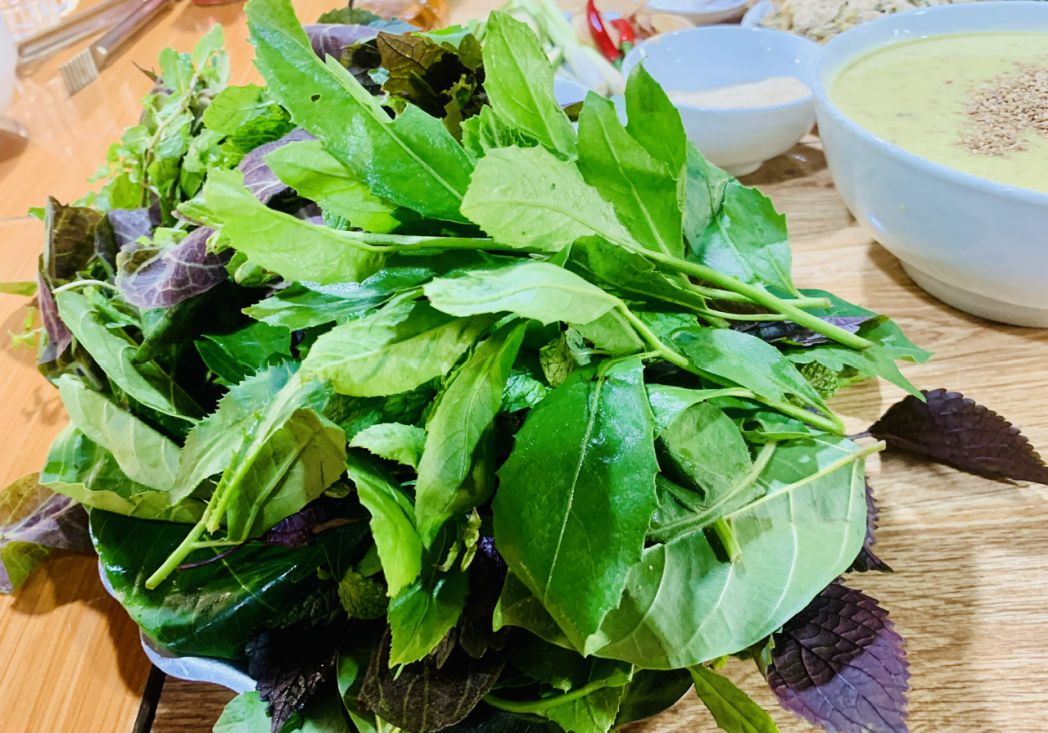
To eat fish salad, the leaves are indispensable, both to enhance the flavor and to firm the stomach. The indispensable leaves are sung leaves, dinh lang, mo tam the leaves, tai bi leaves, vong cach leaves and herbs, cilantro, sliced green bananas, sliced pineapple, dried shallots, fresh garlic cloves, lemongrass stalks, chili.
Thus, the sardines salad is completed, with only a few steps to perform but it can take several hours. But there is no delicious dish that does not require elaborate processing, especially raw or half-boiled pieces. However, when the salad tray is set up, all hardships are quickly forgotten.
First, choose a large hibiscus leaf to make the outer layer, then arrange the vegetable leaves in a flat surface or roll in a whirlpool. Then pick up the fish and put it in the middle, you can add coarse salt, fresh garlic, and a spoonful of foamy shrimp paste to enhance the flavor as desired, then dip the soaked cheo into a small personal bowl and eat it in a neat piece.
Even though it is surrounded by many strong-flavored vegetables, the light, cool, sweet, and fatty taste of the sardines still resonates to balance it. The aroma of the rice powder further clarifies the taste of the sardines, which still faintly smells of the ocean but has absorbed the sweet alluvial taste of the Red River.
A piece of sardines salad consists of only 3 parts of fish, and the remaining 7 parts of leafy vegetables, combined with the mild sour taste of fermented rice in a bowl of fermented pork paste, is definitely a miraculous heat-relieving piece in this unusual heat wave. Eating that piece of salad is also considered the right time, the right weather, the right season. What could be happier than that!