
Opening the Workshop, Ms. Nguyen Thi Thu Thuy - Vice President of the Hanoi Labor Federation - emphasized that the Resolution of the XIV Vietnam Trade Union Congress and the Resolution of the XVIII Hanoi Capital Trade Union Congress have identified specific targets, showing the determination to strongly innovate propaganda, education and improve the quality of the workforce.
In which, striving for at least 90% of workers at enterprises to be propagated, disseminated, studied, and thoroughly grasped the Party's guidelines and resolutions, policies and laws of the State related to labor and trade unions; at the same time, trade unions participate in promoting so that at least 75% of workers at enterprises are educated and improve their qualifications and professional skills.
Strive for 100% of grassroots trade unions in the state sector; 85% of grassroots trade unions outside the state sector to participate with employers to issue regulations on implementing democracy at the grassroots level.
85% of enterprises and units with trade union organizations negotiate, sign and supervise the implementation of collective labor agreements in accordance with the law.
These are not only quantitative targets, but also set very high requirements for the quality, depth and actual effectiveness of propaganda work.
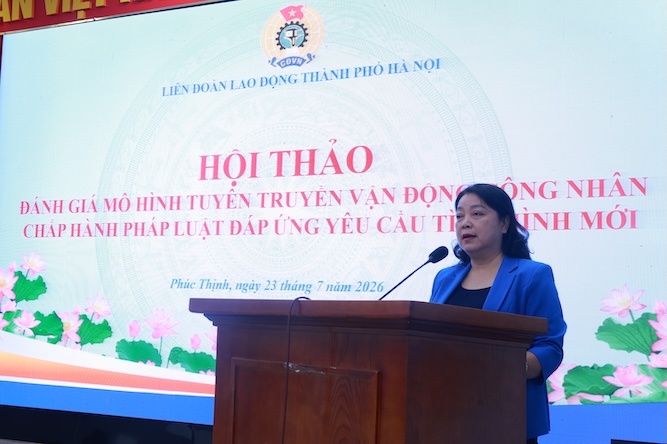
To achieve those goals, the Trade Union organization must have appropriate methods to bring guidelines, policies and laws to the right target audience; helping workers easily access, understand, remember and have the ability to apply them in work and life.
Reality shows that many practical ways of doing things have been implemented such as Law Bookshelves, Worker Cultural Activities Points, Trade Union Relaxation Corners, Ho Chi Minh Cultural Space, Self-management Groups for Worker Boarding Houses, Legal Consulting Groups, Law Clubs, dialogue activities, consulting, and answering questions about laws directly and online.
What is worth noting is not only the number of models, but more importantly, the models have contributed to creating more reliable addresses for workers to access information, share their thoughts, be consulted, supported and protected when legitimate and lawful rights and interests are violated.
At the Workshop, delegates exchanged, discussed, and shared experiences on the organization and implementation of models at units, thereby frankly recognizing the operational efficiency of the models, bringing an objective and comprehensive view of the effectiveness of the models being implemented; clearly identifying which models are truly suitable, capable of being maintained and replicated; which models need to be adjusted, innovated or replaced.


