
Policies need to go into life
On the morning of June 5, in Nghe An, the Ministry of Agriculture and Environment in coordination with the People's Committee of Nghe An province organized the National Forum on Environment and Climate 2026 with the theme "From policy to action".
The forum is a key activity in response to World Environment Day June 5, World Oceans Day June 8, Action Month for the Environment and Vietnam Sea and Islands Week 2026.
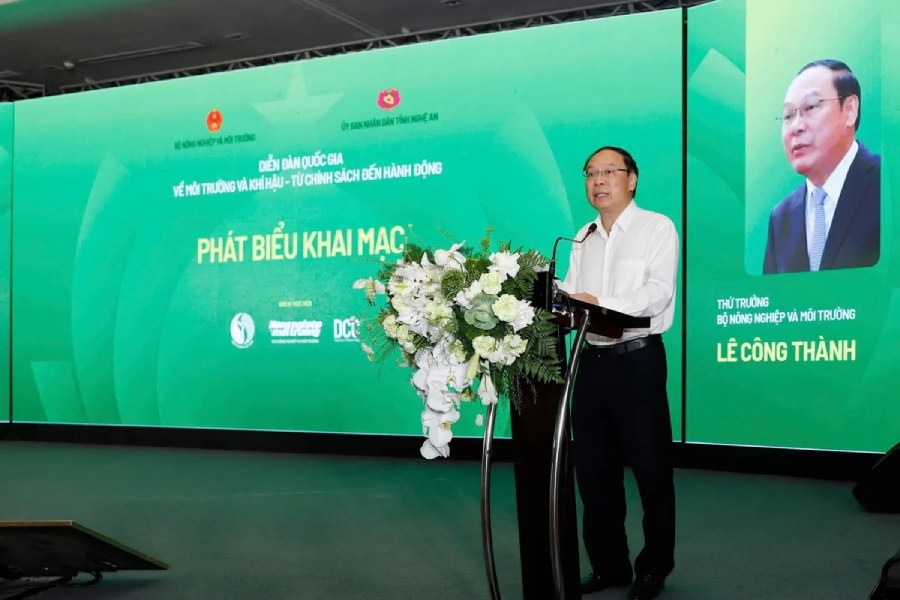
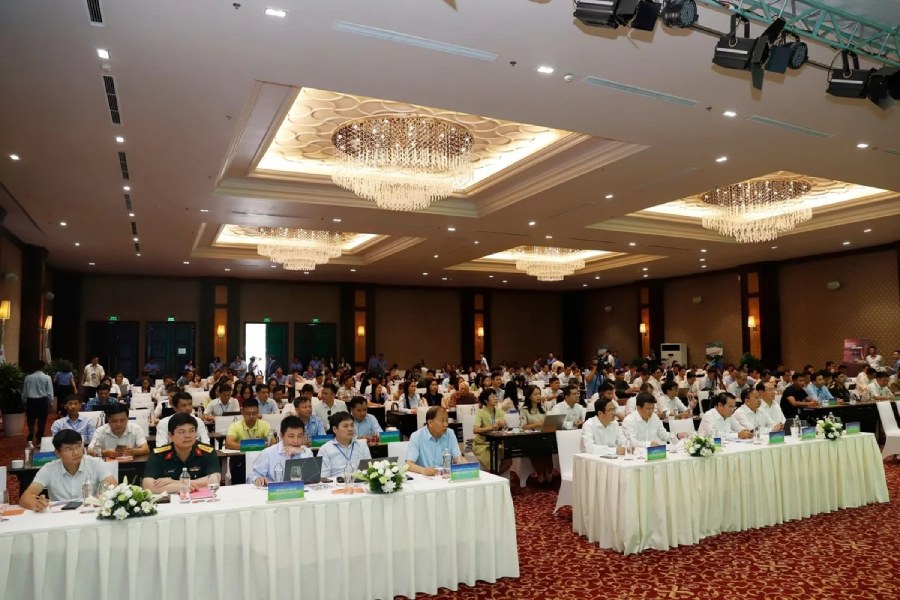
Speaking at the forum, Deputy Minister of Agriculture and Environment Le Cong Thanh said that in the context of the world facing much pressure from climate change, environmental pollution, biodiversity decline and resource depletion, environmental protection is no longer a separate requirement of each country but has become an issue directly related to economic growth, quality of life and sustainable development.
According to Deputy Minister Le Cong Thanh, Vietnam has achieved many results in perfecting institutions and policies on environmental protection. However, the gap between policies and practice is still large. Many regulations, although progressive, still encounter obstacles when implemented; meanwhile, issues such as air pollution, waste, and environmental quality degradation continue to increase.
From this reality, the theme "From policy to action" is set to emphasize the requirement not only to stop at policy making, but also to organize effective implementation, bring policies into life and create clear changes in environmental protection work.
Promoting green transformation, digital data management
In the context that the Ministry of Agriculture and Environment is studying the amendment of the 2020 Law on Environmental Protection, Deputy Minister Le Cong Thanh said that this is an important time to improve institutions and meet new development requirements.
Accordingly, environmental policy needs to shift from a mindset of only controlling pollution to creating a legal corridor for green transformation, circular economy development, greenhouse gas emission management and carbon market formation.
One of the highlighted contents is the transformation of management methods from pre-inspection to controlled risk management, strengthening post-inspection based on digital data and real-time monitoring systems. This is considered a solution to improve policy implementation efficiency, while reducing compliance costs but still ensuring the effectiveness of state management.
The forum also focused on identifying urgent environmental issues, including air pollution in major cities. This is not only an environmental challenge but also has a direct impact on public health and growth quality.
To solve this problem, the Ministry of Agriculture and Environment believes that it is necessary to have a synchronous approach, from urban planning, green transport development, industrial emission control to changing production and consumption behavior.
In addition, reducing greenhouse gas emissions, towards the goal of net zero emissions by 2050 continues to be a key task. The implementation of this goal requires clearly defining the role of the State, localities, businesses and the community; and at the same time effectively mobilizing financial resources, technology and knowledge.
The Deputy Minister also especially emphasized the role of businesses in green transformation, implementing ESG standards and technological innovation; the role of localities in organizing implementation; and the role of people in changing consumer behavior, participating in environmental protection.
The Deputy Minister expressed his belief that, with the spirit of responsibility, frank sharing and heartfelt proposals of the delegates, the Forum will issue many practical policy recommendations, contributing to promoting the process of transforming the development model towards green, circular and low emissions.


