On July 24, in Hanoi, the Ministry of Agriculture and Environment organized a workshop to launch the Project "Sustainable Management of Controlled Substances Under the Montreal Protocol" (SMS-MP Project).
The Montreal Protocol is recognized by the international community as one of the most successful international environmental treaties. Not only contributing to the restoration of the ozone layer, protecting human health and ecosystems, the Protocol also brings great benefits to the climate by eliminating substances with high global warming potential.
The Kigali Amendment of the Montreal Protocol stipulates a roadmap to gradually reduce the production and consumption of HFCs - substances that do not deplete the ozone layer but have a high potential global warming value. Full implementation of the Kigali Amendment could help avoid increasing the global average temperature by 0.5°C by the end of this century.
If the process of gradually reducing HFC is implemented simultaneously with solutions to improve the energy efficiency of refrigeration and air conditioning equipment, climate benefits may nearly double.
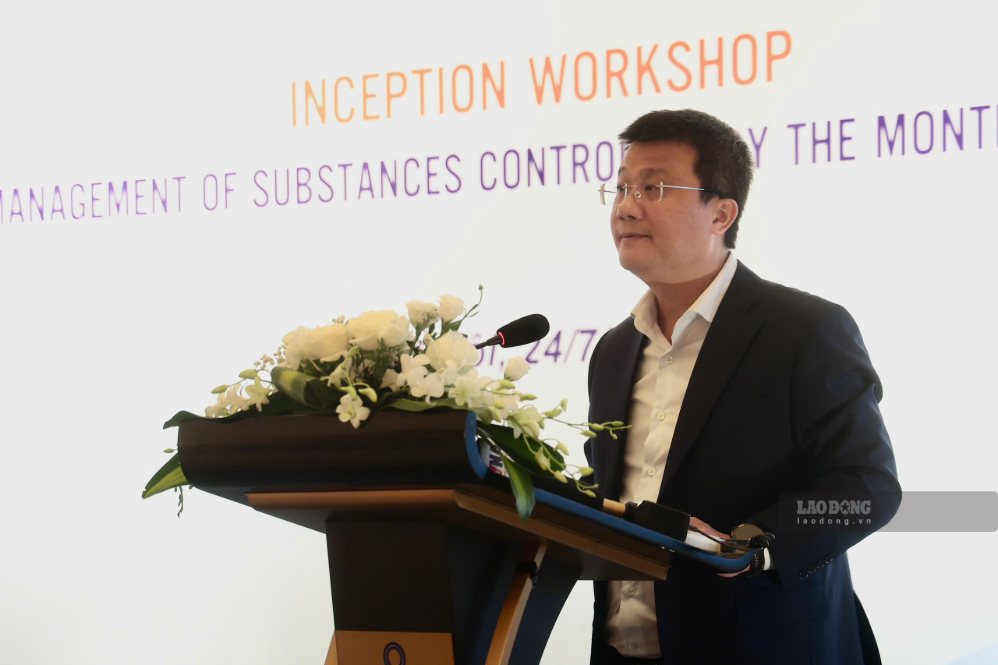
Speaking at the opening of the Conference, Mr. Nguyen Tuan Quang, Deputy Director General of the Climate Change Department (Ministry of Agriculture and Environment) said that this project is in line with Vietnam's policy on green transformation, low-emission economic development, economical and efficient energy use, science, technology and innovation development; and at the same time contributes to the implementation of Contributing to the goal of national self-determination and striving to achieve net zero emissions by 2050.
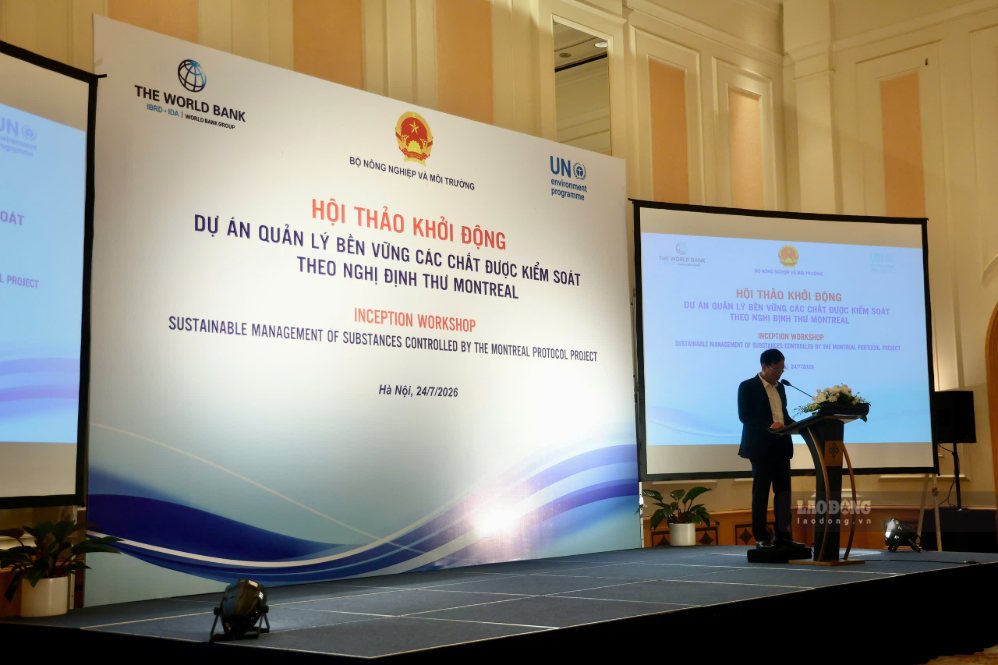
The SMS-MP project was approved in Decision No. 2368/QD-BNNMT dated June 26, 2025 of the Minister of Agriculture and Environment. The project aims to support Vietnam in eliminating 97.5% of the base consumption of HCFCs from 2030 and reducing 10% of the base consumption of HFCs from 2029, ensuring full compliance with the obligations of member states of the Montreal Protocol.
The Deputy Director General of the Climate Change Agency added: "The project focuses on 4 key groups of activities: Technology transformation, Strengthening the capacity of technicians, Import-Export management and policy and legal development and implementation".
At the Workshop, the Department of Climate Change and agencies such as the Customs Department, the Department of Vocational Education and Continuing Education, the Vietnam Railways Department and the Railway Transport Joint Stock Company exchanged views on cooperation orientations and coordination mechanisms in implementing the activities of the Project.
The exchange contents focused on information sharing, strengthening the capacity of customs officers, developing training programs and improving the capacity of technicians, as well as testing, evaluating and gradually transforming technology using cold environments with low global warming potential in railway car air conditioning systems.
HCFC and HFC are two types of cold environments (air conditioning gas, refrigerator) in the form of compounds containing hydrogen, carbon, fluorine elements and adding chlorine (for HCFC). They are commonly used in refrigeration appliances, but differ fundamentally in chemical composition and environmental impact level.