
When it comes to controlling blood sugar levels, many people often focus on breakfast or daytime exercise intensity. However, according to international health experts, living habits after 5 pm also play an important role in contributing to limiting post-eating hyperglycemia, helping to lower natural blood sugar and protect metabolic health.
| Habits (After 5pm) | Medical support mechanism | Practice notes |
|---|---|---|
| Take a walk right after dinner, avoid heavy exercise. | ||
| Balance nutrients, do not overload sugar. | 50% vegetables, 25% lean meat, 25% fiber starch. | |
| Fiber slows down glucose absorption into the blood. | Drink filtered water, skip sugary drinks. | |
| Reduces the hormone cortisol, which helps support stress reduction, a factor that can affect blood sugar | Reduce phone use near bedtime. | |
| Stabilize hormones, prevent high blood sugar in an empty stomach. | Don't stay up late, keep the bedroom dark. |
Short walk after dinner
Clinical studies show that light exercise after eating brings obvious benefits. Nutritionist Toby Amidor (USA) recommends that patients spend 15-20 minutes walking lightly after dinner. Data from the American Diabetes Association (ADA) also shows that this habit can contribute to reducing insulin resistance, supporting hypoglycemia and limiting sudden glucose fluctuations in pre-diabetes people.
Applying the 50-25-25 dish rule
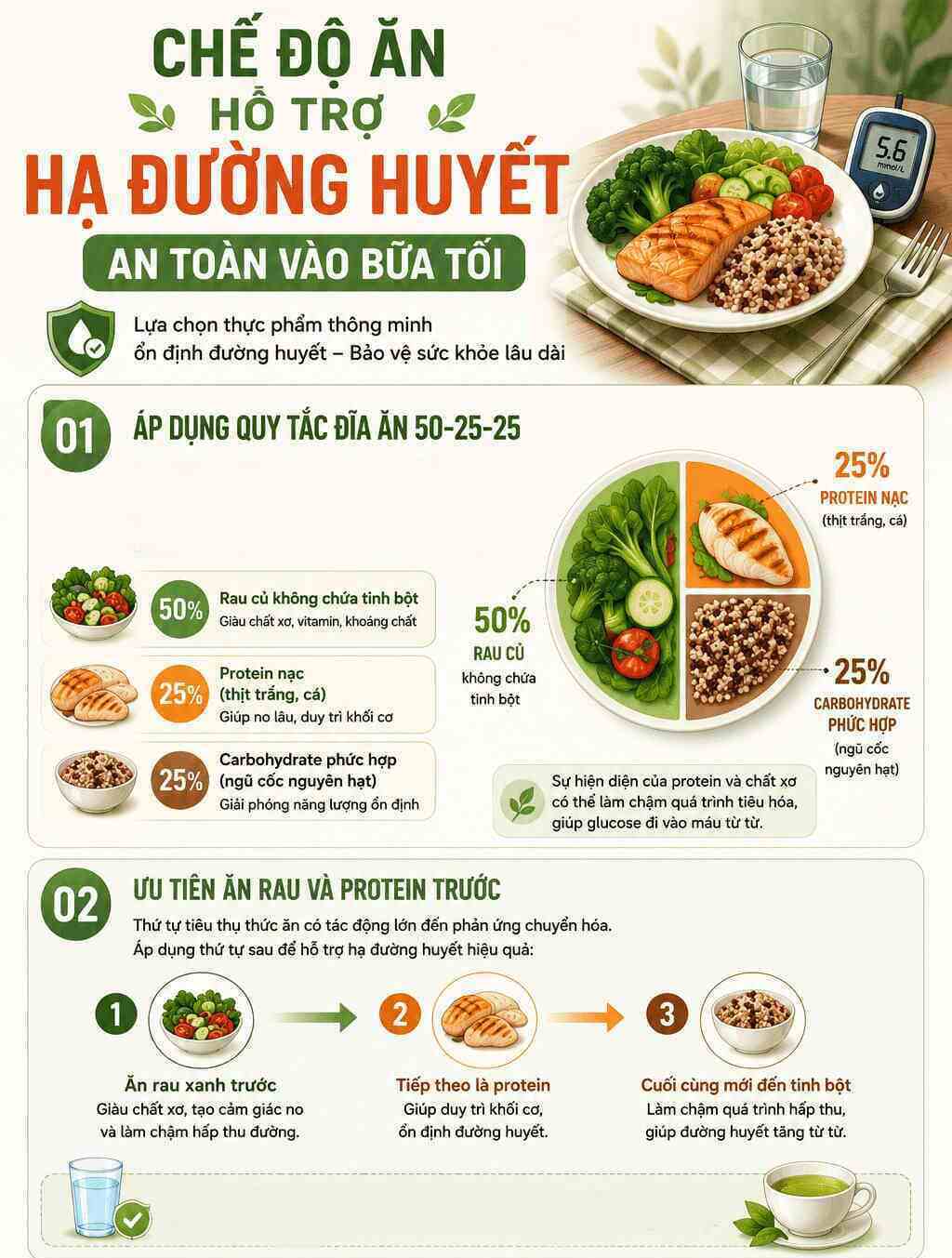
Dinners containing a lot of refined carbohydrates will cause blood sugar to spike. Experts Toby Amidor and Mandy Enright both recommend a balanced dish method: 50% vegetables without starch, 25% lean protein (white meat, fish) and 25% complex carbohydrates ( whole grains). The presence of protein and fiber can slow down the digestion process, helping glucose slowly enter the bloodstream.
Prioritize eating vegetables and protein first
The order of food consumption has a major impact on metabolic reactions. Eating green vegetables first, followed by protein and finally starch, can slow down the absorption process, thereby contributing to effectively supporting post-eating hypoglycemia. Expert Enright also noted that patients should replace soft drinks with filtered water or sugar-free tea in meals.
Relax, manage stress
Prolonged stress increases the secretion of the hormone cortisol – a factor that makes it difficult to control blood sugar. Expert Enright especially recommends evening relaxation therapies such as meditation. Mindfulness helps soothe stress responses, reduce stress responses, thereby helping the body control blood sugar more stably, and lower blood sugar to a stable level.

Ensure sleep quality
Sleep and the endocrine system are closely related. Medical reports emphasize that sleeping less than 6 hours per night or restless sleep can increase blood sugar levels on an empty stomach and worsen insulin resistance in people with type 2 diabetes.
The information in the article is for reference only, not for medical diagnosis or treatment. You should talk directly to your doctor for accurate and appropriate advice to your health condition.


