
Training "real warriors
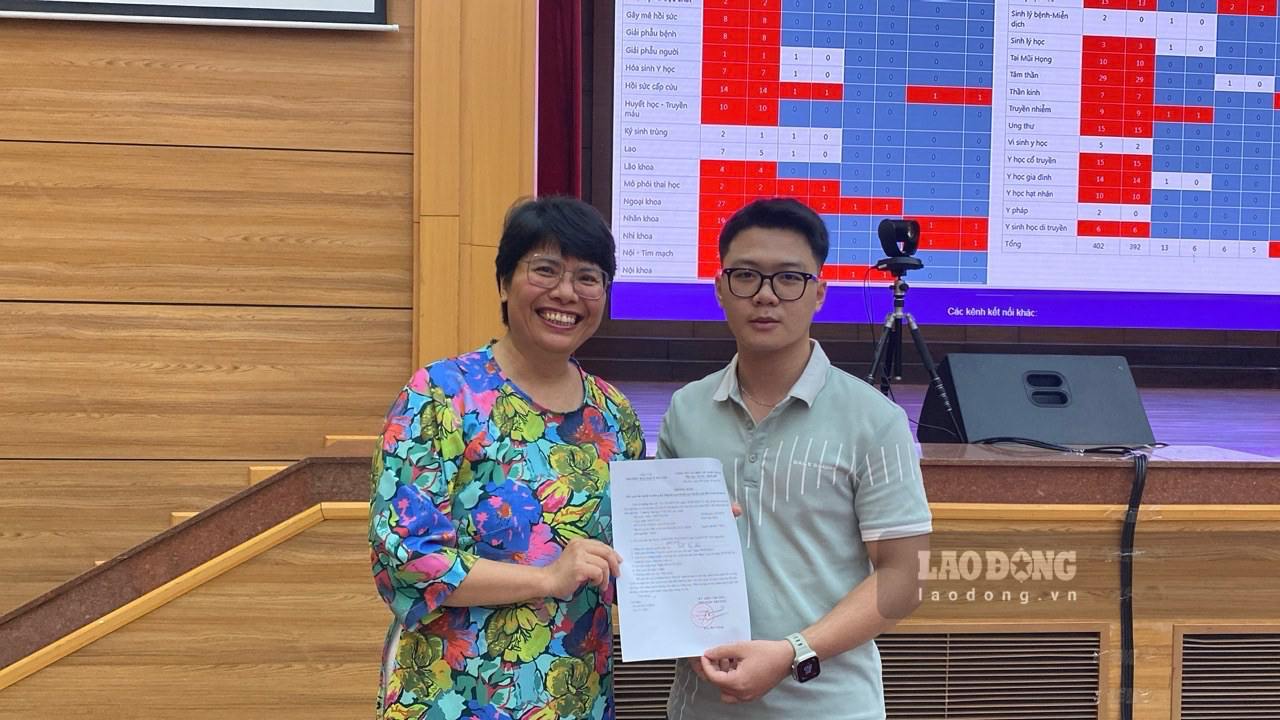
Tomorrow (September 9), Matching Day 2026 of Hanoi Medical University takes place. This is the day new resident doctors choose their training major based on the results of the entrance exam.
Before this time, sharing about the training of resident surgeons, Assoc. Prof. Dr. Duong Duc Hung - Director of Viet Duc Friendship Hospital, Head of the Department of Surgery, Hanoi Medical University - emphasized the strict requirements for those who choose a major.
“We still say to each other: We do not train surgeons, we train real warriors and compare it to special forces. After completing the resident doctor course organized at Viet Duc Hospital, you graduate, you can operate in any environment” - Assoc. Prof. Dr. Duong Duc Hung shared.
For resident doctors of Extracurricular course 51 in 2026, Mr. Hung said that the target is set at 15 people. Viet Duc Friendship Hospital has invested more than 20 billion VND to build a dormitory for resident doctors, ensuring learning conditions. The hospital will also pay salaries and food and accommodation support, but in return, the requirements for learners will be stricter.
According to Mr. Hung, 15 people are input but does not mean that everyone will graduate. The training process continues to have screening to ensure output quality.
15 is the input, we don't need enough 15 people to graduate, in the process of doing it, we will screen, violate regulations and be ready to let them out (fail - PV). 10 people output, but those 10 people are quality" - Mr. Hung said.
Proposal for commensurate investment for resident doctors
Not only setting high requirements for expertise, the issue of regimes and policies for doctors during inpatient training is also receiving attention.
Prof. Dr. Pham Manh Hung - Director of the Institute of Cardiology, Hospital 19-8 - said that the nature of training resident doctors is very different from a normal academic training program.
During the training period, resident doctors examine patients, be on hospital duty, monitor patients, participate in emergency care, perform procedures and gradually take on professional responsibilities under the direct supervision of the hospital.
With more than 30 years of working in university and postgraduate training at Hanoi Medical University, Prof. Dr. Pham Manh Hung said that, unlike students who go to study for a further degree, resident doctors have graduated as doctors and during their residency, they are actually practicing a profession with supervision.
Every day, they examine and monitor patients, on emergency duty, make medical records, participate in consultations, perform procedures, surgeries or specialized techniques under the guidance of more experienced doctors.
According to Prof. Dr. Pham Manh Hung, resident doctors therefore simultaneously take on two roles: Both as doctors who are working and as doctors who are being trained to move towards independent specialized practice.
If a young doctor has to spend all their time for many years studying, being on duty and taking care of patients but at the same time has to pay for all tuition and living expenses, according to him, financial pressure will be very high. This may also reduce the opportunities for young doctors with capacity but difficult family conditions.
From the above reality, Prof. Dr. Pham Manh Hung proposed that the State develop a comprehensive policy for doctors undergoing specialized training, including legal position, salary or training allowance, insurance, working conditions, duty time, rest and professional benefits.
According to experts, this is not simply a preferential policy for a group of learners but also an investment in the country's healthcare human resources in the next 20-30 years.
He also believes that it is necessary to change the mindset from "students have to pay to be trained" to the State and the health system investing in training specialized human resources for the future. In the long term, resident doctor training should move towards a common policy at the national level and may study the direction of tuition exemption.
Assoc. Prof. Dr. Dao Xuan Co - Director of Bach Mai Hospital - and leaders of some public hospitals in Hanoi also said that hospitals have policies to support resident doctors.
Meanwhile, Dr. Nguyen Van Quan - Deputy Director of the Department of Science, Technology and Training, Ministry of Health - expressed his desire for resident doctors to be trained without having to worry about paying tuition fees. However, with current regulations, this issue is decided by the training institution; support policies during the learning process at the hospital also depend on each unit.
Over the past 50 years, 19,706 specialist doctors I, specialist doctor II and resident doctors have been trained, including 8,441 resident doctors. It is expected that in 2026 and 2027, there will be 1,276 and 1,400 more resident doctors graduating respectively.


