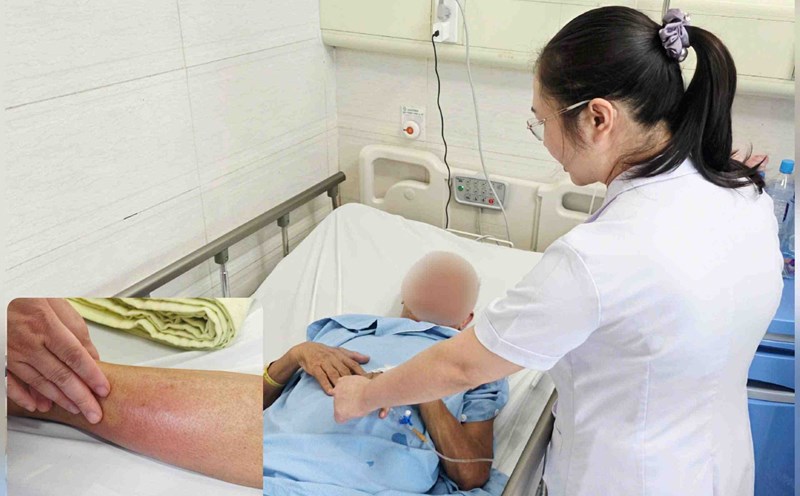
Although considered a convenient treatment support solution, this method still has certain limitations.
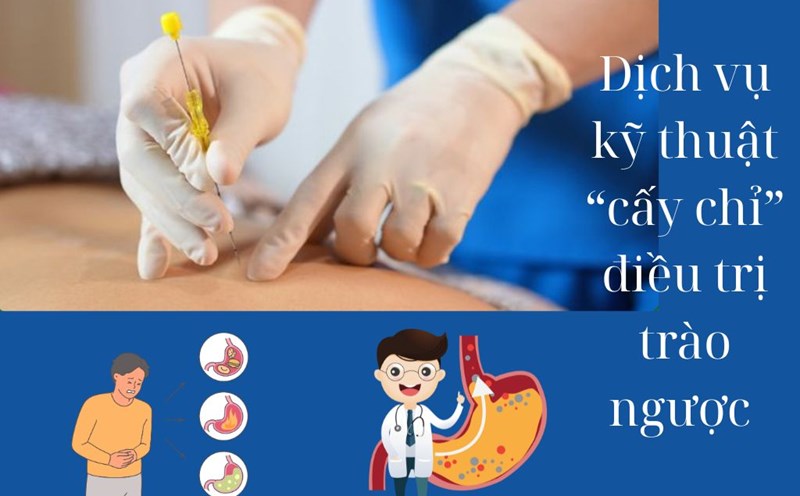
According to Dr. Kieu Xuan Thy - Head of Operations, University Medical Center Hospital HCMC - Branch 3, thread transplantation is a technique of inserting a self-dissolving thread (about 1-2 cm long) into the acupoints under the skin or in the muscles. The thread will decompose on its own after a few weeks, creating continuous stimulation to the acupoint without further intervention.
In essence, this is an improved form of acupuncture. If traditional acupuncture needs to be performed many times a week, thread implantation can maintain its effect for a longer time after just one implementation. "It can be imagined that acupuncture is like watering every day, while thread implantation is like a drip irrigation system, maintaining continuous impact," explained Dr. Kieu Xuan Thy.
According to TCM theory, health depends on the circulation of qi and blood in the kinh lac system. When this flow is interrupted, the body is prone to disease. Stimulating the right acupoint helps regulate qi and blood, improve visceral function and bring the body back to a balanced state.
Current studies show that thread implantation is clearly effective in some disease groups. Notably, chronic pain diseases such as lower back pain, herniated discs, costoarthritis or osteoarthritis of the knee. Some clinical trials have recorded patients experiencing significant pain reduction and improved mobility after treatment.
In addition, this method is also being studied in weight control. Synthesis analysis of many trials shows that implantation can only support weight loss by regulating appetite and improving metabolism. However, experts emphasize that it is necessary to combine a reasonable diet and exercise to achieve sustainable results.
The thread transplantation process is relatively simple. After examination and identification of the appropriate acupoint, the doctor will disinfect and use a specialized needle to insert the thread into the acupoint. Each session lasts about 20-30 minutes, the course usually includes 4-6 times, 1-2 weeks apart.
Regarding safety, common reactions are only mild swelling, bruising, or a feeling of tension in the site and will resolve on their own after a few days. Serious complications are rare, accounting for a very low percentage.
However, Dr. Kieu Xuan Thy, Specialist Doctor Level II, noted that thread embedding only plays a supporting role in treatment, not replacing drugs or surgery in severe or emergency cases. In addition, the effectiveness also depends a lot on the skill of the performer and the quality of the medical facility.
Patients need to be fully examined and choose reputable facilities with well-trained doctors, avoid performing at facilities that do not ensure safety," recommended Dr. Kieu Xuan Thy.