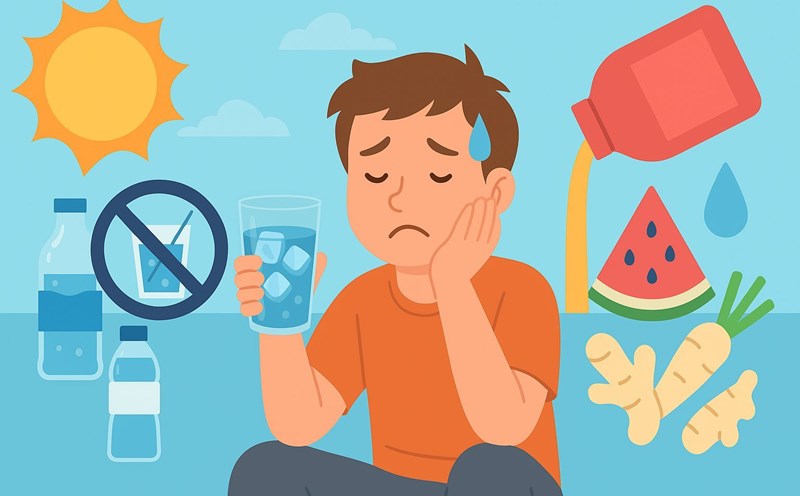
Dehydration not only causes fatigue but is also a factor that increases the risk of kidney stones. Medical experts say that dehydration causes urine to condense, creating conditions for minerals to crystallize and develop into stones.
According to research by the US National Institutes of Health, maintaining enough water to create about two liters of urine per day can help reduce the risk of kidney stones. Dark yellow urine often indicates that the body is dehydrated.
Ms. Edwina Raj - a nutritionist at Aster CMI Hospital Bangalore (India) - said that when the body is dehydrated, substances such as calcium, oxalate and uric acid are more likely to stick together in the urine. Over time, these crystals can develop into kidney stones.
Drinking enough water helps the kidneys eliminate these substances before they can form stones," she said, while noting that people living in hot environments or sweating a lot need to replenish water regularly.
Not only does it increase the risk of forming new stones, dehydration also makes kidney stones more serious. When urine levels decrease, the flow in the urinary tract slows down, making it difficult for stones to be removed and can cause pain, painful urination, or difficulty urinating.
Regarding this issue, Dr. Kishan - Nephrology Consultant, Aster CMI Bangalore Hospital (India) - said that water plays an important role in diluting urine and reducing mineral concentrations. When drinking enough water, the body will increase urine production, helping to eliminate substances such as calcium and oxalate before they crystallize.
In addition to filtered water, experts also suggest some beneficial drinks such as lemon or citrus juice, thanks to containing citrate, a substance that can inhibit the formation of stones. Coconut water or diluted fruit juice also supports maintaining adequate hydration for the body.
However, doctors recommend limiting sugary drinks, carbonated soft drinks and caffeinated drinks. These can increase the risk of dehydration or affect urine composition, thereby promoting the formation of stones.
According to general recommendations, adults should drink about two to three liters of water per day, depending on physical condition and activity level. Maintaining a regular drinking habit is an important factor in protecting kidney health.
In case symptoms such as severe pain, fever, nausea or bloody urine appear, patients need to go to a medical facility for timely examination. Experts emphasize that maintaining enough water every day is a simple but effective way to reduce the risk of kidney stones and protect kidney function for a long time.