Having had a prolonged high fever accompanied by a whole-body rash, baby P.N. G. H (6 years old) was taken by his family to many places for examination but the cause was not found. When admitted to Children's Hospital 2, after many in-depth tests to rule out infection, doctors determined that the baby had systemic juvenile arthritis (JIA).
The patient was indicated for treatment with Interleukin-6 (IL-6) inhibitor biological therapy. After a period of treatment, the baby responded well: fever subsided, rash disappeared and the disease was controlled stably.
Another case is L.N. A. K (13 years old). Before coming to Children's Hospital 2, she had to endure multiple joint pain and prolonged spinal pain for a year. Her family took her to many places for treatment, even had to use prolonged corticosteroid anti-inflammatory drugs, but the condition still did not improve. When examined in-depth, doctors found that the patient was positive for HLA-B27 and diagnosed with JIA type of pelvic arthritis - adhesive spondylosis.
After switching to treatment with TNF-alpha inhibitor biological drugs, the arthritis condition improved significantly after only two infusions, inflammatory indicators in the blood returned to normal and the patient may stop using corticosteroids.
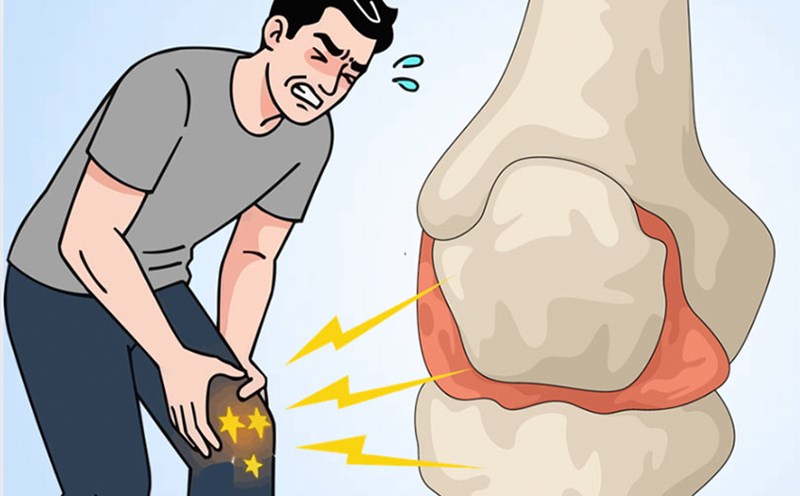
According to MSc.BS Ton That Hoang, Department of Cardiology - Joint, Children's Hospital 2, juvenile spontaneous arthritis is a chronic disease but is easily overlooked in the early stages. One of the characteristic signs is obvious joint pain and stiffness in the morning or after resting. The joint may be swollen, hot or red, making it difficult for children to move.
This symptom is different from "growing pain", a common physiological condition in children. In growth pain, pain usually appears at night, mainly in the muscles of both legs and does not cause joint swelling or stiffness the next morning.
Many early warning signs of the disease are easily overlooked by parents. Children may stumble, avoid using a joint, or have difficulty performing daily activities. Some cases also have symptoms of high fever recurring in the afternoon or evening, red rashes appearing without itching accompanied by fever. In particular, the disease can cause peritonitis, complications in the eyes are usually not obvious in the early stages.
For accurate diagnosis, doctors need to combine clinical examination and paraclinical tests. Blood tests such as hemostatic precipitation rate (ESR), C-reactive protein (CRP), low-form factor (RF) and antinuclear antibodies (ANA) help assess inflammation and classify diseases. Image diagnosis methods such as arthritis ultrasound, magnetic resonance imaging (MRI) or X-rays also support early detection of lesions.
If not detected and treated promptly, JIA can cause permanent joint damage, joint deformities and affect the physical development of children. In addition, peritonitis complications can lead to vision impairment, even causing blindness.
Currently, targeted biological therapies such as TNF-alpha inhibitors or IL-6 have made great strides in JIA treatment, especially for children who do not respond to traditional methods. However, according to Dr. Ton That Hoang, the biggest barrier is still high treatment costs, although health insurance has partially supported it.
Experts recommend that parents take their children to the doctor early if signs such as prolonged pain, swelling or stiffness of the joint appear; unexplained fever accompanied by joint pain; rash; abnormal fatigue or symptoms in the eyes.