
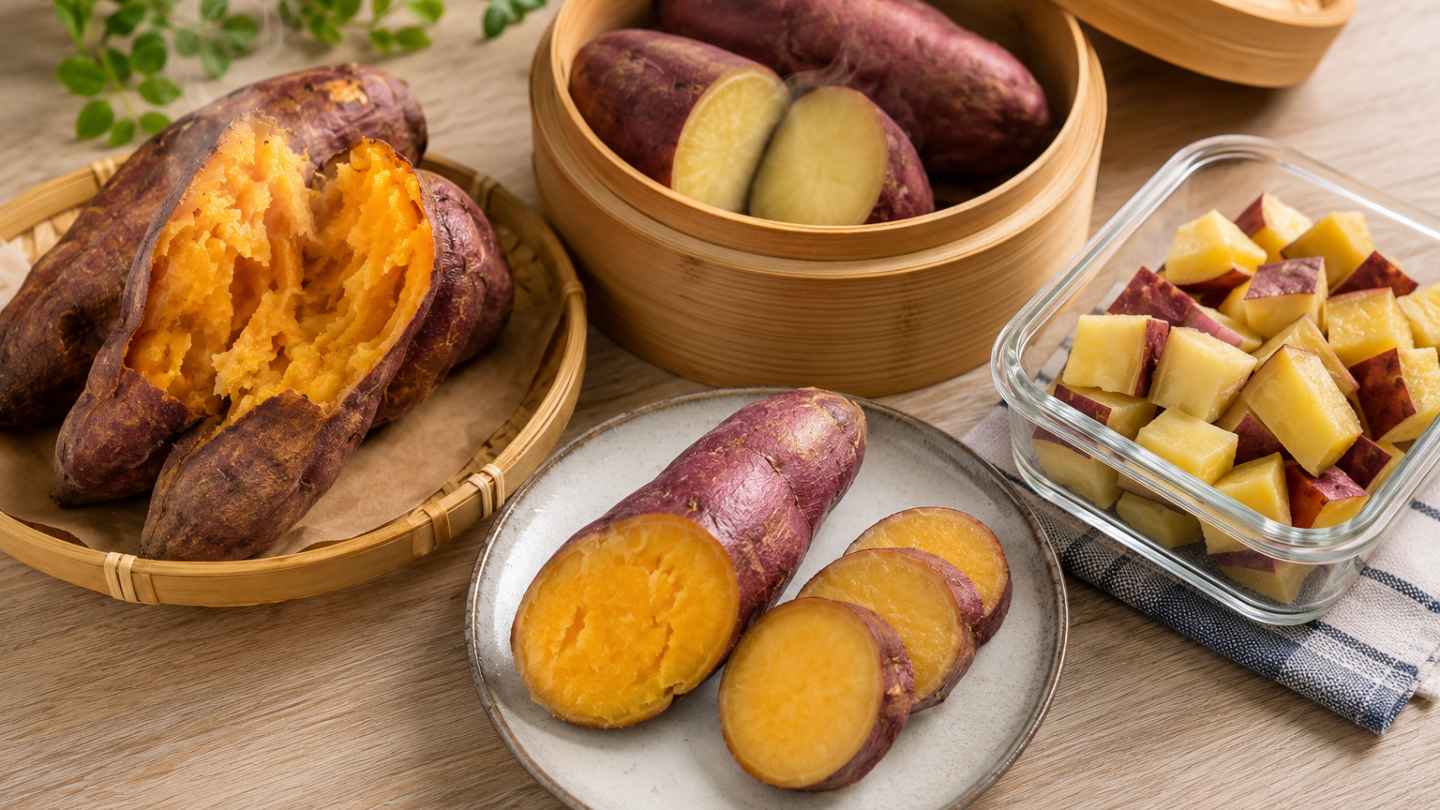
Grilled sweet potato (increases blood sugar faster)
Despite its attractive aroma and sweetness, baked sweet potatoes at high temperatures cause starch to be potassized, partly turning into maltose sugar. The longer the baking time, the higher the glycemic index (GI), causing blood sugar after eating to rise faster than other cooking methods.
Boiled or steamed sweet potatoes (a better option)
Boiling or steaming using lower temperatures and more moisture helps stabilize the starch structure. As a result, it has a milder effect on blood sugar than baked sweet potatoes.
Sweet potatoes cooled or chilled (recommended)
After boiling, cooling potatoes or storing them in the refrigerator before eating will increase the amount of resistant starch. This type of starch is difficult to digest in the small intestine, helping to slow down the process of blood sugar increase, and is also a source of nutrition for beneficial intestinal bacteria.
Besides, we should eat sweet potatoes with eggs, chicken, fish or nuts, olive oil, avocado... to help slow down the process of starch digestion, thereby limiting sudden blood sugar spikes after meals.
Boiled sweet potatoes can be chopped and mixed with salad or eaten with vegetables. The abundant fiber from vegetables helps slow down sugar absorption and create a longer feeling of fullness.
You can add pomegranate-sized sweet potatoes to rice or use sweet potatoes instead of a portion of starch in meals. This method helps reduce white rice consumption, increase fiber and support more effective blood sugar control.


