
I still think I am healthy because I don't feel pain, don't feel the mass or have any other signs. After my friend's incident, I thought I should also go for a check-up even though at that time I still believed I was not sick," Ms. Thanh shared.
Tumor discovered when it was only the size of a rice grain
The decision to check her health after the incident of her friend gave Ms. Thanh results beyond her initial thoughts.
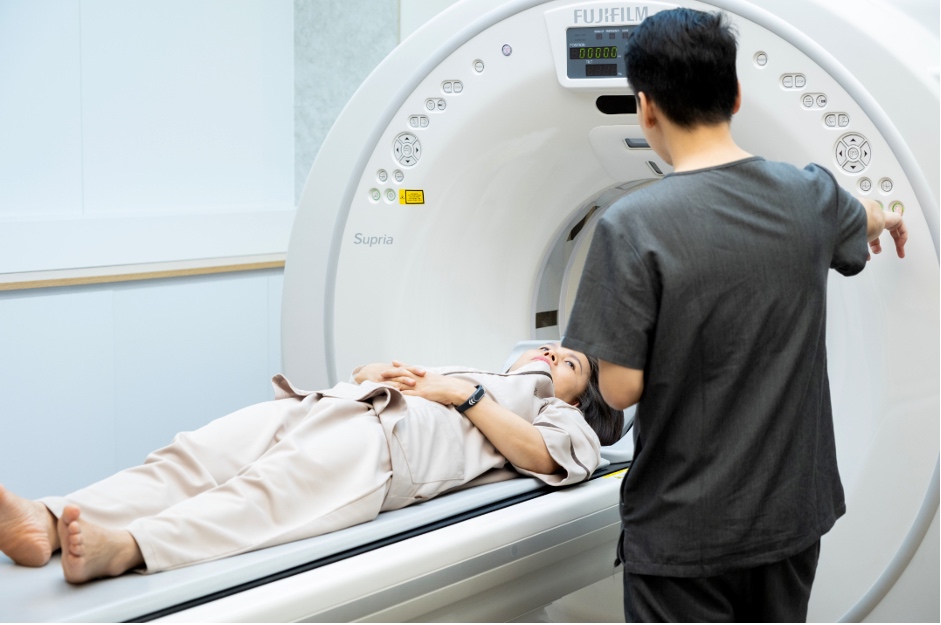
Mammography of the mammary gland recorded a cloudy spot with increased density of about 7 mm, uneven margin at the left breast, classified as BI-RADS 4A. Ultrasound continued to detect a suspected nodule in the same position, classified as BI-RADS 4B.
Faced with suspicious signs, the doctor prescribed a biopsy. The pathological examination results confirmed malignant lesions; the subsequent evaluation determined that she had stage IA breast cancer.
Before the results came, I still went to work and live as usual. I didn't feel pain, nor did I feel the mass, so I really didn't think I was sick," Ms. Thanh shared.
MSc.BS Nguyen Tat Dat, Deputy Director of the NURA Northern Center for Diagnostic Imaging, who participated in evaluating this case, said that the lesions of about 7 mm are still relatively small, so patients may find it difficult to recognize by touch.
According to doctors, whether a lesion causes symptoms or not depends on many factors such as size, location and level of impact on tissue or organ function. A minor lesion may have appeared but has not caused pain, has not created clear changes in daily life.
In other words, the time an abnormality begins to form and the time the body can sense that abnormality is not necessarily the same.
Damage can be seen before the body "speaks up
Ms. Thanh's case is not a phenomenon that only occurs in one patient.
A study published in the American Journal of Roentgenology, analyzed 1,460 patients who had been confirmed with breast cancer by biopsy, showed that in the group of patients detected by screening mammography without symptoms, 42% of tumors were 1 to 10 mm in size.
This number does not mean that every minor injury is cancer or that every woman without symptoms needs to undergo the same test method. More notable is that a malignant injury may have existed and can be identified on the image before it is large enough for the patient to recognize on their own.
This is also the gap between subjective health feelings and objective information obtained through examination, risk assessment and appropriate testing methods.
For Ms. Thanh, mammography and ultrasound are not the final diagnostic steps. These methods help doctors identify abnormal locations and decide to perform a biopsy, or in other words, the step to determine the nature of the injury.
After being diagnosed with stage IA breast cancer, she was transferred to specialized treatment and surgery in the direction of preserving breasts. After treatment, she gradually returned to work and daily activities.

No symptoms don't mean you have to check as much as possible.
The fact that symptoms have not yet appeared is not enough to completely eliminate the risk. However, this does not mean that a healthy person needs to undergo as many tests as possible.
Screening is valuable when it is carried out for the right subjects, with the right methods, and there are subsequent handling steps if abnormalities are detected.
Age, gender, family history, lifestyle factors, underlying diseases, and previous check-ups are information that can help doctors assess risks and advise on appropriate methods. Screening recommendations also vary from disease type to target group.
An abnormal result through screening is not necessarily synonymous with cancer diagnosis. Depending on the case, patients may need to undergo further diagnostic imaging, endoscopy, tests or biopsy to reach a conclusion.
Therefore, a screening process not only requires the ability to identify abnormal signs but also requires a doctor to evaluate the results, stratify risks and guide the next steps.
From abnormal detection to next step of handling
Currently, many medical facilities are developing screening models in the direction of combining technology with professional evaluation by doctors.
A NURA representative said that as of mid-August 2026, the system has screened 42,084 customers, recording 71,633 health issues to note, of which nearly 200 cases of cancer were detected at an early stage. The figures show that in reality, a significant amount of abnormalities can be identified through proactive testing, instead of only appearing when patients have clear symptoms.
When suspicious signs are detected, the examiner is advised on the next check-up step or connected with a suitable specialist. Ms. Thanh's case clearly shows this process, diagnostic imaging helps detect abnormalities early, the biopsy and dissection of the disease are followed by cancer conclusions.
After the treatment process, Ms. Thanh said that the biggest change is not the worry about the disease, but the way she perceives the feeling "I am still healthy".
“Previously, I often thought that if my body had no problems, there was no need for examination. After this time, I understood that there were changes that I could not feel on my own. What makes me feel most fortunate is that the disease was detected when it was still in an early stage,” she said.


