
Real-world records show that recently, the number of people coming for examination at health stations has increased significantly, especially the need for examination and treatment using traditional medicine (YHCT).
At An Hoi Tay Ward Health Station, Ms. Van Thi Cham (59 years old, Hue City), during a visit to Ho Chi Minh City to visit her child, decided to come for examination after being introduced to acupuncture services here by neighbors. With a history of insomnia and prolonged headache for many years, she was prescribed a continuous 10-day acupuncture course by a doctor, combined with using traditional medicine.
What surprised Ms. Cham was that the treatment cost was quite low and she still enjoyed health insurance even though she registered for initial medical examination and treatment in another locality. "I was covered by insurance at 80%. The 10-day acupuncture course was only over 100,000 VND, very suitable for an elderly person like me, and I didn't have to go far," Ms. Cham shared.
Not only An Hoi Tay ward, at An Nhon Ward Health Station, from the early morning, the acupuncture area was always crowded. Many people had to queue to wait for their turn to be treated with methods such as acupuncture and acupressure.
Ms. Nguyen Thi An (68 years old, residing in An Nhon ward, Ho Chi Minh City) said that before, every time she went for a medical examination, she had to ask her children and grandchildren to take leave from work to take her to a higher-level hospital. Long travel became a major obstacle, especially when she had a background disease of hypertension and needed regular check-ups.
Since the nearby health station has more doctors, medical examination and treatment has become much more convenient. My neighbor and I often walk here for re-examination and medicine. When tired, we register for acupuncture, which is very convenient," Ms. An said.
According to pharmacist Trinh Van Tien, Director of An Nhon Ward Health Station, Ho Chi Minh City, this change is something that the grassroots health team had never clearly imagined before. "Currently, medical staff no longer sit and wait for patients but are always busy to serve the increasing medical examination and treatment needs of the people," pharmacist Tien said.
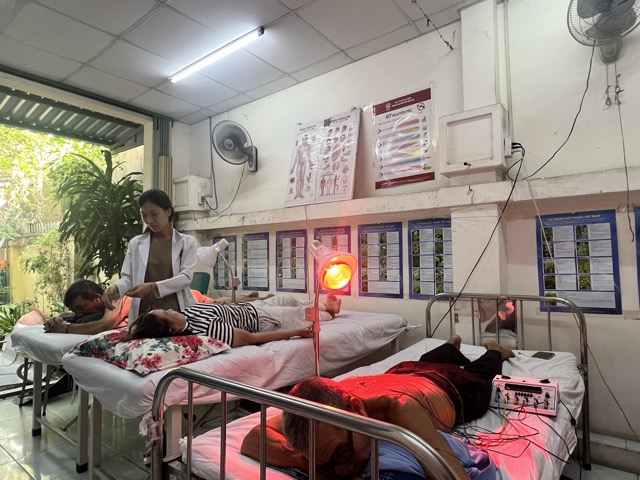
Reality shows that the traditional medicine medical examination and treatment network in Ho Chi Minh City has been widely deployed, from specialized and general hospitals to health stations and private clinics. Currently, about 75% of health stations in the city have deployed traditional medicine medical examination and treatment activities. However, this field has not yet developed commensurate with its potential, and the rate of people choosing is still modest compared to modern treatment methods.
To improve people's access to Traditional Medicine in an official and safe manner, the Ho Chi Minh City health sector is promoting communication work. Many health stations such as An Nhon, Phu Thuan, Thong Tay Hoi, Linh Xuan... use social networks, especially Facebook, to provide information, advice and answer questions for people.
Along with that, the dedication and closeness of the team of doctors and nurses at the grassroots health level are contributing to building trust, especially with the elderly group, those who need regular health care. Promoting the effectiveness of traditional medicine right in the community not only helps reduce the burden on upper levels but also brings appropriate, economical and more convenient treatment choices for people.


