In a statement on February 12, CK Hutchison shipping and telecommunications group (Hong Kong, China) warned that it would sue if Maersk shipping (Denmark) arbitrarily operated 2 strategic ports in the Panama Canal without their consent.
At the same time, this company has also officially notified the Panamanian authorities about a separate dispute based on an investment protection treaty. The group affirmed that it will use all international legal resources to protect its ownership rights against decisions from local authorities.
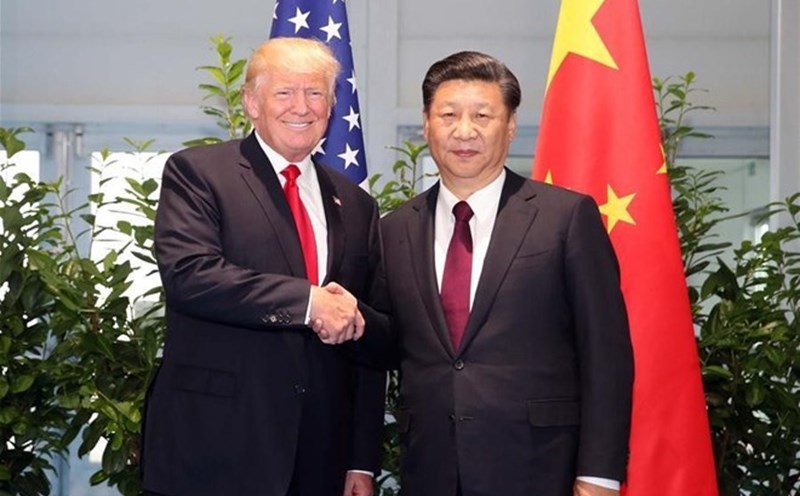
This confrontation quickly became a new geopolitical hotspot between Washington and Beijing, putting Panama in a difficult situation between the two superpowers. Previously, the US continuously expressed concern about China's widespread influence on the Panama Canal - a vital waterway that handles about 40% of US container traffic each year.
In response to pressure from Washington, CK Hutchison once intended to sell its port subsidiaries to a US-led coalition for $23 billion. However, this deal was intervened by Beijing and stalled immediately afterwards.
Tensions erupted fiercely when the Panamanian Supreme Court ruled that the concession contract of CK Hutchison's subsidiary operating these two strategic ports was "unconstitutional". Immediately, the Chinese side reacted strongly, calling this ruling "ridiculous" and political.
Beijing warned Panama that it would face severe economic consequences if it continued on the current path. To put pressure, China even asked state-owned enterprises to stop negotiating new projects in this Central American country.
On the US side, Washington considers the Panama court's ruling an important strategic victory. The US has always strived to prevent the control of pro-China businesses over key commercial infrastructure right in this area.
Through long-standing bilateral security treaties with Panama, the US holds a major lever to intervene in transport activities if it sees a risk that directly threatens national interests and security.
Experts believe that this legal dispute will continue and exacerbate the already strained relationship between the two largest economies in the world. While China is trying to protect billion-dollar infrastructure investments in Latin America, the US is drastically tightening its encirclement to ensure absolute security for global strategic shipping routes.
The current deadlock shows that the Panama Canal has become a strategic chessboard, where every move can change the balance of power in the Western Hemisphere in the near future.