
An unusual earthquake is occurring at the bottom of the Marmara Sea, the area of water connecting the Black Sea with the Aegea Sea. The faulty road running down this area has attracted special attention from the seismological community: Over the past 2 decades, increasingly stronger earthquakes have continuously appeared and gradually moved to the east.
The latest earthquake occurred in April, strong at 6.2 degrees richter, causing experts to worry that if the pattern continues, a major earthquake could approach just south of Istanbul.
Istanbul is in sight, said Stephen Hicks, a seismologist at the University College London. New research published in the journal Science shows that this series of earthquakes are heading towards a 15-20km-long "locked" section on the Marmara main fault. If this weakness bursts, it can release an earthquake of 7.0 degrees or more.
The timing of the incident is still completely uncertain. Shock prediction - patri patricia Martinez-Garzon, co-author of the study from GFZ Germany, emphasized. But understanding the mechanism of activation and identifying abnormal signals is extremely important to minimize damage.
Turkey is not unfamiliar with earthquake disasters. In February 2023, two consecutive earthquakes of 7.8 and 7.5 degrees Celsius swept through southern Turkey and Syria, killing at least 55,000 people.
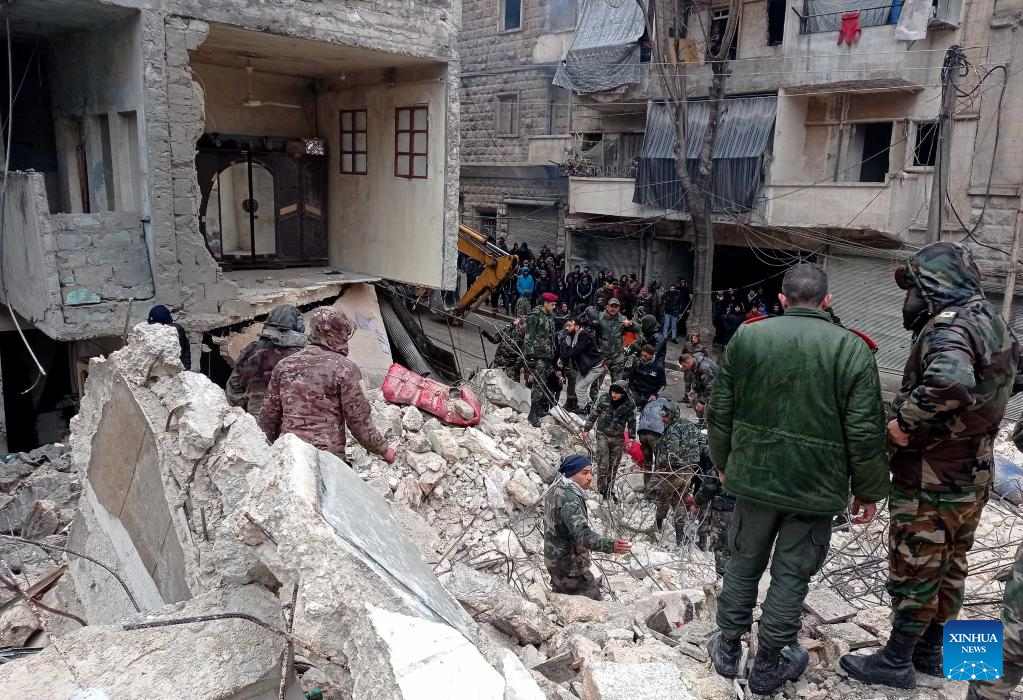
The prospect of a major earthquake hitting Istanbul, a city of nearly 16 million people, is not new but always urgent. A strong earthquake near Istanbul could cause the worst humanitarian disaster in modern history, warnedhead Hubbard, an expert from Cornell University.
The current attention is on the North Anatolian fossile system - the boundary created where the Anatolian plateau slides across the Aoa plateau. This 1,200km long fault has been active recently, but the Marmara section under the southwestern sea of Istanbul has been silent for centuries. The last time the area witnessed a major earthquake was in 1766.
Data over the past 20 years shows a series of unusual changes: The 2011 5.2 minute earthquake in the west severed Marmara, followed by the 2012 5.1 minute earthquake in the east.
In 2019, the 5.8-degree match took place in the central section. In April 2025, the 6.2-degree match will appear in the east. Scientists question whether the next match will be stronger, and if it will happen right in Istanbul?
No one is sure. But another moderate earthquake could add strength to the eastern fracture which could trigger a major quake the city fears. And even with just a slight increase in size, the released energy can be many times greater, causing serious damage.
But like the double disaster in 2023, the new factor of humanity is what makes Istanbul especially vulnerable. Decades of uncontrolled growth, dense construction, and non-implemented construction standards, along with development on weak land, have pushed the city into the highest risk position.


