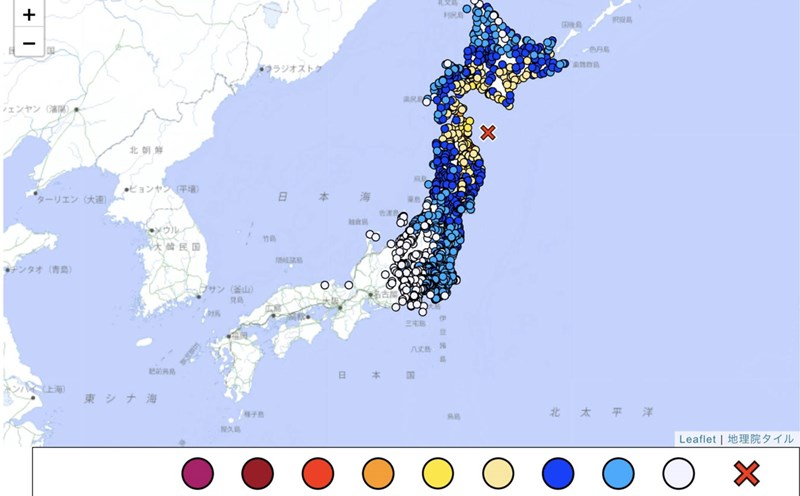
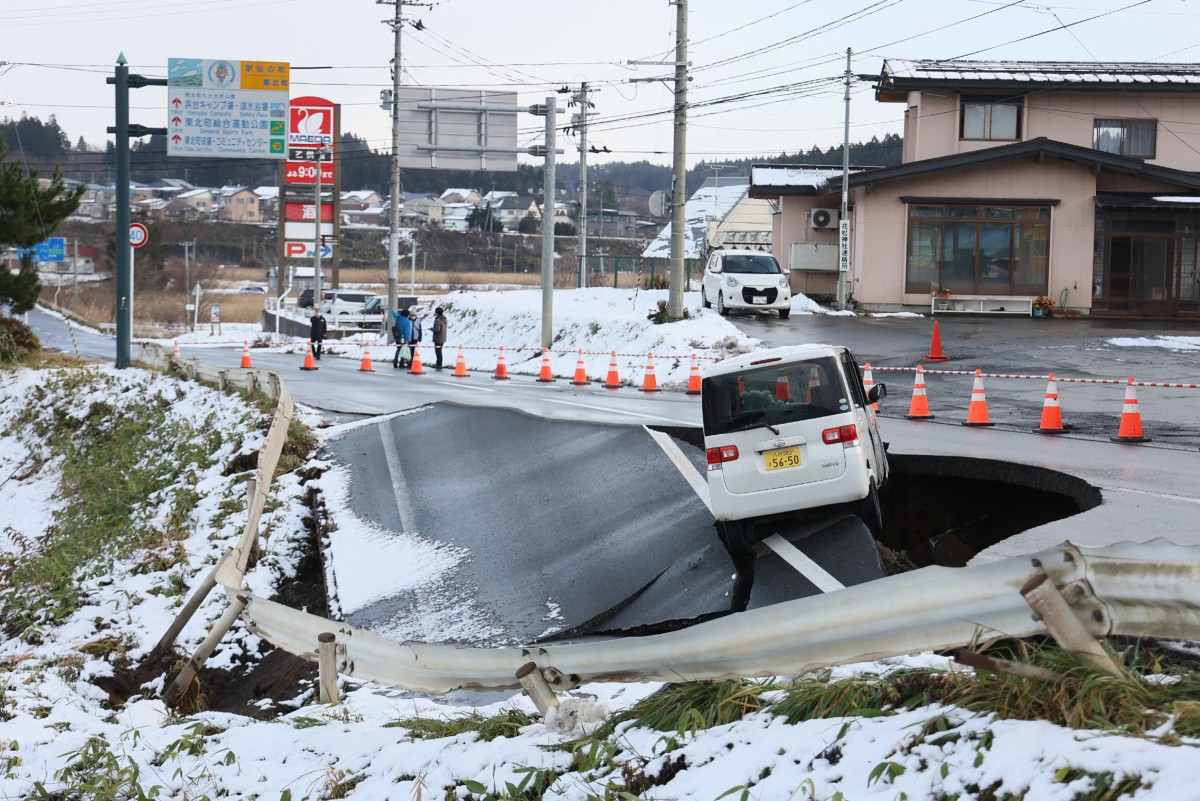
On December 9, Japan issued a "super earthquake" warning (megaquake advisory) after a 7.5 degree richter earthquake shook the eastern coastal area of Aomori on the night of December 8, injuring at least 34 people and damaging many roads and structures.
Although the government stressed that this was not a forecast and the likelihood of an earthquake of 8 degrees richter or more was only about 1%, the warning was issued as an urgent reminder of the same danger as the 2011 earthquake and Tsunami disaster.
The Japan Meteorological Agency (JMA) said the earthquake on the night of December 8 occurred off the coast of Aomori - the border point between Honshu and Hokkaido islands. Many people panicked and ran outside in the middle of a landslide that lasted nearly 20 seconds.
Daiki Shimohata, 33, living in Hashikami, told AFP: We have never had such a strong and long shake-up. I could only hug my two children and run. It feels like back to 2011.
After the earthquake, the risk of a larger one - 8 degrees or more - is set to increase within a week, especially in the Hokkaido and Sanriku regions. This is the border between the two ditches of Japan Trench and Chishima - which have created many terrible earthquakes in history.
The JMA highlighted the 2011 9.0-magnitude richter earthquake - which claimed nearly 20,000 lives and caused a nuclear disaster - that occurred just two days after a 7.3-magnitude earthquake in the Japan trough. Therefore, this warning is a "special vigilance measure" to avoid repeating the same disaster.
According to the latest estimate from the Japanese government, an offshore super earthquake in Hokkaido - Sanriku could create a 30m high song that swept away entire coastal towns.
The total human losses could amount to nearly 200,000 people, more than 220,000 homes destroyed, and economic losses could be around $31 trillion worth of Yen (198 billion). In the winter, about 42,000 people are at risk of dying from hypothermia after evacuation.
This warning covers 182 urban areas stretching from Hokkaido to Chiba. The government calls on people to stay calm but prepare all response plans carefully.
Localities have urgently inspected relief warehouses, communication equipment and warning systems. Iwaki City (Fukushima) requires people to register for an emergency warning email, while Oarai Town (Ibaraki) checks the wireless broadcasting system to ensure information is transmitted immediately.
Japan activated another super earthquake warning in the summer of 2024, involving the Nankai trough - the area south of the South Pacific. However, the vague announcement at that time caused panic among people, the supermarket ran out of instant noodles, rice and water; many cultural events were canceled; businesses were closed for many days.
This time the Government affirms that the message is conveyed clearly, avoiding misunderstanding. There is no specific forecast for the time or location of the super earthquake. People should be vigilant but still live normally, said natural disaster prevention official Tsukasa Morikubo.
Japan is located on the Pacific Ring Road, suffering about 20% of the world's total number of strong earthquakes.