Two consecutive strong earthquakes raise concerns about super earthquakes

Song Minh |

In less than 3 days, two earthquakes with a force of over 7 degrees occurred in Alaska (USA) and Japan, raising concerns about a more serious super earthquake.

On December 6, a 7.0-magnitude earthquake occurred in the remote area east of Alaska, near the Canada border. The location far from residential areas helps limit damage, but its intensity is still considered enough to cause great damage if it occurs near cities.

Just 2 days later, on December 8, a 7.6-magnitude earthquake rocked northern Japan. This strong earthquake prompted a Tsunami warning, forcing tens of thousands of people to evacuate and at least 30 injured before the warning was lifted.

Both areas continue to record many aftershocks. Japan has warned that another stronger earthquake could hit within a week, requiring people from Hokkaido to Chiba to remain on high alert.

According to statistics from the US Geological Survey (USGS), the world records an average of 16 major earthquakes each year: 15 of which are at 7.0 degrees richter or higher and 1 of which is at 8.0 degrees or higher. In the past 4 to 5 decades, this number has exceeded the average many times.

However, experts say that the two strong earthquakes that occurred close together in time were not too unusual.

Dr. Lucy Jones, a seismologist at CalTech, emphasized: In fact, we average one earthquake of 7.0 richter per month worldwide. The two earthquakes in Alaska and Japan with such intensity appearing close together for several days is something that can happen every few years.

Ms. Lucy Jones also said that there is no scientific evidence that Alaska and Japan are seismically linked, as the aftershocks only occurred near the center of the earthquake, and the two sites were thousands of kilometers apart.
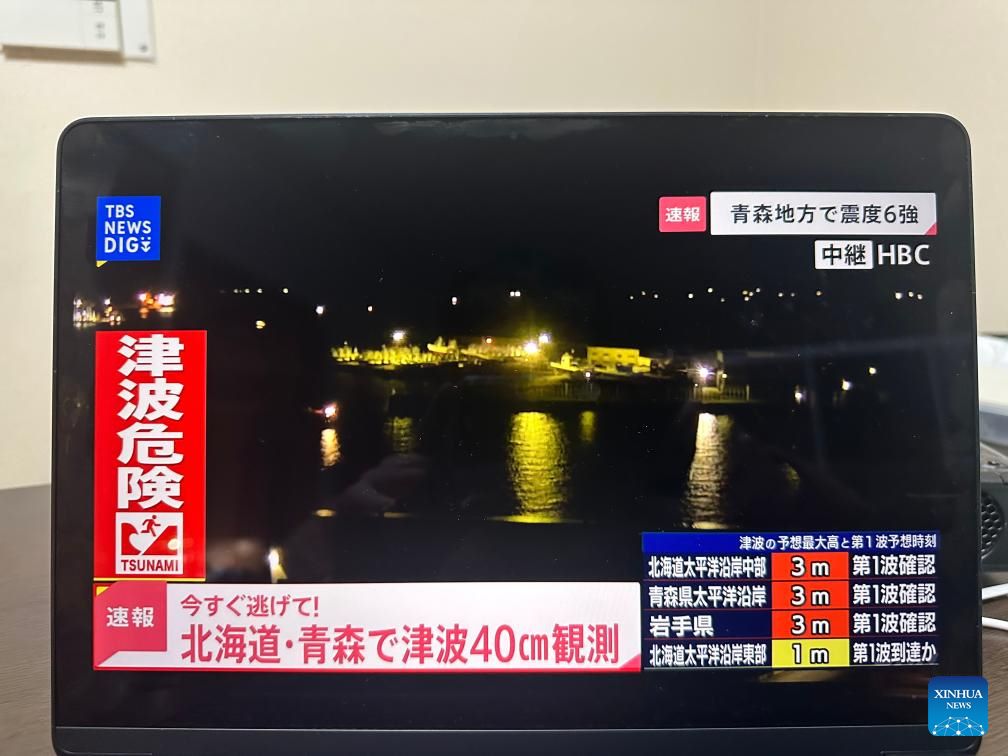
Thong tin dong dat hien thi tren man hinh o Tokyo, Nhat Ban, ngay 9.12.2025. Anh: Xinhua
Earthquake information is displayed on the screen in Tokyo, Japan, on December 9, 2025. Photo: Xinhua

Despite no direct connection, two consecutive earthquakes still remind us of an unacceptable truth: science cannot predict the time of the earthquake.

The USGS frankly said: No one can predict the exact earthquake. We can only assess the likelihood of future disruptions based on the history and structure of the disruptions.

After each earthquake, there is always a 5% chance of a stronger match appearing nearby in a few days. The proportion is small but much larger than the basic level, and this is why Japan has to continuously warn.

A typical example is the 2019 in Ridgecrest (California, USA), a 6.4-magnitude richter hit on July 4, and just one day later, a 7.1magnitude match - the largest in southern California in 20 years - appeared.

According to the USGS, 37 US states have recorded earthquakes of 5.0 degrees or more in the past 200 years, the most dangerous of which is the West Coast and southern Alaska - where large tectonic boundary areas are concentrated.

The most concern area is currently the Cascadia subduction zone, which stretches from northern California to Canada. This is where a 9.0-magnitude earthquake occurred in 1700. Oregon's emergency management agency said there is a 37% chance of a 7.1-magnitude or more earthquake in Cascadia in the next 50 years.

Experts warn that a super earthquake (The Big One) could happen at any time, or not for centuries.

Song Minh
RELATED NEWS

Japan warns of super earthquake, risk of 30m Tsunami next week

|

Japan warns of the risk of a super earthquake of 8 degrees or more next week, causing a 30m high Tsunami and causing terrible damage.

Quite a few earthquakes after strong earthquakes, posing great potential risks

|

A 7.0-magnitude earthquake rocked the recessed area between Alaska (USA) and Yukon (Canada) at noon on December 6, causing more than 20 consecutive aftershocks.

Strange earthquake signals appear under the most dangerous super typhoon on Earth

|

American scientists have just discovered a completely new form of seismic signal in Alaska - an area considered the "production site" of a rare super-tsune on Earth.

Two consecutive strong earthquakes raise concerns about super earthquakes

|

In less than 3 days, two earthquakes with a force of over 7 degrees occurred in Alaska (USA) and Japan, raising concerns about a more serious super earthquake.

sad news

|

Mr. Ngo Duy Son, born in 2013, passed away at 1:45 p.m. on December 10, 2025 (ie October 21, At Ty year), at the age of 93.

The role of the Vietnam Fatherland Front in the market economy and international integration in the current period

|

On December 10, in Hanoi, the Standing Committee of the Central Committee of the Vietnam Fatherland Front organized a scientific workshop on "New factors of market economy and international integration affecting the gathering work, promoting the strength of national solidarity and the role of the Vietnam Fatherland Front in implementing a market economy in our country".

SEA Games 33 Medal Schedule on December 10: Vietnam temporarily ranked 4th

|

Updated the total score for the 33rd SEA Games medal table after the end of the competition on December 10.

Image processing process of AI cameras is about to spread in Hanoi

|

Hanoi - The City Police are about to put into operation more than 1,800 AI cameras, installed at nearly 200 intersections in the area.

Japan warns of super earthquake, risk of 30m Tsunami next week

Song Minh |

Japan warns of the risk of a super earthquake of 8 degrees or more next week, causing a 30m high Tsunami and causing terrible damage.

Quite a few earthquakes after strong earthquakes, posing great potential risks

Khánh Minh |

A 7.0-magnitude earthquake rocked the recessed area between Alaska (USA) and Yukon (Canada) at noon on December 6, causing more than 20 consecutive aftershocks.

Strange earthquake signals appear under the most dangerous super typhoon on Earth

Khánh Minh |

American scientists have just discovered a completely new form of seismic signal in Alaska - an area considered the "production site" of a rare super-tsune on Earth.