
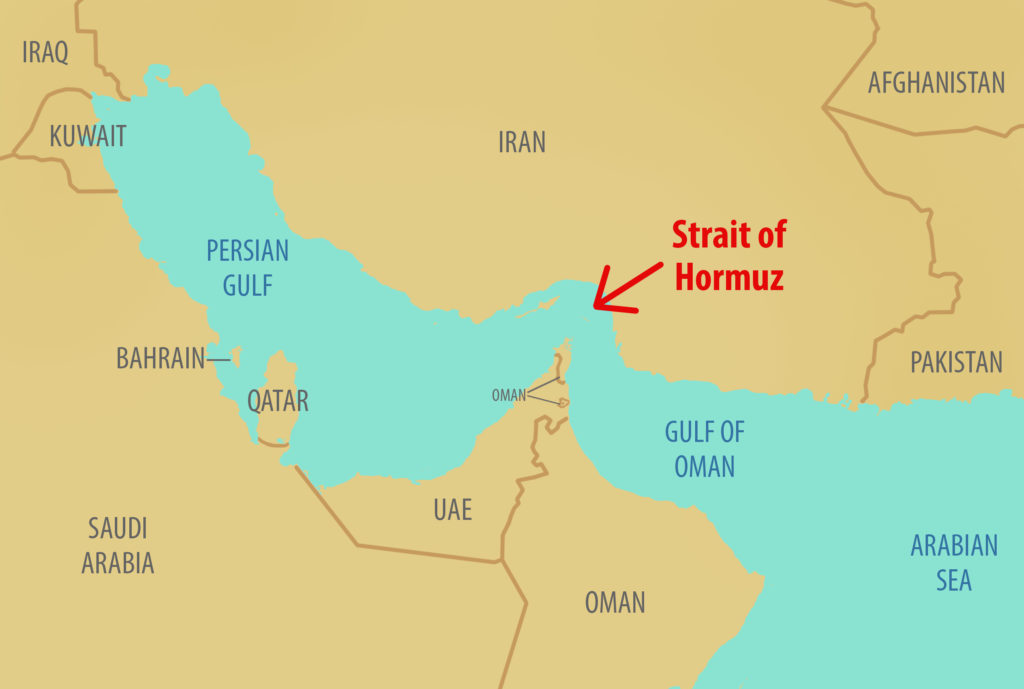
It all revolves around the Strait of Hormuz - which used to transport about 20% of global oil and liquefied natural gas before the war. According to Reuters, when this route was disrupted, Iran's control suddenly became a "golden lever" in the energy game.
Toll collection through the strait: "Money mine" revealed
According to maritime transport sources, Iran has started collecting transit fees, with at least one ship having to pay up to 2 million USD to pass through Hormuz.
Before the war, about 150 ships traveled through this route every day. If similar fees are applied, Tehran could earn up to 110 billion USD per year - a figure enough to change the regional financial balance.
Not stopping at fixed fees, Iran can also apply more sophisticated models such as charging fees based on ship tonnage or even based on commodity profits. This is a way to help Tehran "participate" directly from the huge oil and gas profits of the Gulf countries.
The profit problem of hundreds of billions of USD
Before the war, about 20 million barrels of oil per day passed through Hormuz. However, the possibility of redirection through the pipeline by Saudi Arabia and the UAE only solved less than half.
That means about 10 million barrels/day are "stuck" in the Persian Gulf if Hormuz is not cleared.
Assuming oil prices are at 60 USD/barrel and mining costs are about 5 USD, producing countries could lose up to 200 billion USD in profit each year if they cannot export.
Meanwhile, Qatar - a gas "giant" - used to earn about 50 billion USD in revenue each year, mostly profits. The total regional oil and gas profit "piece" could reach 250 billion USD/year.
If Iran forces countries to share a portion of this profit to reopen Hormuz, Tehran can completely earn about 100-120 billion USD per year.
500 billion USD "money printing machine
In the average scenario, if the toll collection mechanism exists for 3-4 years - the time needed for countries to build alternative pipelines - Iran could collect a total of nearly 500 billion USD.
Of this, about 350 billion USD from oil and an additional 140 billion USD from gas, will turn Hormuz into one of the largest "money-making machines" in the history of the energy industry.
Geopolitical power struggle
However, dividing this "piece of cake" is not simple. Gulf countries can delay, relying on national assets to endure in the short term, in order to avoid paying high fees to Iran.
Conversely, Tehran may use the prolonged blockade itself to put pressure, causing economic centers such as Dubai, Doha or Riyadh to suffer long-term losses.
Outside, the US may threaten to sanction countries that pay fees to Iran. But the paradox is that if Hormuz continues to be congested, oil prices will rise sharply.
Iran may also choose to keep its supply limited to maintain high oil prices, thereby increasing pressure and profits. But this strategy poses risks as it may trigger strong reactions from major consumer countries.
In every scenario, one thing is gradually becoming clear: If it continues to control Hormuz, Iran will not only hold the "oil valve" of the world, but can also turn the crisis into a huge source of profit - something that few people thought of when the conflict began.


