
CNN quoted US intelligence sources as saying that after 5 weeks of continuous airstrikes, Iran still retains about half of the missile launchers and thousands of suicide unmanned aerial vehicles (UAVs) in its arsenal.
A intelligence source frankly stated: Iran "is still fully ready to cause large-scale chaos". Notably, the remaining launchers may include systems buried underground by airstrikes but not completely destroyed.
Not only that, about 50% of Iran's UAV capabilities still exist, equivalent to thousands of devices. This is a low-cost but highly effective weapon, once widely used in "group" attacks.
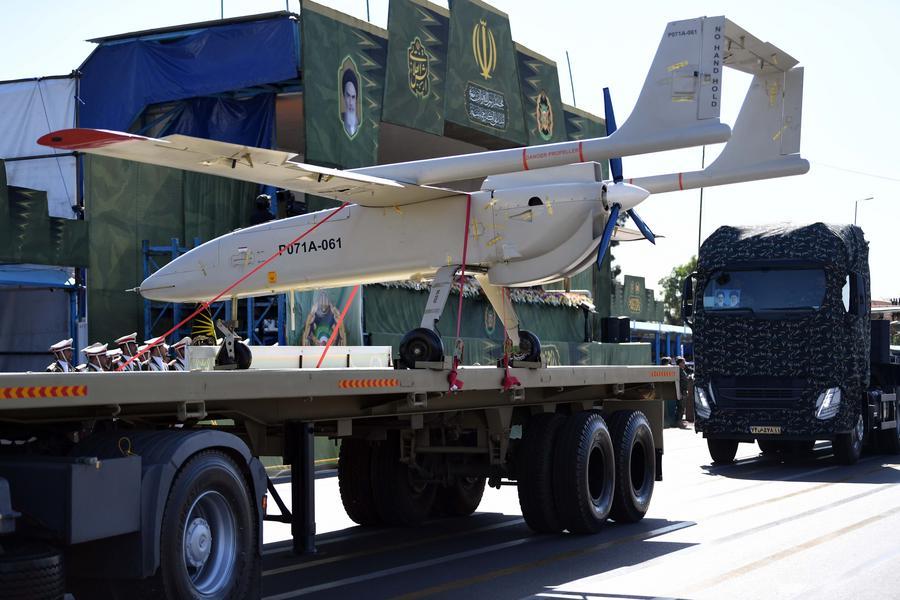
Another key point is that Iran's coastal defense cruise missile system is largely intact. This is a "strategic card" to help Tehran maintain its ability to threaten the shipping line through the Strait of Hormuz - the world's most important energy bottleneck.
These intelligence assessments are somewhat contrary to President Donald Trump's statement, who affirmed that Iran's missile and UAV capabilities have been "significantly reduced" and most of the launchers have been destroyed.
On the ground, the US Central Command (CENTCOM) said it had attacked more than 12,300 targets in Iran. These attacks are believed to have significantly weakened military capabilities and eliminated many senior leaders, including Supreme Leader Ali Khamenei.
However, the problem lies in the fact that destruction does not mean complete control.
The Pentagon admits that the number of missile and UAV attacks from Iran has decreased by 90%, but this reflects a slowdown in the rate of use, not that all capabilities have been destroyed.
The main reason Iran "survived" airstrikes lies in its extremely complex underground military infrastructure system. For decades, the country has built a large-scale network of tunnels and caves to hide launchers and weapons.
Mobile launchers can "shoot and then run", constantly changing positions, making tracking and destroying difficult - similar to the challenge the US once faced with the Houthi forces in Yemen.
Meanwhile, despite heavy damage to the Iranian navy, the navy of the Islamic Revolutionary Guard still retains about half of its capability, with hundreds, even thousands of small ships and unmanned vehicles at sea.
This is the key force in attacking merchant ships in the Strait of Hormuz - where the US is still unable to guarantee a complete reopening before the end of the military campaign.
Analysts believe that the fact that Iran's important weapon systems still exist means that the conflict is unlikely to end as quickly as expected.
A source assessed that President Donald Trump's goal of ending the Iran campaign in 2-3 weeks is unrealistic, because Iran still has many "cards" that have not been rolled out.
In other words, despite heavy losses, Iran has not lost its counter-attacking capability. And while missile depots, UAVs and underground systems are still there, the Middle East is still facing the risk of escalation at any time.


