
For the US, prolonged Iranian conflict is not a big problem. President Donald Trump affirmed that the US military is capable of maintaining a long-term campaign. But for Israel - a country that has been tired after many consecutive fronts, the problem is not simple.
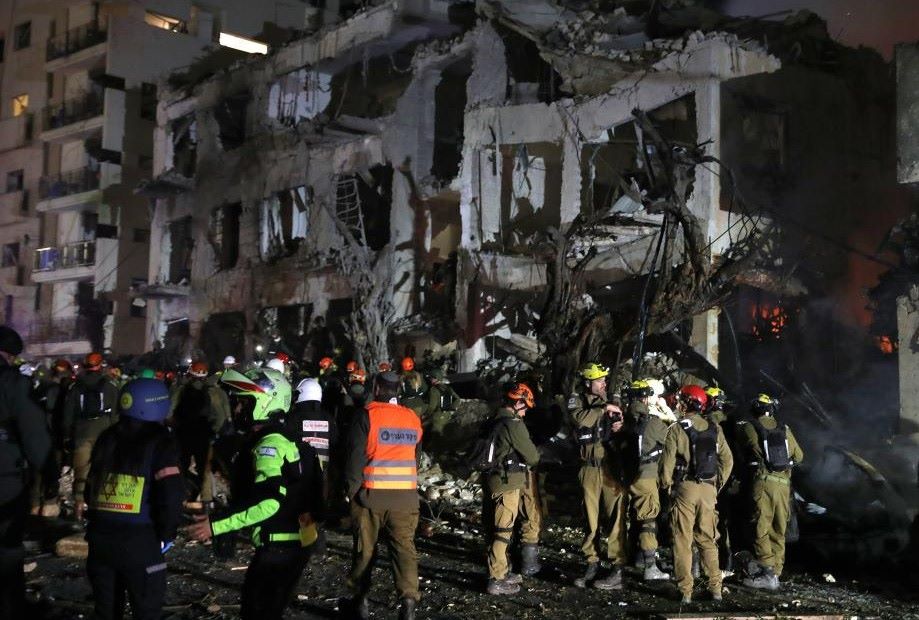
Since Israel launched a new offensive into Iran on February 28, cities such as Tel Aviv and Haifa have continuously been hit by missiles and unmanned aerial vehicles responding. Alarm bells rang densely, schools were closed, and tens of thousands of reservists were mobilized. A society that was used to military operations of "quick attack, quick victory" now has to get used to the rhythm of bomb shelter life.
Aljazeera quoted political economist Shir Hever as saying that Israel is being drawn into a "militarist wave". If in the 12-day war in June 2025, the main psychology was panic, this time it was high confidence. However, he warned, that confidence could obscure the real limits.
How much military endurance?
In the first 5 days of fighting, Iran is said to have launched 500 ballistic missiles towards Israel. Each such missile forced Israel to respond with an interceptor missile. If this pace lasts, the big question is whether Israel's reserves are sufficient to maintain?
Israel possesses 3 main layers of air defense: Iron Dome intercepting short-range rockets; David's Sling countering medium-range missiles and Arrow 3 intercepting ballistic missiles.
The number of interceptor missiles in stock is not disclosed. However, in the previous conflict, Israel was said to have started to lack interceptor missiles as the fighting lasted. If this situation repeats itself, the military may be forced to "distribute" firepower, prioritizing the protection of military and political targets, meaning risks for civilians increase.
In the opposite direction, Iran is said to produce about 100 ballistic missiles per month after the June war. However, the actual capacity depends on the number of active launchers. "Having ammunition without guns is meaningless," an analyst commented.
Increasing socio-economic pressure
Two years of almost continuous fighting in Gaza, Lebanon, Syria and now Iran have left a heavy mark on the Israeli economy. In 2024, war costs in Gaza and Lebanon were reported to reach 31 billion USD. Preliminary data for 2025 shows that military spending could reach 55 billion USD.
Budget deficits increase sharply, national credit ratings are downgraded, while hundreds of thousands of reservists have to leave civilian work for a long time. Israel is simultaneously facing pressure on public debt, energy, healthcare and transportation.
However, many experts believe that the decisive factor is not necessarily money, but technology and supplies. If the US continues to provide advanced weapons, Israel can maintain the operation longer than expected, despite domestic pressure.
The longer the conflict lasts, the deeper the militarization of Israeli society becomes. A new generation growing up in a context of continuous conflict could shape the political arena in a tougher direction.
The problem therefore is not only how long Israel will have enough interceptor missiles in stock, but how many weeks or months the country's economy and society can endure a state of full-scale war, before having to pay a price beyond initial calculations.


