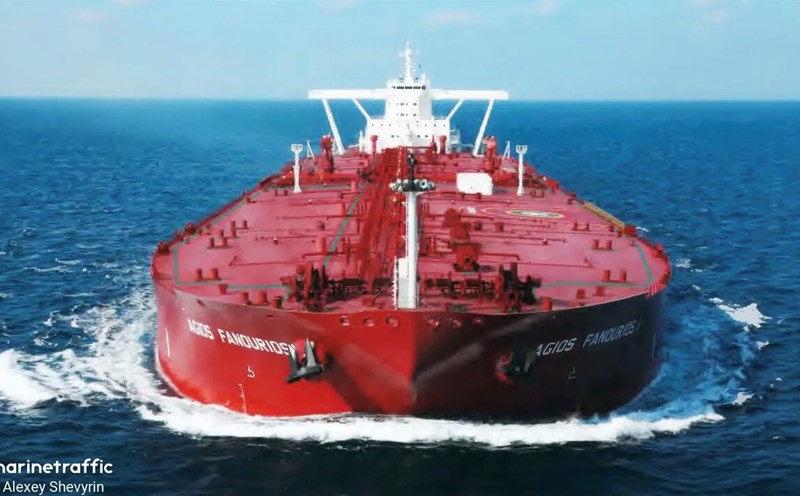
On May 25 (Singapore time), according to Reuters, some oil and liquefied natural gas (LNG) tankers began leaving the Strait of Hormuz, heading to customers in China and Pakistan after a long period of energy transportation in this area was disrupted.
Sea transport data shows that the LNG ship Fuwairit is moving through the Strait of Hormuz and is expected to dock in Pakistan on May 26. This Bahamian-flagged ship has been receiving goods at Ras Laffan port in Qatar since the end of March.
Another LNG ship, Al Rayyan, has also left the Hormuz Strait area. According to tracking data, the ship is currently operating outside the waters between Iran and Oman, and is expected to dock at a port in China at the end of June.
Besides LNG, the market also recorded the return of crude oil shipments. The large oil tanker Eagle Verona left Hormuz on May 23 and is expected to dock at Ningbo port, eastern China, on June 12.
This ship carries nearly 2 million barrels of Iraqi Basrah crude oil, which was loaded from the end of February. According to Reuters, Eagle Verona was stuck in the area for nearly three months before being allowed to continue its journey.
This is one of the few oil tankers allowed to leave the Gulf region through the maritime route designated by Iran in the context that military tensions in the region have not completely ended.
Previously, war between the US, Israel and Iran broke out from the end of February, causing transportation through the Strait of Hormuz to decline sharply. This is a strategic shipping route, where normally about 20% of global oil and LNG volume passes through.
According to Reuters, before the conflict occurred, the Strait of Hormuz recorded an average of 125 to 140 ships passing by per day. However, prolonged fighting has caused transport volume to decrease sharply, and at the same time caused hundreds of ships to anchor or wait for permits to move.
Sources said that there are still about 20,000 crew members trapped on hundreds of ships operating in the Gulf area.
Observers believe that the start of LNG and crude oil ships leaving Hormuz is the first positive sign for the global energy market. However, the current transport volume is still much lower than the pre-conflict period and cannot be considered a complete recovery of trade through this important sea route.