
The statement was made by Donald Trump on social media on April 12. According to a plan from the US Central Command (CENTCOM), the blockade of the strait may begin at 10 am on Monday, April 13 (US time, ie 9 pm on April 13 Vietnam time), applying to all ships entering and leaving Iranian ports. However, Washington affirms that freedom of navigation is still guaranteed for routes not directly related to Iran.
This move immediately raises the question: Why does Washington want to "close down" a road that they themselves have repeatedly asked Iran to open?
In fact, the Strait of Hormuz is not completely locked. Iran is applying a flexible form of control: allowing some oil tankers to pass through but charging fees, with information up to 2 million USD per trip.
More importantly, Tehran still maintains its own oil exports. According to market data, Iran's export output still averages about 1.85 million barrels/day - even slightly increasing compared to before.
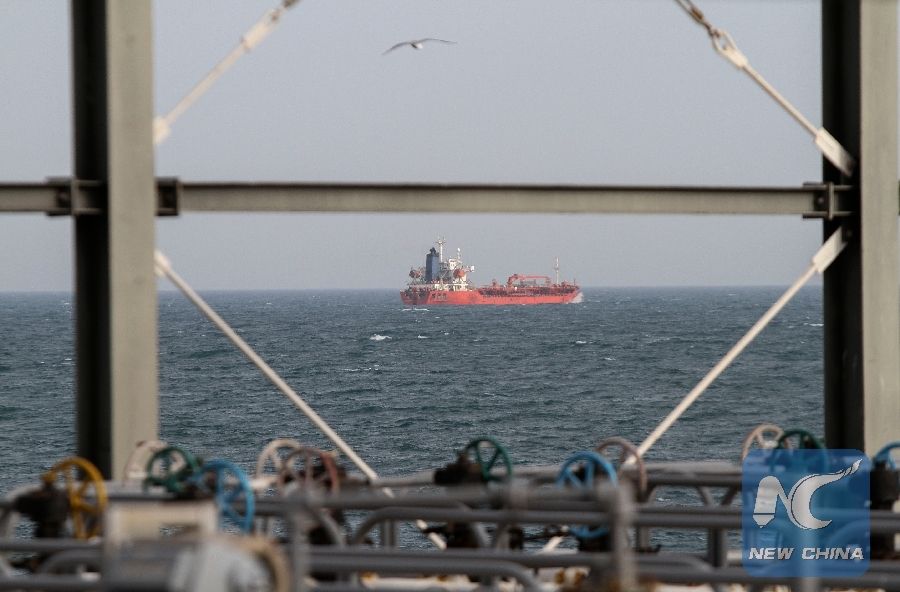
This turns Hormuz into a "conditional bottleneck": Not completely closed but enough to put pressure on the market and oil-dependent Middle Eastern countries.
In that context, Mr. Trump's threat to blockade has clear strategic significance: If the US really locks down Hormuz, money from oil - Iran's main financial source - could be squeezed.
This is a lever that Washington has long not dared to use thoroughly. The reason is very simple: If Iranian oil is also blocked, global oil prices could explode.
Therefore, during the tense period, the US Navy still "selectively ignored" allowing Iranian oil tankers to pass through to keep the supply from being completely broken.
Even in March, the US also temporarily licensed Iran to sell its oil inventories on oil tankers - a rare move that helped cool down the market.
For decades, the US has imposed oil sanctions on Iran. But the Trump administration recently eased partially, releasing about 140 million barrels of oil - equivalent to global demand in more than 1 day.
This move creates a paradox: Iran is both sanctioned and "opened the way" to sell oil. Not only that, Tehran also sells oil at prices higher than the Brent oil price standard, earning significant profits.
Pressure from high domestic gasoline prices forces the US to balance between two goals: putting pressure on Iran and maintaining the energy market stability.
The Trump administration has tried many measures to cool down energy prices, such as releasing strategic oil reserves, easing sanctions on Russian oil, and even indirectly legitimizing part of Iranian oil.
But now, the threat to blockade Hormuz shows that the White House is willing to take greater risks, pushing oil prices up to force Iran to de-escalate.
According to CNN, this is a dangerous gamble. If Hormuz is truly completely blockaded, the oil market could fall into a new shock, leading to inflation and global economic instability.
In other words, Mr. Trump's crackdown on Iran could also become a "double-edged sword" - both putting pressure on the opponent and causing the US and the world to pay the price.


