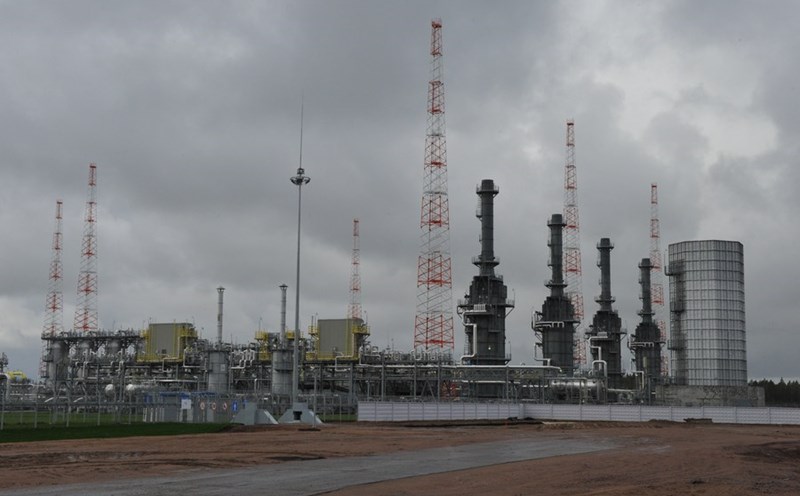
The Czech Republic has infrastructure, reserves and access to alternative suppliers to stop Russian oil imports. However, three years after the Russia-Ukraine conflict broke out, the Eastern European country has yet to make this strategic change, Reuters pointed out.
According to a recent analysis by the Center for Democratic Studies (headquartered in Bulgaria), in 2024, the Czech Republic will import 2.7 million tons of Russian crude oil, worth an estimated 1.5 billion euros ($1.6 billion). Although the amount of Russian oil imported by the Czech Republic has decreased by 30% compared to 2023, mainly due to three major incidents with the Druzhba oil pipeline.
The completion of the Trans-Alpina (TAL) oil pipeline expansion by the end of 2024 is likely to help the Czech Republic completely replace Russian oil. However, state pipeline operator MERO CR and the Orlen Unipetrol refinery have not yet fully exploited the new resource. Therefore, the Czech Republic still spends more than 100 million euros a month on Russian oil.
The Czech Republic has a strategic reserve of 3.6 million tons, which can meet nearly half of its annual consumption needs. However, in the last quarter of 2024, oil imports from Russia skyrocketed by 30%, reaching 970,000 tons. This is the highest quarterly volume since the European Union's oil embargo on Russia took effect in 2022. This trend will continue in 2025, when the Czech Republic buys an additional 220,000 tons of Russian oil.
Orlen Unipetrol said that long-term contract obligations with Rosneft do not allow immediate stopping of Russian oil imports. The plant's contract with Rosneft expires in mid-2025.
Russian oil prices are about 20% cheaper than Azerbaijan's crude oil prices on average in 2023 and 2024. However, retail fuel prices remained stable during this time, with gasoline and diesel prices averaging 1,500 to 1,360 euros/ton, respectively. Therefore, Orlen Unipetrol can take advantage of the cost difference.
Reuters forecasts that future price cuts for Russian oil could be even higher as the recent US tariffs could reduce global oil demand, forcing Russia to further price cuts.
Since the Russia-Ukraine conflict broke out in February 2022, the Czech Republic has spent 8.4 billion euros on Russian oil and gas, more than six times the 1.32 billion euros it has provided to Ukraine.
The Czech Republic continues to import refined oil products from Slovakia and Hungary - where Russian crude oil refineries under the exemption order are extended by the EU until June 2025. In 2024, Slovakia will export 710,000 tons of fuel to the Czech Republic, worth 520 million euros.
The Czech Republic's gas imports also have a similar trend. Predicting that Ukraine will end the transit of Russian gas by January 2025, the Czech Republic has increased its gas purchases from Russia by nearly 400% in 2024. In the last quarter of 2024 alone, monthly imports skyrocketed to 0.34 billion m3, 62% higher than the average in other quarters of the year.