In Yangon, Myanmar's largest city, and in the capital Naypyitaw as well as elsewhere, voters voted at high schools, government buildings and religious establishments.
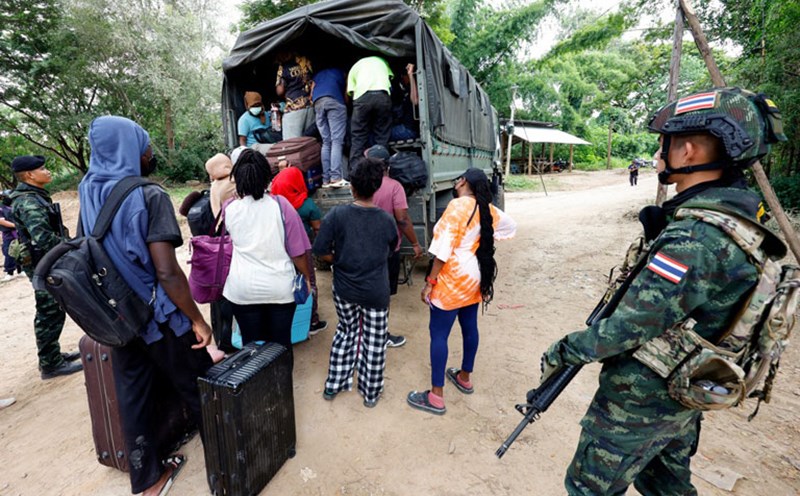
Security in Yangon has been significantly tightened since December 27, with armed security forces deployed outside polling stations and military trucks patrolling the routes.
Election officials have set up equipment and installed electronic polling machines, the type of machine used for the first time in Myanmar.
This is the first election held since the army overthrew the elected government of Aung San Suu Kyi in February 2021.
Suu Kyi, an 80-year-old former leader of Myanmar, did not participate in the election because she is serving a 27-year prison sentence. Suu Kyi's party - the National Alliance for Democracy - was dissolved in 2023 after refusing to register under new military regulations.
The election takes place in 3 phases, with the first round on December 28 held in 102 out of 330 towns in Myanmar. Phase 2 will take place on January 11, 2026 and phase 3 on January 25, 2026. The final results are expected to be announced at the end of January 2026.
There are more than 4,800 candidates from 57 parties competing for seats in national and regional legislative bodies, but only 6 national-level candidates are likely to gain political influence in Parliament.