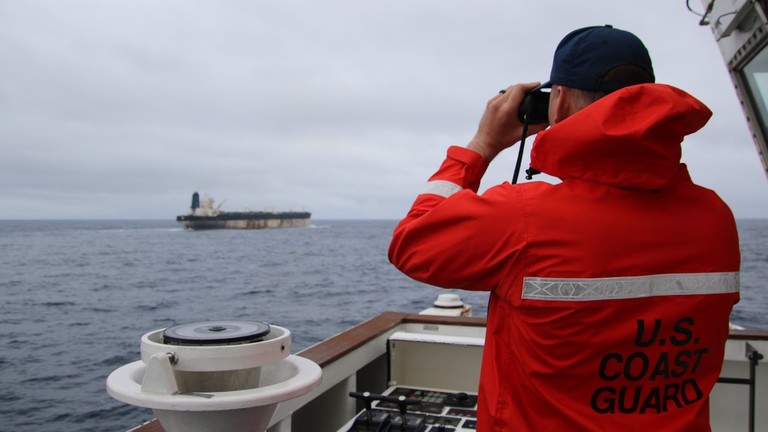
The ship, formerly named Bella 1 and operating under the name Marinera, fled the US Coast Guard for more than 2 weeks after escaping arrest near Venezuela.
This oil tanker was seized by US forces on January 7, although the Russian Navy was on its way to escort.
The incident marked a rare public confrontation between Washington and Moscow during Mr. Trump's second presidential term when the US leader pushed to end the Ukraine conflict.
What happened?
The US imposed a naval blockade on Venezuela in December to tighten power over President Nicolas Maduro's administration before he was unexpectedly arrested on January 3.
The travel ban on all sanctioned ships entering and leaving Venezuelan ports marks a serious escalation and threatens the country's important oil trade activities.
On December 20, the US Coast Guard tried to intercept the Bella 1 ship for not raising a valid national flag. This ship was sanctioned in July 2024 for allegedly transporting oil and creating financial resources for Hezbollah, and it left Iran.
The people on board did not allow the authorities to board and fled into international waters towards Europe.
For 2 weeks, the US Coast Guard chased the ship, even when a elite special operations team of the US military arrested President Maduro and took him to New York to face drug trafficking charges.
On New Year's Eve, the Kremlin officially asked the US to stop the pursuit.
While crossing the Atlantic Ocean, crew members renamed the Bella 1 ship Marinera, re-registered it in the Russian ship database and painted the Russian flag on the hull.
Russia is said to have dispatched a submarine to escort the ship on January 6, but it seems too late.
Before the reinforcements arrived, the US had caught up with the ship in the waters between Iceland and the UK. RT media channel released a clip showing US ships making the final effort to capture the ship.
The US European Command (USEUCOM) said this arrest supports President Trump's efforts "to target sanctioned ships that threaten the security and stability of the Western Hemisphere.
This is a Venezuelan submarine carrying sanctioned oil," White House Press Secretary Karoline Leavitt told reporters on January 7, adding that the arrest was allowed under court orders and the crew may face prosecution.
The British Department of Defense said it has provided logistical support for this operation.
How did Russia react?
The Russian Foreign Ministry said it is closely monitoring the situation and requesting "humanitarian and respectful treatment" for the Russian crew members on board.
The Russian Ministry of Transport condemned the arrest as an act of violating international maritime conventions.
According to the 1982 United Nations Convention on the Law of the Sea, freedom of navigation is applied in international waters, and no country has the right to use force against ships and boats legally registered by other countries" - the Russian Ministry of Transport stated clearly.
Russian Senator Andrei Klishas called the incident "a blatant act of piracy at sea internationally" in an article on his Telegram channel.