
On May 14 (US time), according to CNN, scientists discovered new clues showing that the sub-Saharan region in Africa may be in the early stages of a major geological process, in which the continent may be separated after several million years.
This process is believed to take place along the Kafue Rift, a fault zone belonging to a system of cracks about 2,500km long, stretching from Tanzania to Namibia. In geology, the rift is a crack in the Earth's crust, which can deform the surface, cause land subsidence and earthquakes.
Previously, geologists believed that Kafue Rift had been inactive for a long time. However, some experts now believe that the area may have reactivated in recent decades.
Previous evidence included very small earthquakes, not strong enough for humans to feel but still recorded by the device; increased underground temperatures; and very small changes in ground elevation detected by satellites.
The new study, published in the journal Frontiers in Earth Science, adds more geochemical data from this area. Ms. Rūta Karolytė, who led the study while still a postdoctoral researcher at Oxford University, said that this is another line of evidence, helping to reinforce the hypothesis that the Kafue Rift area is experiencing tectonic activity.
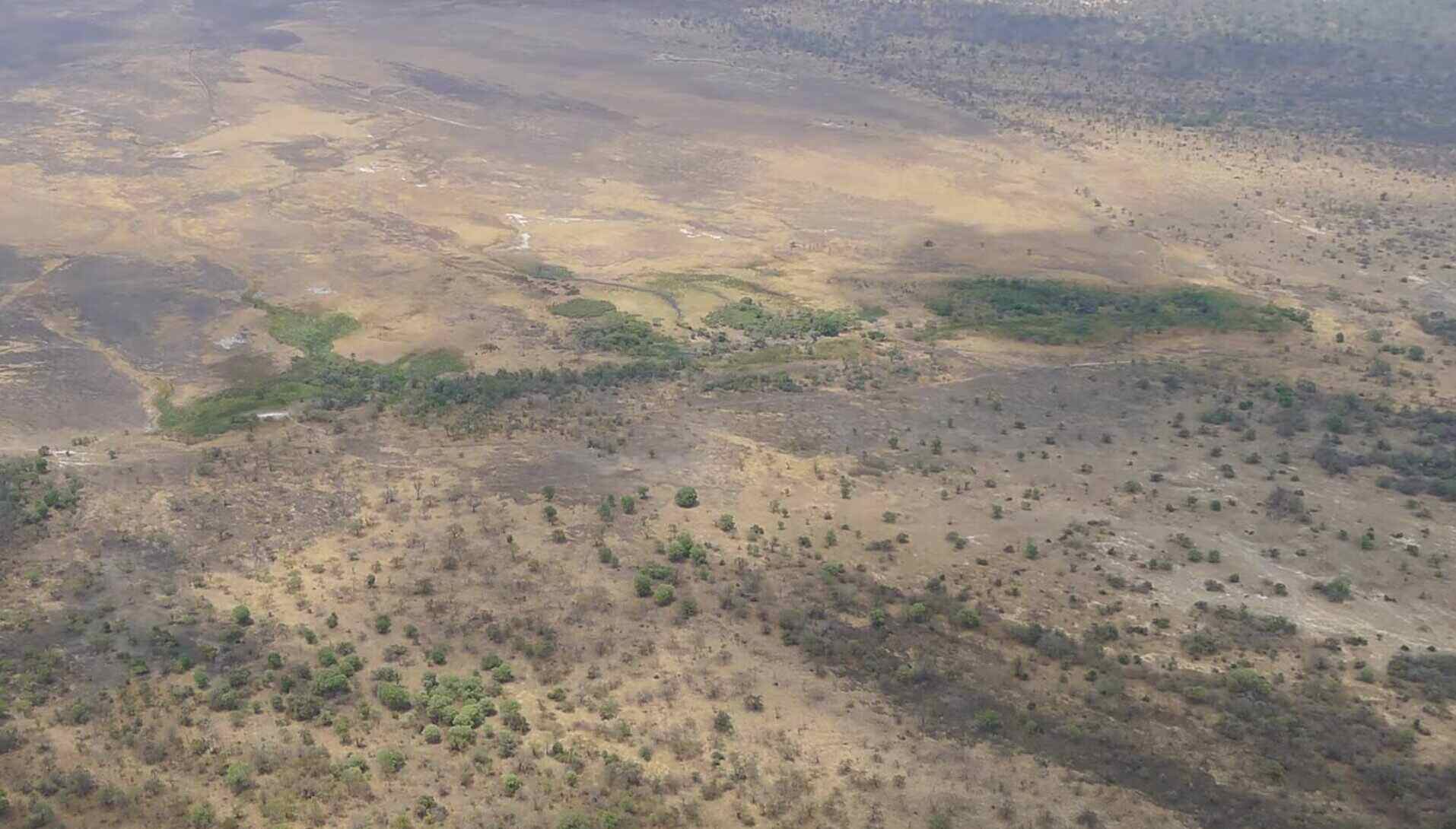
The research team collected gas samples from hot springs and geothermal wells in Zambia. They focused on the ratio between the two forms of helium, helium-3 and helium-4. The results showed that the amount of helium-3 was higher than commonly seen in the Earth's crust. This may be a sign that fluid from the Earth's mantle is rising to the surface.
According to scientists, when tectonic plates are stretched and begin to separate, matter from the mantle can move up close to the surface. Therefore, this helium signal may be an early sign that a new tectonic plate boundary is forming.
However, researchers emphasize that this is only the initial result. Data currently only comes from some sampling points within a narrow range, so it is necessary to continue to collect more evidence in a wider area.
If Kafue Rift continues to develop, the southern part of Africa may split in a very distant future. This process may be accompanied by more earthquakes, volcanic activity, the formation of deep valleys, lakes and eventually a new sea.
However, experts emphasize that Africa will not split in a short time. This process may take several million years, even 10-20 million years. For scientists, it is noteworthy that they may be observing a tectonic plate boundary in the newly formed stage.


