
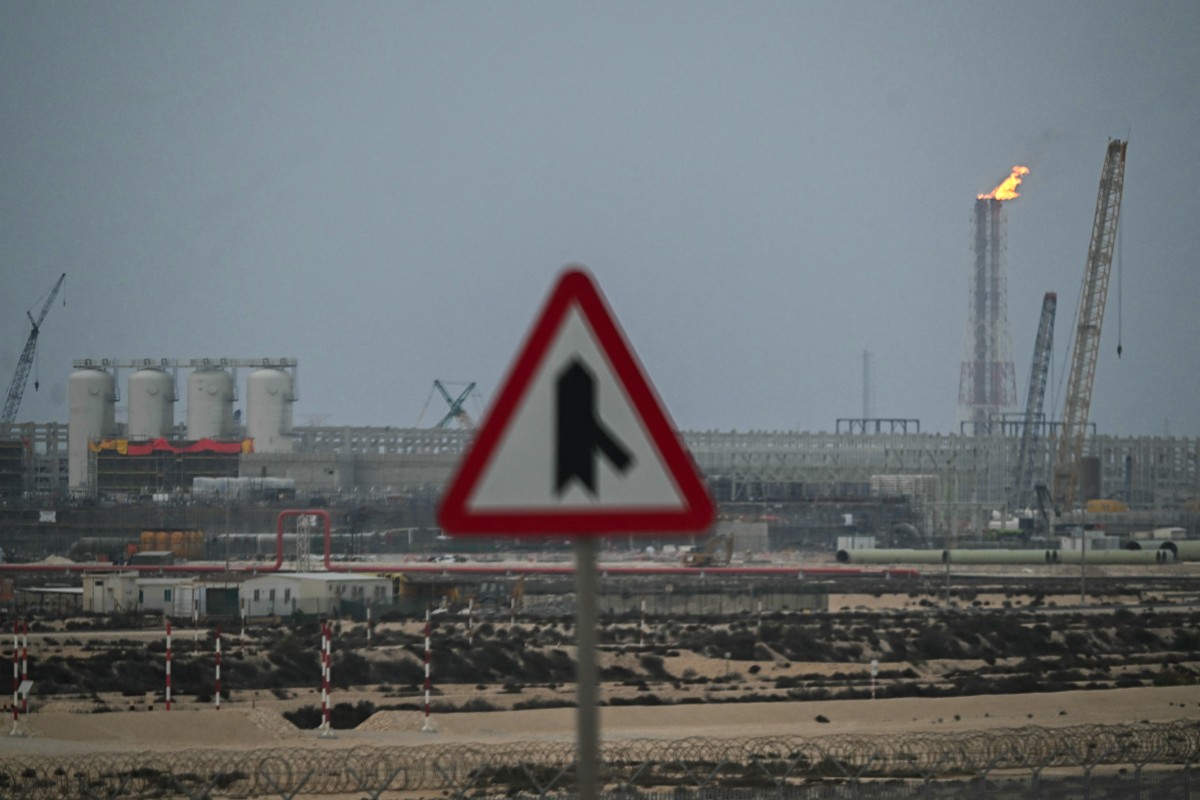
On March 2, Iranian drones attacked 2 locations in Qatar: A water tank at a power plant in Mesaieed Industrial Park and an energy facility in Ras Laffan belonging to QatarEnergy - the world's largest producer of liquefied natural gas (LNG).
No casualties were recorded, but for security reasons, QatarEnergy suspended the production of LNG and other products at the affected facilities.
The drone attack targeted the Ras Laffan complex, where natural gas treatment and liquefied gas production lines are located for export.
Many sources familiar with the matter say that the world's largest LNG producer was forced to declare a "force majeure" status, meaning exemption from contract obligations due to unusual events beyond control, such as military attacks.
This development occurred in the context of escalating maritime fighting between Iran and the US, along with continuous missiles flying over the area and the Strait of Hormuz - the world's strategic oil and gas shipping route - being blocked.
At least 150 ships, including LNG-carrying ships, have had to anchor in the straits and surrounding areas. The volume of ships passing through carrying LNG and oil has decreased by 86%, with about 700 ships stranded at both ends of the Strait of Hormuz.
Qatar's LNG exports account for about 20% of global supply. When production decreases, supply immediately tightens, causing gas prices to rise sharply.
This is clearly a serious escalation, especially when energy infrastructure in the Gulf is under pressure" - Rachel Ziemba, senior expert at the Center for a New American Security, said.
The most directly affected markets are Asia, especially Bangladesh, India and Pakistan, countries heavily dependent on LNG imports from Qatar. On March 3, Reuters reported that India had reduced its gas supply to industries after Qatar stopped production.
China is currently the world's largest gas importer, but most of the supply comes from Australia (accounting for about 34%), according to the US Energy Information Administration (EIA).
However, Maksim Sonin - an energy expert at the Stanford University Future Fuel Center - believes that QatarEnergy's decision will cause "strong volatility" but not to the point of creating a "crisis".
He does not believe that Europe will repeat the gas crisis in 2022, when the conflict in Ukraine broke out, forcing many European countries to sharply reduce dependence on Russian oil and gas.
Currently, the US is the world's largest LNG exporter, followed by Qatar and Australia.
About 82% of QatarEnergy's LNG sales are aimed at the Asian market. However, the disruption of supply still creates pressure to spread to other markets, especially Europe.
When supply decreases but global demand remains unchanged, rising gas prices are inevitable. "If QatarEnergy has to stop operating for a long time, this will be very bad news," expert Rachel Ziemba warned.


