
North Korea's Central News Agency reported on January 5 that the drill was conducted in the early morning of January 4 (local time), with the launch of a supersonic missile from Ryokpho district in Pyongyang.
The missile flew a distance of about 1,000km before falling into the area over the Sea of Japan. State media described this as a war assessment of North Korea's strategic weapons.
Supervising the launch, Chairman Kim Jong Un called the drill "an extremely important strategic task" to maintain and expand "strong and reliable nuclear deterrence capabilities".
Our operation is clearly aimed at gradually bringing nuclear war deterrence capabilities to a high level of development. The necessity of this is shown through the recent geopolitical crisis and complex international developments," Kim Jong Un said.
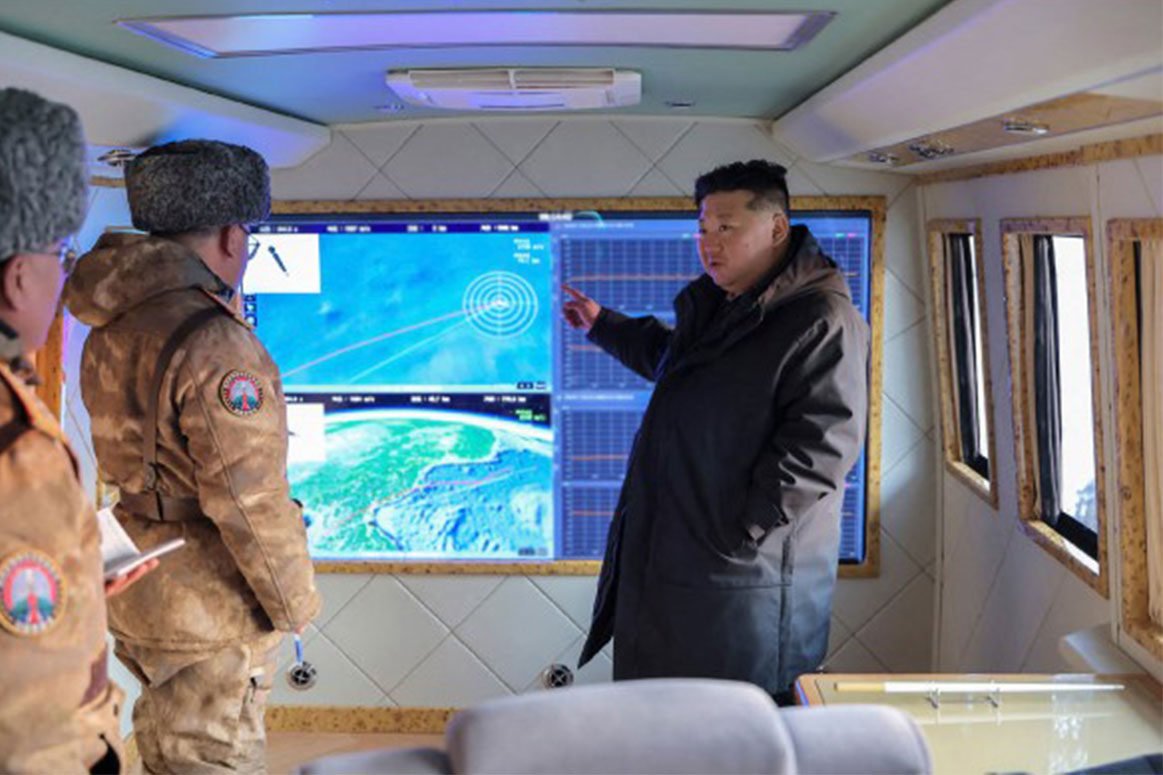
Mr. Kim Jong Un also praised the missile launching unit for "opening the first combat exercise in the new year", and sent New Year greetings to the country's missile forces, calling them "a reliable shield in protecting sovereignty and security".
North Korea has long affirmed that its weapons programs are legitimate self-defense actions, focusing on developing increasingly sophisticated supersonic missiles.
Previously, North Korea test-launched a supersonic missile in October 2025 - a weapon that analysts believed was introduced at a military parade, along with a long-range intercontinental ballistic missile.
North Korea expert at the Korean National Reunification Institute (KINU) Hong Min said that the missile launched is likely Hwasong-11 - the type that was displayed at the military parade in October.


