
After decades of pursuing the goal of ensuring food security and maintaining its position in the group of leading rice exporting countries in the world, Vietnam is beginning to write a new story: a story about quality, added value and sustainable development.
The center of this shift is the Project to develop 1 million hectares of high-quality, low-emission specialized rice cultivation in the Mekong Delta. This is considered one of the important restructuring programs of the rice industry, aiming to change production methods from fields.
As of May 2026, more than 354,000 hectares of high-quality, low-emission rice have been implemented. This figure shows the involvement of localities, cooperatives, businesses and farmers in changing traditional farming practices. More especially, Vietnam is no longer simply exporting "rice", but is gradually positioning a new brand: "Green Vietnamese Rice, Low Emission".
Changes from farming methods
In many fields in Dong Thap, An Giang, Can Tho, Soc Trang, farmers have begun to get used to techniques such as interspersed dry watering, electronic diary recording, production data retrieval and emission control.
Rice cultivation no longer follows the direction of sowing very densely, fertilizing a lot to expect high yields. Instead, it is sown sparser, using fertilizer more accurately, reducing pesticides and limiting burning straw after harvest.
According to the models participating in the project, the amount of seeds sown decreased by 30-50%, the amount of nitrogen fertilizer decreased by about 30%, and the number of sprays of pesticides decreased by 2-3 times per crop. Meanwhile, yield still increased by 5-10%.
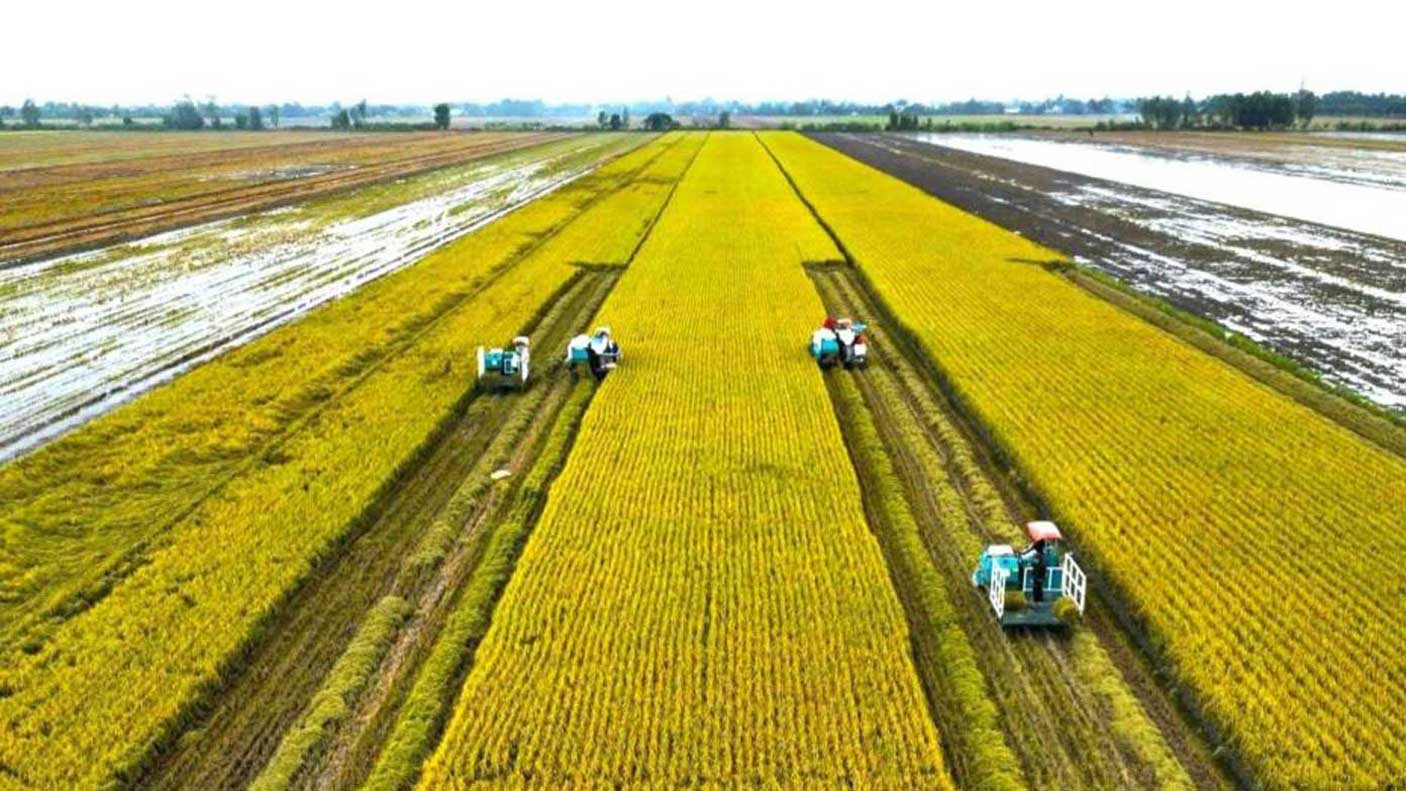
In Dong Thap, a pilot model achieved a yield of 7.1 tons/ha, profit of nearly 28 million VND/ha, about 4.6-4.8 million VND higher than outside the model. Some advanced models also help reduce average costs by more than 4 million VND/ha and increase yield by 0.78 tons/ha.
These results show that reducing emissions does not mean reducing productivity. Conversely, if production is organized well, farmers can reduce input costs, increase profits and create more competitive advantages for Vietnamese rice.
From exporting quantity to selling value
The rice export picture in 2026 also shows mixed signals. In the first 4 months of the year, rice exports reached 3.37 million tons, but turnover decreased due to falling world prices and increased international competition.
However, a noteworthy point is that the structure of rice exports is changing. The proportion of high-quality rice currently accounts for about 89% of total exports, of which 60-70% is fragrant rice and specialty rice.
Rice lines such as ST24, ST25, Japonica or some high-quality rice brands of Vietnam are gradually approaching demanding markets such as the EU, USA, and Japan.
In June 2025, the first batch of "Green Vietnamese Rice with low emissions" was exported to Japan at a FOB price of more than 800 USD/ton. Some high-quality fragrant rice lines reached 700-800 USD/ton, while ST25 at one point reached about 1,150 USD/ton, significantly higher than ordinary rice.
This shows that the market is changing. Consumers are not only interested in delicious rice grains, but also pay attention to the story behind the product: farming process, carbon emissions, environmental responsibility and transparency of the supply chain.
One of the most important factors creating the initial success of the Project is the increasingly close coordination between the "4 houses": the State, scientists, businesses and farmers.
The State plays a role in policy making and infrastructure investment. Research institutes, universities and international organizations such as IRRI, World Bank provide technical support, build MRV systems and low emission standards.
Businesses are starting to change their approach, no longer just "buying rice after harvest", but participating in building raw material areas, signing long-term consumption contracts, supporting data and traceability.
Meanwhile, cooperatives are becoming "organizational nuclei" of the new value chain. They are the bridge to help standardize planting area data, deploy electronic logbooks, organize synchronous production and connect with export businesses.
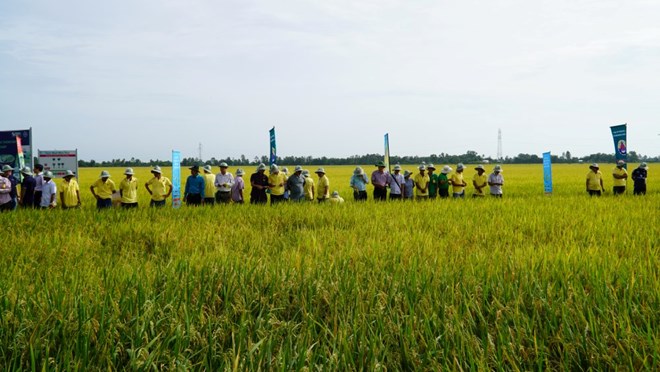
In many localities, farmers no longer see emission reduction as a "burden", but are beginning to see it as a new competitive advantage for Vietnamese rice.
From a country strong in output, Vietnam is facing the opportunity to reposition the rice industry in a greener, more transparent and responsible direction. If done well, Vietnamese rice not only plays a role in ensuring food security, but can also become a product representing a sustainable agricultural development.


