
Currently, Quang Phu commune (Lam Dong province) has dozens of hectares of chili peppers with varieties such as pink lotus, wild chili peppers... with an average yield of about 3 tons/sao.
This year, chili peppers bear fruit, have few pests and diseases, and are priced 3-4 times higher than in previous years, so chili pepper growers in Quang Phu share the joy of a bumper crop and good prices.
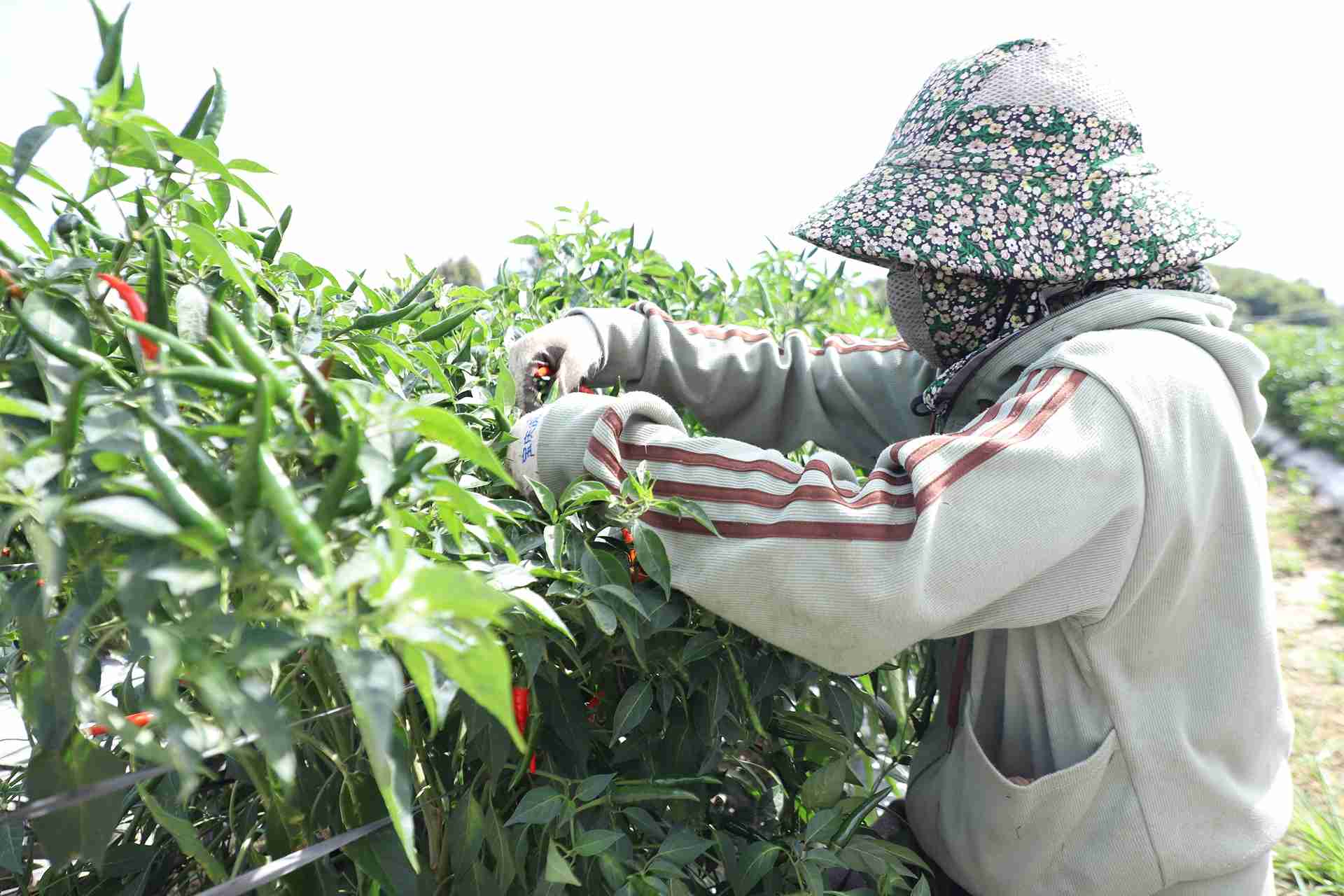
Ms. Nguyen Thi Man, residing in Xuyen Ha village (Quang Phu commune), said that due to market scarcity, chili prices are being purchased by traders at a record high. A week ago, chili prices were at 100,000 VND/kg, now they have increased to 140,000 VND/kg. Calculated, each chili fruit costs about 1,000 VND.
With 3 sao of chili peppers entering the main season, my family needs about 4 people to harvest each day. Thanks to the high chili price, wherever they harvest, traders wait to buy there. If the price is maintained until the end of the season, these 3 sao of chili peppers will bring my family about 120 million VND," Ms. Man shared.
Reality shows that soil conditions in Quang Phu commune and neighboring areas are very suitable for chili plants to grow.
Planting and care techniques are not too complicated, but planters must be meticulous and careful in each stage. Compared to many other crops on the same area, chili brings higher economic efficiency.
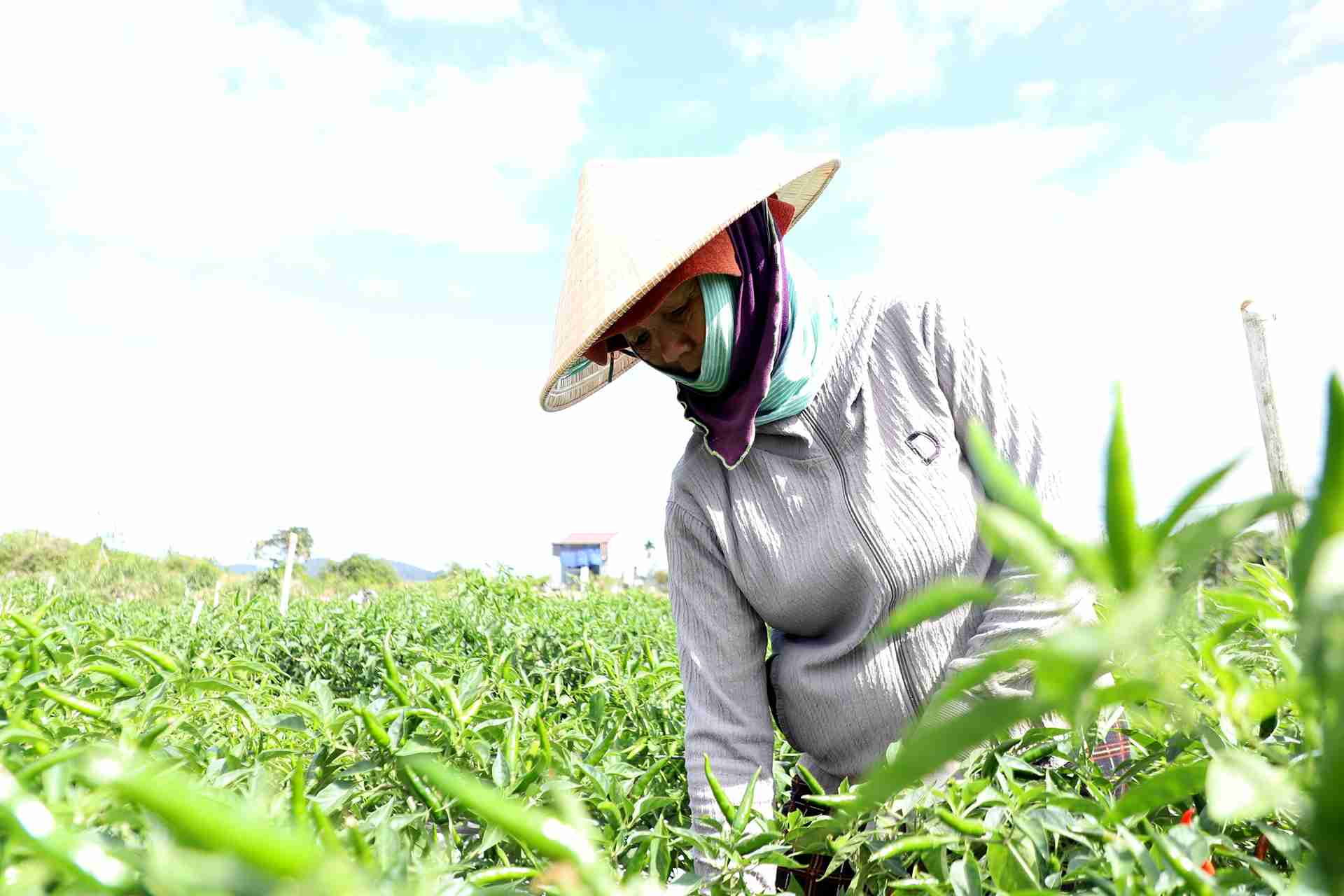
Faced with the sharp increase in chili prices, in this year's Winter-Spring crop, Quang Phu farmers have planted nearly 100ha of chili peppers, a significant increase compared to previous years. Many households have switched from growing corn, pumpkin, and sweet potatoes to growing chili peppers with the expectation of increasing income.
Mr. Ngan Thanh Hai, Vice Chairman of Quang Phu Commune People's Committee (Lam Dong) said that after the flood caused many damages, pepper trees suddenly became a bright spot, bringing significant income to local people.
However, chili prices often fluctuate strongly according to the market. Short-term expansion, lack of consumption linkages and lack of sustainable production orientation may put people at risk of "bumper crops, price drops".
Local authorities are strengthening propaganda and advising people to proactively grasp market information, and at the same time calculate a reasonable crop structure, avoid chasing immediate prices, towards sustainable and long-term production," Mr. Hai advised.


