
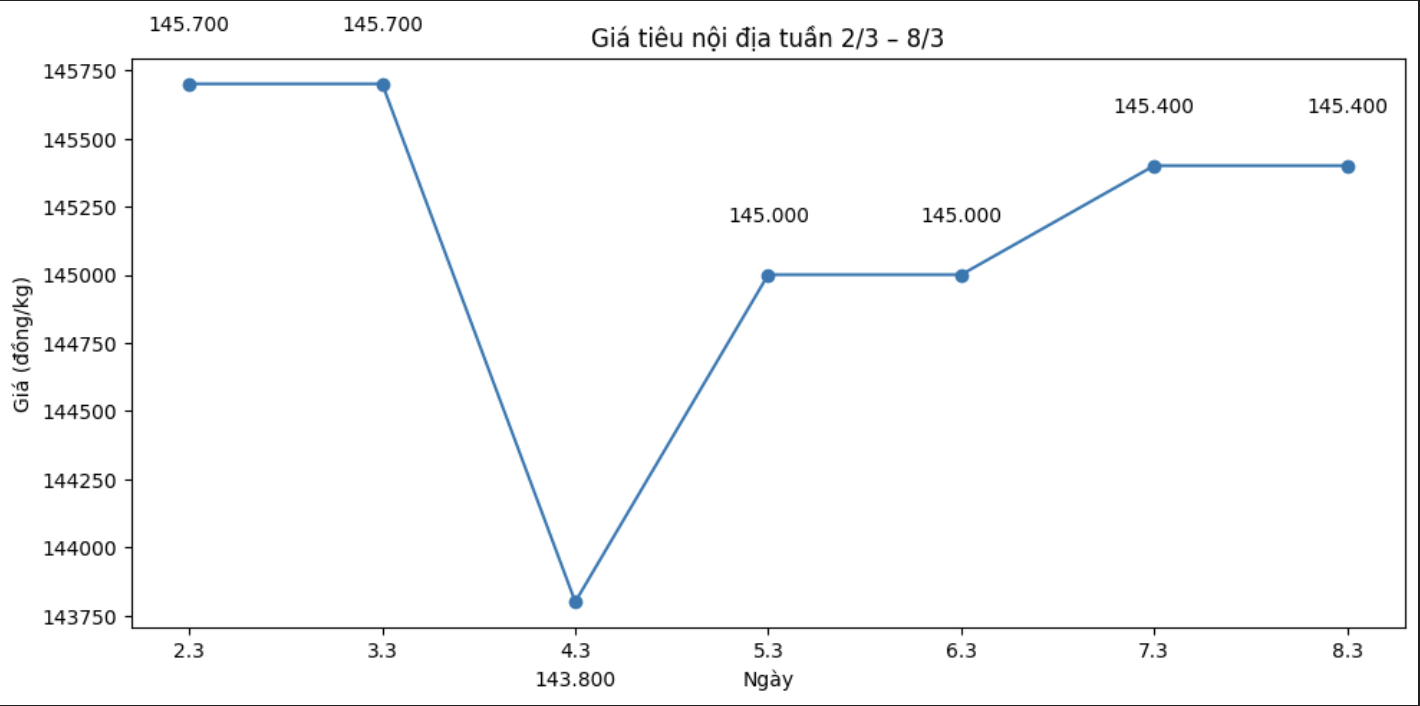
Domestic pepper prices: Week of sharp drop
Today (March 8), domestic pepper prices traded in the range of 144,500 - 146,500 VND/kg, down from 1,500 - 3,000 VND/kg.
At the end of last week, Dak Lak and Lam Dong pepper prices are being purchased at the highest level of 146,500 VND/kg, down 1,500 VND/kg.
In other localities such as Gia Lai and Dong Nai provinces, pepper prices fell to 144,500 VND/kg, a sharp decrease of 3,000 VND/kg.
With the same decrease of 3,000 VND/kg compared to the closing session last week, Ho Chi Minh City recorded a price of 145,000 VND/kg.
World pepper prices: Price slippage
According to the International Pepper Association (IPC), world pepper prices simultaneously decreased.
Indonesian black pepper price ended last week at 6,953 USD/ton, down 58 USD/ton compared to the previous week. At the same time of the survey, Indonesian white pepper price was quoted at 9.262 USD/ton, down 77 USD/ton.
Brazilian black pepper ASTA 570 reversed to decrease by 125 USD/ton, remaining at the mark of 6,050 USD/ton. Meanwhile, black and white pepper ASTA Malaysia remained unchanged, selling at 9,100 USD/ton and 12,100 USD/ton respectively.
In Vietnam, the export price of black pepper diễn biến theo xu hướng giảm nhẹ in the range of 6,400-6,500 USD/ton for types 500 g/l and 550 g/l. Ngược chiều, the price of ASTA white pepper is currently at 9,150 USD/ton.
Assessments and forecasts
Key pepper growing areas in the Southeast and Central Highlands are entering the peak harvest season. However, according to actual records from gardeners, the output of the 2026 crop year is forecast to decrease significantly due to the impact of prolonged extreme weather phenomena.
New supply is delivered to the market in small quantities while the demand for goods to be collected by export units to meet contracts to China and Europe is still very large, creating strong support for domestic pricing.
One of the biggest impacts on pepper prices today is the international logistics situation. The continuous geopolitical tensions in the Middle East have pushed sea freight rates and maritime insurance premiums to high levels. The change in transport routes has prolonged delivery time to the European market by 10-15 days, forcing international importers to accept high asking prices to ensure safe inventory for production plans at the end of Q1.2026.


