
Ministries must submit plans to reduce administrative procedures before April 20.
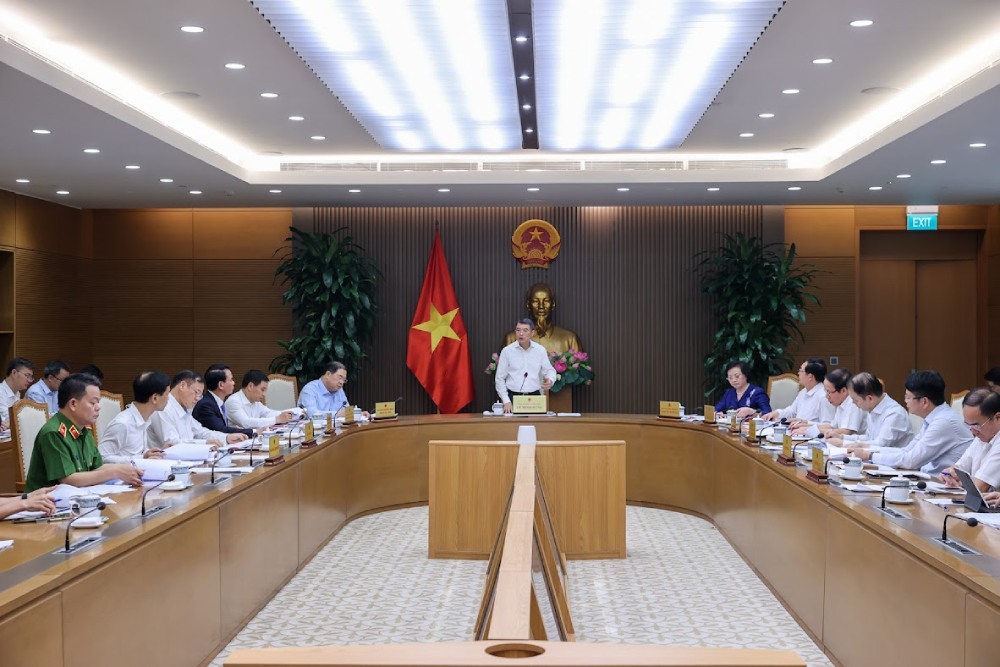
In the afternoon of April 13, Politburo Member, Prime Minister Le Minh Hung chaired a meeting of the Standing Committee of the Government to discuss solutions and methods of implementing reform, reducing administrative procedures, business conditions, reducing conditional business lines, and decentralizing the resolution of administrative procedures according to Conclusion No. 18-KL/TW of the Central Government.
According to reports and opinions at the meeting, there are currently 198 conditional business lines and 4,603 business conditions.
Conclusion No. 18-KL/TW has requested ministries and agencies to continue to review and further reduce 30% of conditional business lines currently, and at the same time reduce 100% of unnecessary business conditions.
Concluding, the Prime Minister emphasized the requirement to immediately get to work, especially the group of tasks according to Conclusion No. 18 with very high requirements.
The Prime Minister will assign Deputy Prime Ministers in charge of the field, the Ministry of Justice, the Ministry of Public Security, the Ministry of Home Affairs, and the Government Office to arrange specific schedules, working directly with ministries and sectors on reform plans, cutting administrative procedures, business conditions, cutting conditional business lines, and decentralizing the resolution of administrative procedures of each ministry and sector.
The Prime Minister requested that, not waiting until the end of the second quarter but until April 20, ministries must propose to the Standing Committee of the Government and the Government a plan to cut and reform administrative procedures, business conditions, and conditional business lines.
The Government Office and the Ministry of Justice will summarize and review the plan to submit to the Government for approval in April.
The Ministry of Justice, the Ministry of Public Security, the Ministry of Home Affairs, and the Government Office proactively propose contents related to administrative procedures and business conditions under the management of ministries and sectors that must be cut and simplified, and contents that need to promote the application of new technologies and digital transformation to create favorable conditions for people and businesses.
Ministers must directly direct a thorough review of administrative procedures under the Ministry's jurisdiction to simplify, cut and decentralize resolution; cut the list of 198 conditional business lines and 4,603 current business conditions; so that people and businesses can understand, do, and implement them easily.
Unnecessary business conditions must of course be cut, but other business conditions must also be reviewed.
The quantity is important, but the nature and content within the conditions are even more important; it is necessary to truly reduce compliance time and costs. The reduced quantity may not be much but it brings great efficiency," the Prime Minister noted.
The Prime Minister also requested Ministers to be responsible if they let go of procedures and business conditions that do not meet requirements.
Absolutely do not require people to provide existing information and data.
Continue to improve the quality and capacity of grassroots cadres through training and workshops with practical and specific contents, solving arising issues from practice, avoiding general and unrealistic contents, and bringing cadres from departments and branches down to strengthen grassroots levels, implementing the direction of General Secretary and President To Lam on 2026 as "the year of improving the quality of grassroots cadres".
The Prime Minister requested ministries to drastically complete the database, especially the databases associated with businesses, people, the economy and directing and operating activities.
Restructure the process in the direction of promoting the reuse of data and information in resolving administrative procedures, with the spirit that people and businesses only provide information once.
Information and data that is available should absolutely not be required by people and businesses to provide, officials carrying out procedures must look up on the basis of data; there must be very specific legal regulations on this matter.


