
On the afternoon of April 17, at the Government Headquarters, Member of the Party Central Committee, Deputy Prime Minister Ho Quoc Dung chaired a working session with the Ministry of Science and Technology, the Ministry of Agriculture and Environment (MARD), and the Ministry of Ethnic Minorities and Religions (MOLISA) on reducing and simplifying administrative procedures (APs) and business conditions.
Concluding the meeting, Deputy Prime Minister Ho Quoc Dung highly appreciated the efforts of the 3 ministries in implementing the reduction and simplification of administrative procedures, business conditions and conditional business lines in the past time.
Up to now, the Ministry of NNMT and the Ministry of DTTG have basically implemented cuts according to the set criteria. In which, the Ministry of NNMT is the unit that fully completed the contents on decentralization, cutting procedures, business conditions and compliance costs.
The Ministry of Agriculture and Rural Development is a ministry with a large number of procedures, directly related to people and businesses, especially in localities - which are very much looking forward to the results of reform. Therefore, it is necessary to have high determination, do it quickly and practically.
Praising the Ministry of Agriculture and Rural Development in performing the above tasks, Deputy Prime Minister Ho Quoc Dung assigned the Ministry of Justice to study and consider taking the Ministry of Agriculture and Rural Development as a typical example in implementing administrative procedure reform.
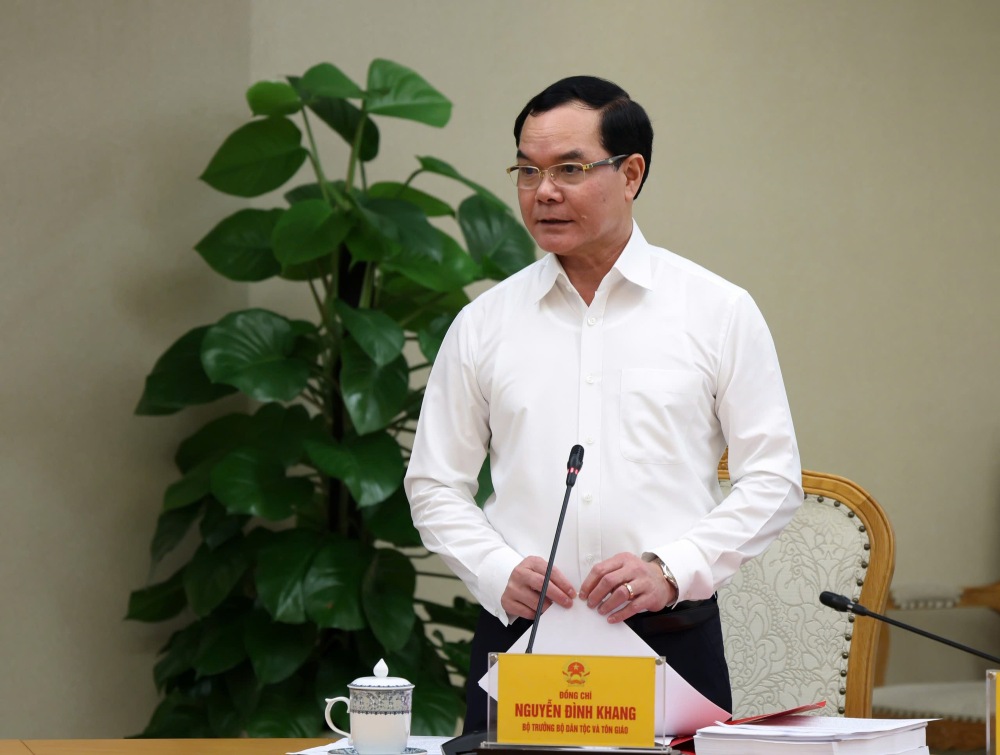
In the process of implementation, the Deputy Prime Minister requested ministries to carefully review, ensure publicity and transparency, "resolutely do not cut this place but put it in another place". At the same time, decentralization must take local opinions, avoiding the situation of imposition leading to infeasibility when implemented.
The Deputy Prime Minister requested ministries to urgently review and exchange with the Ministry of Justice, the Ministry of Public Security, and the Ministry of Finance to unify the results of cutting, decentralizing, and simplifying administrative procedures, business conditions, and cutting conditional business lines; clearly identify the quantity and proportion that needs to be continued to be completed.
Regarding the Ministry of Science and Technology, the Deputy Prime Minister requested to urgently review all criteria, especially the decentralization of administrative procedures to reach at least 30%; continue to study reducing conditional business lines.
It is necessary to develop standards and regulations to strengthen post-inspection, strongly shift from pre-inspection to post-inspection, both creating favorable conditions for production and business activities and ensuring state management.
Government leaders requested ministries to take in the opinions of the Ministry of Justice, urgently complete the plan to decentralize administrative procedures; reduce 50% of administrative procedure compliance costs; reduce 50% of administrative procedure resolution time; complete the plan to reduce conditional business lines and send it to relevant agencies within the prescribed time limit.
Ministries must closely coordinate with the Ministry of Justice and the Ministry of Finance in the process of developing and completing draft resolutions of the Government on reducing, decentralizing, simplifying administrative procedures and reducing business conditions.
Promptly complete databases, announce information fields to replace administrative procedure dossier components; restructure processes, connect, and share data to serve administrative procedure resolution, ensuring progress as required by the Standing Committee of the Government.
The Ministry of Justice guides the criteria for reducing, decentralizing, and simplifying administrative procedures, and methods for calculating procedure compliance costs; is responsible for summarizing the plans of the 3 ministries and reporting to the Deputy Prime Minister within the prescribed time.


