
In the afternoon of April 8, continuing the First Session, the 16th National Assembly listened to Minister of Ethnic Minorities and Religious Affairs Nguyen Dinh Khang present the report on the draft Law on Religion and Belief (amended).
Minister Nguyen Dinh Khang said that the draft Law is built on the basis of summarizing the practical implementation of the 2016 Law on Religion and Belief, and at the same time institutionalizing the Party's guidelines and policies and the Constitution's provisions on human rights and citizen rights.
According to the content of the Submission, the draft Law consists of 9 chapters, 61 articles, a reduction of 7 articles compared to the current Law, with the scope of regulation related to the right to freedom of belief and religion; organization and operation of religious organizations; as well as the rights and obligations of relevant subjects.
One of the notable points is that the Government proposed 4 major policy groups, focusing on perfecting the principles of religious and belief activities, especially in the digital environment; promoting decentralization and delegation of power; supplementing management tools suitable to reality; and simplifying administrative procedures associated with digital transformation.
The draft law also shows a clear reform direction when many administrative procedures are reduced, shifting from "request" to "registration", from "registration" to "notification", and at the same time gradually shifting from the "pre-inspection" mechanism to "post-inspection". This is considered a suitable step, contributing to reducing the burden of procedures, creating more favorable conditions for organizations and individuals in religious and belief activities.
The draft law amends and supplements many regulations related to centralized religious activities, personnel work, religious training, as well as medical, educational, and charitable activities of religious organizations.
Some new contents such as religious activities in cyberspace and international cooperation have also been adjusted, reflecting practical requirements in the context of integration and digital transformation.
The draft law continues to ensure compatibility with international human rights treaties of which Vietnam is a member, and at the same time is associated with the requirements of ensuring national defense, security, and social order.
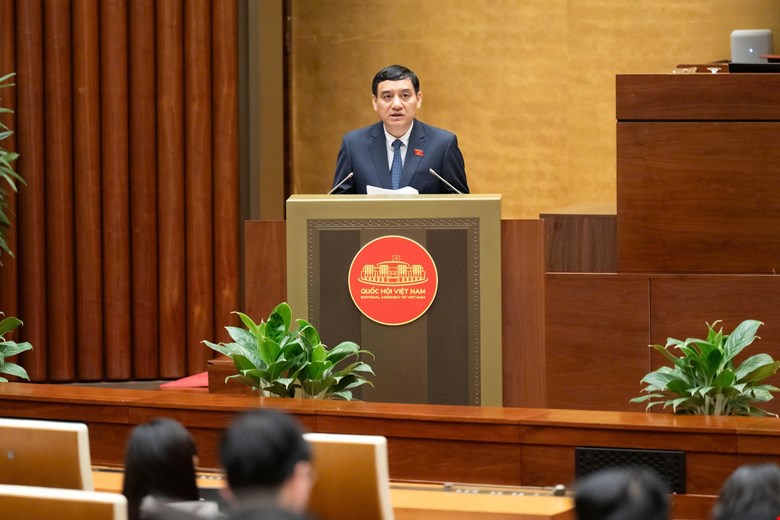
Presenting the thẩm tra report on the draft Law on Religion and Belief (amended), Chairman of the National Assembly's Committee for Culture and Society Nguyen Dac Vinh basically agreed with the contents in this draft amended law.
Regarding regulations on religious and belief activities in cyberspace, the Committee agreed on the necessity, but proposed to amend them to avoid duplication with the provisions of the Law on Network Security, only clarifying the specific characteristics of this field.
Regarding decentralization of management, the Committee for Culture and Social Affairs assessed that the new regulations have closely followed the spirit of promoting decentralization of power to localities. However, decentralization needs to go hand in hand with practical conditions, ensuring feasibility, especially for communes. Some opinions suggested allowing provincial levels to proactively decentralize or authorize when human resources and organization are sufficient.
Regarding activities outside of religious establishments, the Committee for Culture and Social Affairs believes that it is necessary to have clearer regulations on registration subjects and settlement deadlines to both create conditions for religious activities and ensure state management requirements.


