
The front line in communes and wards
More than half a year after the two-level local government officially went into operation, Quang Tri immediately faced a practical test: storm over storm, rain after rain.
The newly merged communes and wards; officials who have just taken on tasks in the changing apparatus... all had not yet gotten used to the new rhythm when natural disasters struck, forcing the system to operate smoothly, decisively and effectively.
Since completing the new model, Quang Tri has continuously been affected by four storms No. 5, 6, 9 and especially storm No. 10. This storm swept strongly through the northern area of the province, including Phu Trach commune, leaving many damages to traffic, power grids, houses and civil works.
Amidst broken power poles and corrugated iron roofs blown away by the wind, what remains intact is the people's trust in the local government.
Ms. Tuong Thi Nhien, hamlet 3 Hop Phu, recalled the storm night with a voice still trembling: "My house was temporary, hearing information that the storm was very strong, the government mobilized to relocate, I moved to a solid neighbor's house. It was not until the sheet metal flew loudly that I realized that if we were a few hours behind, it would probably not be enough.
According to her, warning information is broadcast continuously through loudspeakers, telephones and social networks of the commune. People proactively reinforce their houses, prepare food and drinking water; households in weak houses are all arranged to evacuate. "The storm has come, so there is no time to do anything else, so we have to leave early," she said.
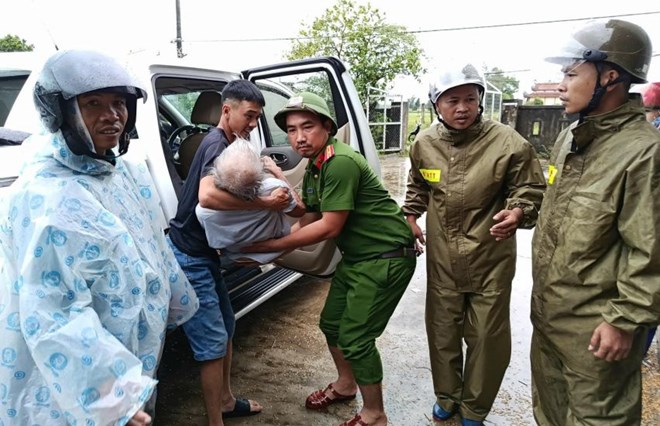
The failure to record casualties in a strong storm like storm number 10 is the result of a series of early, methodical and responsible actions, which in the past, communes did not always have enough authority to proactively decide.
Strong government amidst big storms
One of the fundamental changes in the 2-level local government model is the granting of more authority to communes and wards. The Civil Defense Command Board is consolidated, consolidating tasks previously undertaken by the intermediate level.
The commune level now not only "waits for instructions", but must develop response scenarios, allocate resources, receive relief, appraise production support and directly organize people's evacuation when dangerous situations occur.
The 2-level local government model poses many challenges, cadres are mobilized from many places; management area is large; coordination regulations in the early stages are still being completed; inter-communal situations are prone to confusion.
Vice Chairman of Quang Tri Provincial People's Committee Hoang Nam said that the province has established 5 key defense areas, playing the role of coordinating forces and means when the grassroots level encounters incidents. "Without intermediaries, all forces must be brought to the central commune or key area. Neighborhood groups and villages must promote their core role because they understand each household and each risk," he said.
According to Mr. Nam, in the initial stage, the province must support the grassroots level in terms of advice, guidance and forces. However, in the long term, the commune level will become a system strong enough to handle most arising situations on its own.
In the recent storms, the province issued many urgent telegrams, requesting the commune to implement on time, on assignment and report promptly. But when it comes to reality, the commune not only "implements", but must proactively think, decide and deploy in conditions of continuous fluctuations.


