
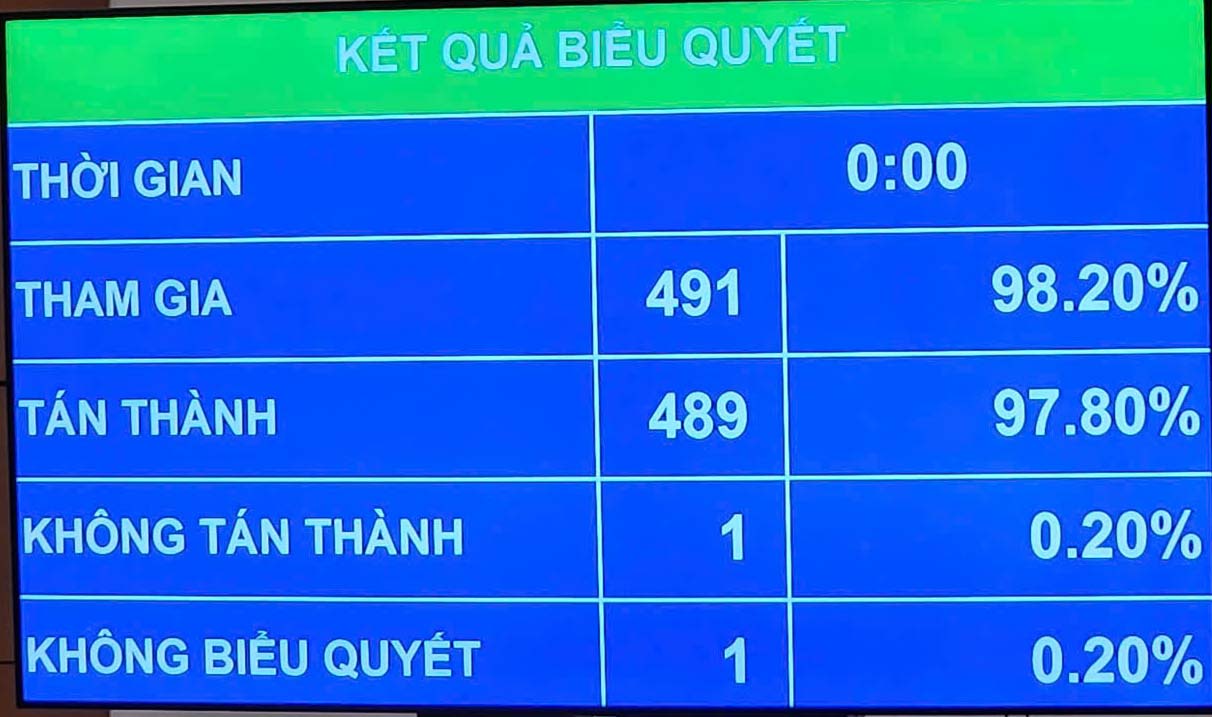
In the Report on receiving, explaining, and revising the draft law before the National Assembly deputies press the button, the Government stated the direction of not listing transactions that must be notarized in the Law, but only specifying more clearly the criteria for determining transactions that must be notarized.
The adjustment according to this plan both helps narrow the scope of transactions that must be notarized and clarifies the mandatory criteria for transactions that must be notarized without being duplicated or conflicting with relevant laws.
This approach both contributes to narrowing the scope of transactions subject to notarization (reducing 6 types of transactions subject to notarization currently regulated in government decrees).
The explanatory report also clearly stipulates the responsibility of the Ministry of Justice to preside over and coordinate with relevant ministries and sectors to review, update and post the list of transactions subject to notarization on the Electronic Information Portal.
This list has reference value, support for lookup, and uniform application nationwide; and at the same time ensures that the principle that specific transactions subject to mandatory notarization must be regulated by specialized laws, in accordance with the criteria of the Law on Notarization.
Regarding the authority to notarize real estate (RE) transactions, a National Assembly delegate proposed to stipulate the authority to notarize real estate transactions not according to administrative boundaries right in the Law on Notarization.
Some other opinions suggested not immediately removing the authority to transact real estate according to provinces and cities but assigning the Government to stipulate a roadmap to ensure legal safety for real estate transactions.
According to the Government's viewpoint, real estate is a valuable asset, playing a particularly important role in socio-economic life, so real estate transactions need to have appropriate mechanisms to both facilitate and promote transactions, and ensure the highest legal safety.
The regulation that notaries of notary practice organizations are only allowed to notarize transactions with real estate objects within the province or city where the notary practice organization has its headquarters is appropriate, minimizing the risk of notarization and certification multiple times for a real estate at one time.
The Government said that the opinions of National Assembly deputies on only narrowing down but not immediately removing the authority to trade in real estate and assigning the Government to regulate according to the roadmap have been expressed in the draft Law.
Accordingly, notarization of transactions without the direct object being real estate (for example, power of attorney contracts related to real estate, transfer contracts, real estate purchase and sale contracts, deposit contracts for real estate purchase and sale, transfer...) can be carried out at notary practice organizations in any province or city to facilitate people and businesses.
Thus, the notarization of real estate transactions regardless of administrative boundaries will be carried out according to an appropriate roadmap, when the notarized and related database is fully operated, ensuring legal safety for transactions.


