
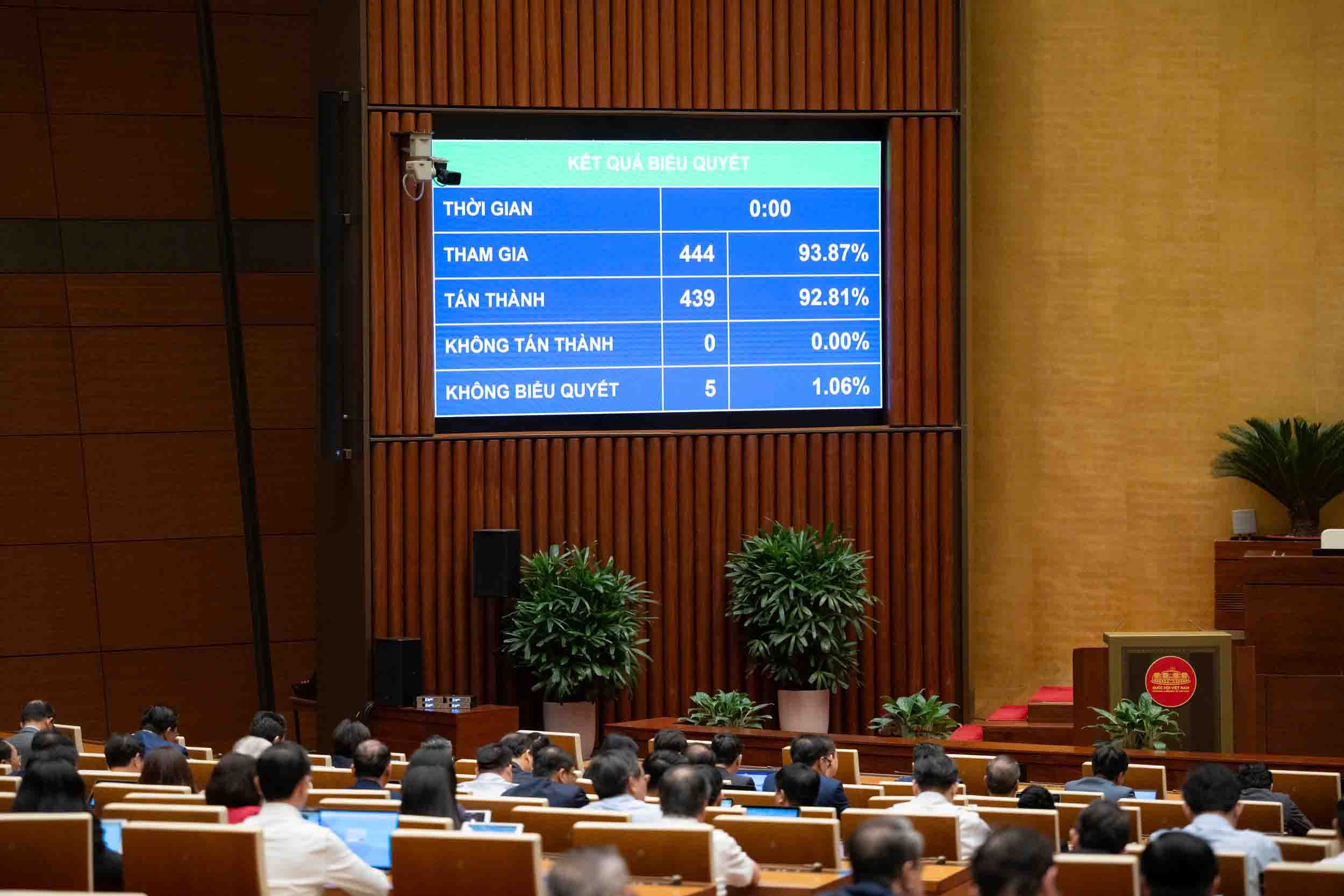
On the afternoon of December 10, with the majority of delegates in favor, the National Assembly voted to pass the Law amending and supplementing a number of articles of the Law on Citizen Reception, the Law on Complaints, and the Law on Reprimand. This Law takes effect from July 1, 2026.
With the law passed, the National Assembly agreed to add the form of online citizen reception. The Government will regulate online citizen reception.
The Law on Citizen Reception also adds a regulation that people coming to complain, denounce, and recommend must provide identification information to avoid impersonation.
The Chairman of the People's Committee at the commune level directly receives citizens at the citizen reception location at least 2 days in 1 month and conducts surprise reception of citizens in cases prescribed by law.
The Law also adds and clarifies the responsibility of receiving citizens of the Standing Committees of People's Councils at all levels.
Reporting before the National Assembly voted, Government Inspector General Doan Hong Phong said that the draft law does not stipulate the establishment of a Commune-level Citizen Reception Committee to avoid the emergence of new organizations; does not authorize the issuance of citizen reception deputies to enhance the responsibility of the head.
Regarding the Law on Complaints, the Government Inspector General said that the Government will accept and supplement regulations on withdrawing complaints and not reviewing the withdrawn content, except in cases of forced or threatened.
The Government has also clarified the basis for "temporary suspension" when it is necessary to wait for the results of handling related issues; added the Inspectorate is the unit advising on handling complaints.
According to the provisions of the Law, the reclamant can withdraw the entire or part of the reclamation at any time during the reclamation and complaint settlement process.
The withdrawal of complaints is carried out by withdrawal of complaints or a record of the complaenter's withdrawal of complaints when working with the complaint settler or the person verifying the complaint content.
The complaint withdrawal form and record of the complaint withdrawal opinion must have the signature or direction of the complainter and send to the competent person to resolve the complaint.
The law also stipulates that the person with the authority to resolve complaints shall temporarily suspend the settlement of complaints in 2 cases.
First, due to force majeure events or other objective obstacles, the complaint cannot continue to participate in the complaint settlement process.
Second, it is necessary to wait for the results of the settlement of competent agencies, organizations and individuals on issues directly related to the complaint content.
The Government will specify in detail the temporary suspension and suspension of complaint settlement.
Meanwhile, the Law on Reprimand supplements regulations on cases of termination of protection when the protected person intentionally fails to fulfill his/her obligations under the law. The protection of the identity of the whistleblower, according to the Government Inspector General, will be stipulated in the guiding decree.
The Government Inspector General also said that the law maintains the scope and subjects of protection for whistleblowers; does not add the statute of limitations for reporting and the form of reporting via social networks; does not increase the time for initial processing of reporting information and handling of reporting.


