
Ho Chi Minh Thought on revolutionary ethics
During his lifetime, President Ho Chi Minh always paid attention to ethics, especially revolutionary ethics. He affirmed: "Just as rivers have sources to have water, without sources rivers shallow. Trees must have roots, without roots trees will wither. Revolutionaries must have ethics, without ethics, no matter how talented they are, they cannot lead the people.
President Ho Chi Minh's moral views cover the basic relationships of people in society, first of all with the country and the people - "Loyal to the country, filial to the people". In his speeches and writings, President Ho Chi Minh summarized the content of revolutionary morality as: "Recognize right and wrong clearly. Maintain a firm position. Be loyal to the country. Be filial to the people"; "Absolutely loyal to the Party, to the Fatherland, to the people".
This is the key point of revolutionary morality. "Loyal to the country" is boundless loyalty to the cause of building and defending the country, fighting for national independence and making the country increasingly rich and strong. "Filial to the people" means that all cadres must be "loyal servants of the people", "all powers belong to the people", "all benefits be for the people"; attached to the people, close to the people, trusting the people, relying on the people, taking the people as the root. It is necessary to firmly grasp the people's feelings, understand the people's hearts, pay attention to improving people's lives, improve people's knowledge, and make the people understand the responsibilities and rights of the people who are the masters of the country.
The second thing in President Ho Chi Minh's moral ideology is towards people, or more precisely, "loving people". Loving people is doing everything for people; daring to sacrifice, daring to commit to fighting to liberate people. Loving people, believing in people.
With oneself, it is strict; with others, it is generous and altruistic, even with those who are wrong, lost, make mistakes, and have shortcomings. Loving people must practice self-criticism, sincere criticism, helping each other correct shortcomings, helping each person to become more and more progressive and better.
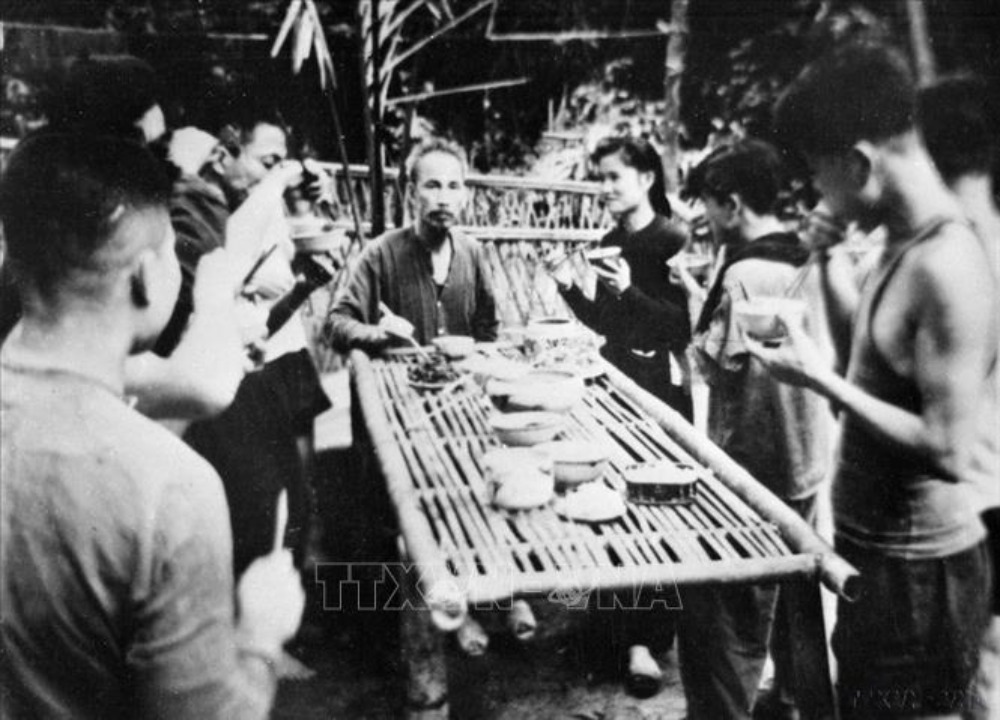
President Ho Chi Minh - a bright example of revolutionary ethics
President Ho Chi Minh's life was the most beautiful, wonderful and complete convergence of revolutionary moral qualities. He always reminded cadres and party members to regularly cultivate and train, because: "Revolutionary morality is not descended from the sky. It is developed and consolidated by daily struggle and persistent training. Just as jade is sharpened the brighter, gold is refined the clearer".
Throughout his life, He has constantly self-cultivated and trained himself in morality, becoming a model image of "the leader and loyal servant of the people", not only having a strong attraction and influence on the entire nation, but also having a profound influence throughout the world.
The morality that He upheld is the morality of action, vividly expressed in lifestyle, in every daily work. That is diligence, thrift, integrity, righteousness, impartiality; is the spirit of altruism, simple lifestyle, closeness, and harmony with the People.
Regarding "need", Uncle Ho worked, studied, and researched tirelessly to find a way to save the country; together with the Party, he organized and led the people to successfully carry out the revolution.
Regarding "saving", Uncle Ho is a typical example of simplicity and transparency. Although he is the leader of a whole nation, he is always as simple as possible, from eating (braised fish, pickled mustard greens, pickled eggplant); wearing (old bà ba set with rubber sandals or yellow ka ki set with fabric shoes); to living (when in the war zone, living with cadres and staff, returning to Hanoi to live at the house of an electrician, later living in a simple stilt house with a few essential personal items). Even in his work, Uncle Ho also highly valued thrift, "when you shouldn't spend, you shouldn't even spend a penny".
Regarding "integrity", His integrity has been clearly shown through each word and action. Not only never having thoughts of personal gain, he also always pondered and thought about how to make his people have a better life, how to make "everyone have food and clothing, everyone is educated".
In terms of "main", He was always humble, respectful to superiors and yielded to subordinates, loving and caring for all classes in society, especially the poor. In particular, He did not care about personal happiness but always put the interests of the nation first, and sacrificed his whole life to bring independence to the nation and freedom to the people.
Going hand in hand with cultivating and training revolutionary morality is to fight against the manifestations of individualism, bureaucracy, corruption, arrogance and abuse of power. He called individualism an "internal enemy", the most dangerous disease for revolutionary cadres.
He emphasized: "A nation, a party and each person, yesterday was great, with great appeal, not necessarily loved and praised by everyone today and tomorrow, if their hearts are no longer pure, if they fall into individualism". That warning is still valid today.
And in the sacred Testament, what He pondered until the end of his life was still "to take care of the people's lives", to "cultivate revolutionary morality for future generations", to keep our Party "truly clean, worthy of being a leader, a truly loyal servant of the People". Those reminders not only express the last wishes of a leader but also a bright example of dedication, love and boundless sacrifice.


