
Expanding unlimited public-private partnerships
Thủ tướng Chính phủ Phạm Minh Chính nhấn mạnh nội dung này khi chủ trì phiên họp thứ nhất của Ban Chỉ đạo Quốc gia triển khai Nghị quyết số 79-NQ/TW của Bộ Chính trị về phát triển kinh tế Nhà nước, ngày 1.2.
Tại Phiên họp, Ban Chỉ đạo tập trung thảo luận, đóng góp ý kiến vào: Dự thảo Nghị quyết của Chính phủ ban hành Kế hoạch hành động của Chính phủ thực hiện Nghị quyết số 79; Dự thảo Nghị quyết của Quốc hội về một số cơ chế, chính sách đặc thù, đặc biệt phát triển kinh tế nhà nước; Dự thảo Quy chế hoạt động của Ban Chỉ đạo, đảm bảo tính thực chất, thiết thực, hiệu quả, tránh hình thức.
Kết luận phiên họp, Thủ tướng nhấn mạnh, việc xây dựng nghị quyết của Quốc hội phải thể chế hóa đầy đủ chủ trương của Đảng, nhất là 5 quan điểm chỉ đạo đối với kinh tế nhà nước trong Nghị quyết 79; nhằm sử dụng hiệu lực, hiệu quả 9 thành tố của kinh tế nhà nước, nâng cao giá trị gia tăng, tuân thủ quy luật thị trường, giảm can thiệp hành chính, giải quyết tốt quan hệ thị trường, nhà nước và xã hội.
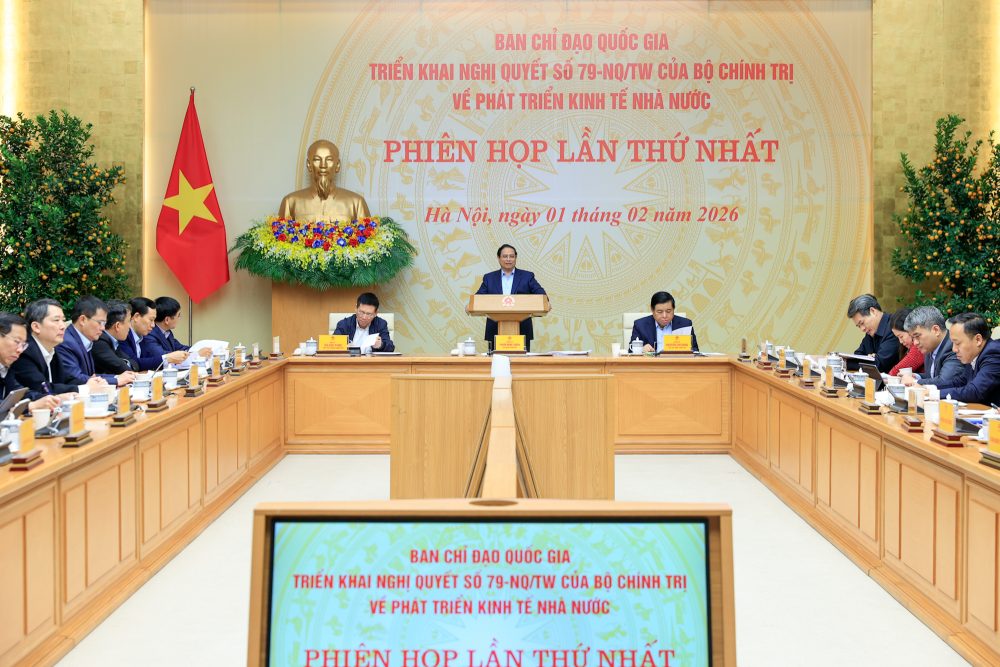
Dự thảo Nghị quyết trình Quốc hội phải tháo gỡ được các nút thắt, điểm nghẽn trong tiếp cận nguồn lực nhà nước; thu hút được nhân tài với chế độ tiền lương, chính sách cán bộ để phát huy tinh thần dám nghĩ, dám làm, dám dấn thân, dám chịu trách nhiệm.
Phân định rõ các nhiệm vụ nhà nước phải làm, giữ vai trò chủ đạo, đi đôi với cơ chế, chính sách; nhà nước không làm những việc tư nhân có thể làm được và làm tốt hơn; đồng thời mở rộng hợp tác công tư không giới hạn trên cơ sở nguồn lực nhà nước dẫn dắt, định hướng. Hài hòa hóa giữa quyền quản lý và quyền sở hữu. Phân cấp, phân quyền quản lý rộng hơn, sâu hơn. Vừa có cơ chế, chính sách vừa có công cụ kiểm tra, giám sát, kiểm soát quyền lực.
Thể chế hóa một số giải pháp mới về đơn vị sự nghiệp công lập
Directing a number of specific tasks, the Prime Minister assigned the Ministry of Finance to receive opinions, urgently complete drafts to submit to the Government, and complete them in February 2026; study innovation and completion of the ownership representative agency model and restructuring of state-owned corporations and general corporations; continue to improve tax, fee, and charge policies.
The Ministry of Agriculture and Environment continues to review and propose amendments and improvements to relevant laws, especially laws on land, environment, and sustainable exploitation of resources. The Ministry of Construction reviews and improves legal regulations on management, exploitation, and use of underground space; housing policies.
The Ministry of Home Affairs builds a mechanism for hiring, recruiting, and appointing directors/general directors in enterprises. At the same time, institutionalize a number of new solutions for public non-business units such as public non-business units that are autonomous in terms of minimum recurrent expenditures and above being autonomous in terms of organizational structure, salaries and other remuneration and benefits, recruiting and using personnel according to operating results such as enterprises with 100% state-owned charter capital;
Focus on investing in development for a number of important public non-business units with potential and competitiveness in some basic research fields and strategic technology industries;
Piloting the establishment of departments with in-depth consulting functions in large-scale units and implementing the hiring of CEOs in public non-business units; not organizing Management Boards in public non-business units.
The Ministry of National Defense, the Ministry of Public Security, and other ministries, agencies, and localities, according to their assigned functions and tasks, review the tasks and solutions in Resolution 79 to propose to improve legal regulations and solutions to effectively organize the implementation of the Resolution.


